

Do food grade chillers have a defrosting function? That's a question I get asked a lot as a supplier of Food Grade Chillers. In this blog, I'm gonna break it down for you, talk about why defrosting is important, and if food grade chillers usually come with this feature.
First off, let's understand what a food grade chiller is. These chillers are designed specifically for use in the food industry. They need to meet strict health and safety standards to ensure that the food they're used with stays safe and fresh. Food grade chillers are used in a bunch of different food - related applications, like in commercial kitchens, dairy processing plants, and meat packing facilities.
Now, why is the defrosting function so crucial? When a chiller is working, its evaporator coils can get covered with frost. This frost build - up happens because the cold coils cause the moisture in the air to freeze. Over time, a thick layer of frost can form on the coils. And here's the problem: frost acts as an insulator. It reduces the efficiency of the chiller by making it harder for the coils to absorb heat. As a result, the chiller has to work harder, use more energy, and may not be able to cool the food as effectively.
So, do food grade chillers have a defrosting function? The answer is, it depends. Many modern food grade chillers do come equipped with a defrosting function, and there are a few good reasons for that.
Firstly, in the food industry, maintaining the right temperature is super important. A chiller that's not defrosting properly can lead to inconsistent cooling. This can cause food to spoil faster, which is a huge no - no in a business where food safety and quality are top priorities. For example, in a dairy processing plant, if the milk isn't kept at the correct temperature due to a frosted chiller, it can start to sour and contaminate large batches of product.
Secondly, energy efficiency is a big deal for food businesses. With a defrosting function, the chiller can operate at its peak efficiency. When the coils are free of frost, the chiller doesn't have to use as much power to achieve the desired cooling effect. This can lead to significant savings on energy bills over time, which is always a plus for any business.
There are different types of defrosting methods used in food grade chillers. One common method is the hot - gas defrost. In this method, hot refrigerant gas is redirected to the evaporator coils. The heat from the gas melts the frost on the coils. It's a relatively quick and effective way to defrost the chiller.
Another method is electric defrost. Here, electric heaters are installed on the evaporator coils. When it's time to defrost, the heaters are turned on, and they generate heat to melt the frost. Electric defrost is often used in smaller food grade chillers because it's simple and easy to control.
Now, let's talk about some of our products. We offer a range of food grade chillers, including Packaged Air Cooled Chiller. These chillers are great for businesses that need a compact and efficient cooling solution. Our Air Cooled Glycol Chiller is another option. Glycol is used in these chillers, which can provide better performance in colder environments. And if you're looking for something more heavy - duty, our Industrial Chiller Units are designed to handle large - scale food processing operations.

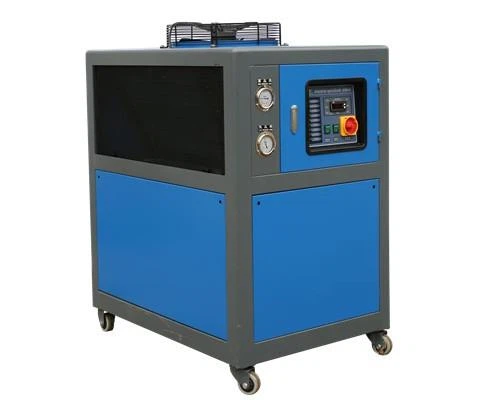
Most of our food grade chillers come with a built - in defrosting function as standard. We understand that our customers in the food industry rely on consistent and efficient cooling. That's why we make sure our chillers are equipped to handle the challenges of frost build - up.
However, there might be some cases where a customer doesn't need a defrosting function. For example, if the chiller is being used in a very dry environment with low humidity, the chances of frost formation are much lower. In such situations, we can offer a custom - made solution without the defrosting feature, which can save the customer some money.
But in general, having a defrosting function in a food grade chiller is a smart choice for most food businesses. It helps to ensure food safety, improves energy efficiency, and prolongs the lifespan of the chiller.
If you're in the market for a food grade chiller and have questions about the defrosting function or any other features, don't hesitate to reach out. We're always here to help you find the perfect chiller for your specific needs. Whether you're running a small café or a large - scale food manufacturing plant, we've got a solution for you. Let's have a chat and see how we can work together to keep your food at the optimal temperature.
References:
Frick, T. A., & Bramel, J. (2018). Advanced Refrigeration Systems Design. CRC Press.
Bejan, A., Tsatsaronis, G., & Moran, M. J. (2018). Thermal Design and Optimization. Wiley.