

Chiller
Why Choose Us?
Rich Experience
One of more than 10 years profession supplier of refrigeration equipment and air compressor, Our products are widely used in different industries,perfect performance especially for plestic PET bottles.
Reliable Product Quality
We have advanced management experience,design,raw materials purchase, production flow and quality control to provide customers with guaranteed high-quality products.
Excellent Customer Service
Pre-sale service for free, product consulting, designing scheme. On-purcahse service Patiently, update production scheule, pacakge, shipping etc. After sales service timely, feedback within 24hours, provide solution ASAP.
Wide Range of Applications
Our chillers and air compressor are widely used in field of plastic, electroplating, leather, medicine, chemical, shoes, printing, fungus mushroom production environment project, agricultural cultivation, etc.
What is Chiller?
A chiller (cooling water circulation device) is a general term for a device that controls the temperature by circulating a liquid such as water or heat medium as a cooling liquid whose temperature was adjusted by the refrigerant cycle. In addition to maintaining the temperature of various industrial devices and laboratory instruments, equipment and apparatuses at a constant level, it is also used for air conditioning in buildings and factories.




Advantages of Chiller
Energy Efficiency
Water chiller-enabled process cooling is a very efficient method for various reasons. To begin with, water chillers operate independently of ambient environmental temperatures, allowing them to avoid system inefficiencies that occur with fluctuations in ambient thermal conditions. Furthermore, due to their principle of operation (using water to dissipate heat from a system), water chillers are very effective in rapidly lowering the temperatures in larger industrial applications.
High Return on Investment and Cost and Energy Savings
Among the water chiller benefits is a higher return on investment. While the initial costs of installation and start-up might be significant, once the water chiller system is up and running, it is a worthwhile long-term investment with few maintenance costs and component replacements. Many process chiller constructors build water chiller systems that significantly save energy costs. The coolant used in these chillers (water) is plentiful, cheap, and easy to source compared to other alternatives.
Long-Lasting Process Cooling
Process chiller manufacturers typically build water chiller systems to last for very long. When compared to other cooling systems, water chillers are more durable and have far longer life spans. The explanation for this is relatively straightforward. Most of the components within water-cooled chiller systems are typically installed indoors, with only a few parts exposed to natural weather elements (rain, wind, sunlight, ice).
Increased Production Speed
Water chillers can boost production speed by optimizing process temperatures. Maximum efficiency is obtained under properly regulated thermal conditions, and water-cooled chillers can guarantee a stable process environment. Additionally, water chiller systems prevent damage to heat-sensitive industrial components preventing undesirable repair downtime that might slow or even halt production altogether.
Quiet Operation
Process chilling done using water-cooled industrial chillers is a noiseless one. This is another major advantage of using water chillers. They possess few dynamic components and, as such, will not generate unwanted noises in an industrial environment. This will allow their use in virtually any setting with good compliance with industrial noise level regulations.
Greater Flexibility
Water chiller systems are very flexible industrial devices that can be modified to operate in various indoor and outdoor settings. Dependent on operator requirements, water-cooled chillers can be manufactured in a vast range of sizes and configurations to ensure maximum process compatibility.
Types of Chiller
Air-Cooled Chillers
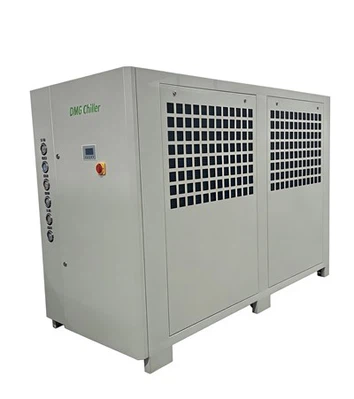
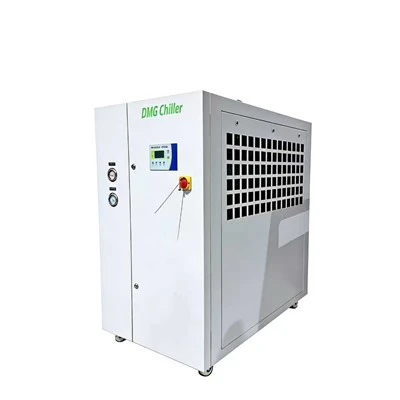
Air-cooled chillers rely on a condenser cooled by the environment air. Thus, air-cooled chillers may find common application in smaller or medium installations where space constraints may exist. An air-cooled chiller can represent the most practical choice in scenarios where water represents a scarce resource. A typical air-cooled chiller can feature propeller fans or mechanical refrigeration cycles to draw ambient air over a finned coil to condense the refrigerant. The condensation of the refrigerant vapor in the air-cooled condenser enables the transfer of heat to the atmosphere.
Water-Cooled Chillers
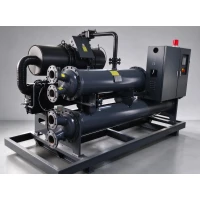
Water-cooled chillers feature a water-cooled condenser connected with a cooling tower. They have commonly been used for medium and large installations that have a sufficient water supply. Water-cooled chillers can produce more constant performance for commercial and industrial air conditioning because of the relative independence to fluctuations of the ambient temperature. Water-cooled chillers range in size from small 20-ton capacity models to several thousand-ton models that cool the world’s largest facilities such as airports, shopping malls and other facilities.

Application of Chiller
Food Processing
Industrial chillers are used extensively in food production and processing operations, which require a high degree of precision in temperature control. For instance, winery chillers are used for temperature control during the fermentation and storage of wine. Likewise, bakery chillers help with mixer cooling, potable water cooling, and cooling jacketed tanks of yeast which are all critical bakery components.
Metal Finishing
Temperature control is essential in metal finishing processes such as electroplating or electroless plating to remove the excess heat as they typically require very high temperatures (several hundred degrees) to bond the metals. Some industries use metal-finishing chillersto cool the anodizing liquid in a heat exchanger or use glycol/water as a cooling medium to lower the temperature inside the tank.
Injection Molding
Injection molding is a mass-production technique for creating plastic parts using an injection-molding machine, thermoplastic pellets, and a mold. The process and melt must be maintained within precise temperature limits to prevent problems such as cracks, warping, and internal stresses in the final product. An injection molding chillercan supply a stream of supercooled fluid to cool the mold at an ideal rate to ensure optimum product quality.
Space Cooling
In manufacturing plants that generate a lot of heat from the heavy-duty machinery they use, a chiller can help prevent temperature extremes in the offices and other working spaces. They also help save costs on purchasing separate HVAC systems for cooling.
Components of Chiller
Condenser
The function of a chiller condenser unit is to eliminate heat from the refrigerant being circulated through the chiller unit. This is achieved by circulating water between a cooling tower and the condenser for water-cooled variants or blowing cool air over condenser piping for air-cooled chiller units.
Compressor
The compressor is the driving unit of any chiller system. It generates the pressure gradient necessary to push refrigerant around the chiller unit to achieve process cooling. Various condensers are available, with the most popular types including centrifugal, screw, and reciprocating compressors.
Evaporators
An evaporator is placed between the expansion valve, and the condenser removes heat from any associated process into circulating refrigerant. This is then channeled to a cooling tower or air-cooled depending on the chiller configuration.
Thermal Expansion Valves
Thermal expansion valves located between the compressor and the evaporator serve to expand refrigerant passing through them. This action diminishes the pressure and improves the heat elimination from the evaporator.
Power Unit
Every chiller incorporates a power unit that controls electrical energy flowing through the system. Power unit components usually include starters, power monitoring panels, and circuit breakers.
Control Panels
Control panels serve to regulate the entire process of cooling operation. They usually integrate sensors, alarms, and display screens that allow operators to adjust system settings for optimal thermal control.
Water Boxes
These devices may be mounted on either the chiller system evaporator or its water-cooled condenser. Their purpose is to conduct water flow effectively.
Differences Between a Chiller and Freezer
Principles of a chiller and freezer
You can think of the principles of a chiller and freezer as almost the same. Because both are used to cool their intended objects, they both possess cooling capacities. The basic principle of a chiller and freezer is to cool the intended object and lower the temperature, so there is little difference in that respect. It's hard to tell the differences between a chiller and freezer, and it's easy to get confused because the principles are almost the same. There is no doubt that they are very similar devices.
However, even if the principles are almost the same, several differences can be seen in the cooling mechanisms. In other words, if you can understand the mechanisms, you can begin to see the differences between a chiller and a freezer. Let's take a detailed look at the mechanisms.
Differences between the mechanisms of a chiller and freezer
First, let's take a look at the mechanism of a chiller. The way a chiller works is that a liquid called a coolant circulating inside the chiller cools the intended object. Various liquids, including water, are used to produce the coolant, but in any case, this coolant removes heat from the object and cools it. The coolant spins around inside the chiller and removing the heat of an object also means that the temperature of the coolant rises. To reuse it, you need to lower the temperature again, so this is where water or air is used. The temperature of the coolant is reduced by using water or air taken in from the outside, and the coolant that has cooled down is used again to cool the intended object. By doing this, it allows continuous cooling of the intended object. On the other hand, with a freezer, cooling is performed by creating chilled air by exchanging heat between the refrigerant and air. Chilled air is created by the refrigerant without using any liquids such as circulating fluid. Perhaps it is easier to imagine if you think of it like an air conditioner. In this way, the mechanisms are different even though they are both devices used for cooling. If you can remember the differences between these mechanisms, it will become easier to tell the difference between a chiller and a freezer.
Common Problems That Affect Chillers
Corrosion
Chillers use metal tubes (usually made of copper or carbon steel) to transfer water between the chiller and the climate-controlled space. The simple presence of oxygen in water can cause corrosion, but if the water and pipes are treated properly, this can significantly reduce the risk. However, if the water treatment is inadequate, sediment, minerals, and bacteria can enter the system. If there is a buildup of sediment or bacteria that causes oxygenation levels to differentiate, the metals can begin to corrode. In addition, any point where two different metals are used can be at risk for corrosion due to their different electrochemical properties. No matter how the corrosion occurs, it can cause leaks that will damage the chiller, reduce its efficiency, and possibly damage the area surrounding the chiller.
Poor Maintenance
These complex machines require a lot of maintenance to keep them in good working order. If proper steps aren’t taken, the chiller can corrode, clog, lose efficiency, or experience a number of other issues. For example, if proper water treatment isn’t maintained or if open cooling towers aren’t cleaned, sediment or particulates can be introduced to the system, causing clogged pipes and poor heat transfer. An air-cooled chiller’s condenser can be blocked by debris or become caked in dirt, which also lowers efficiency.
Electrical Issues
The electrical systems within a chiller are carefully designed and as complex as the rest of the machine. They can easily be thrown off balance by a high voltage surge or wear and tear. If there is a grounding issue or a power supply failure, the chiller may detect this and shut itself off. Overloading the chiller can cause it to overheat, which will likely result in failure. Wires and cables can become loose or damaged after maintenance or due to negligence, which can result in chiller malfunctions.
Which Gas Is Used in Chiller?
Hydrochlorofluorocarbons (HCFCs)
Examples include R22 (chlorodifluoromethane). However, many HCFCs, including R22, are being phased out due to their ozone-depleting potential, as mandated by international agreements like the Montreal Protocol.
Hydrofluorocarbons (HFCs)
HFCs are commonly used as replacements for HCFCs because they do not deplete the ozone layer. Examples include R134a (1,1,1,2-tetrafluoroethane), R410A, and R407C. However, some HFCs have high global warming potential (GWP), and there is ongoing global effort to transition to more environmentally friendly alternatives.
Hydrocarbons (HCs)
Hydrocarbons like propane (R290) and isobutane (R600a) are considered environmentally friendly due to their low GWP. However, they are flammable, so safety precautions must be taken.
Ammonia (R717)
Ammonia is an efficient and environmentally friendly refrigerant with zero ozone depletion potential and low GWP. It is commonly used in industrial applications but may not be suitable for all types of chillers due to its toxicity and flammability.
Carbon Dioxide (CO2 or R744)
Carbon dioxide is gaining popularity as a refrigerant in some applications, particularly in commercial and industrial settings, due to its low environmental impact and favorable thermodynamic properties.
Every plant operator or process manager should plan and execute industrial processes that maximize productivity while minimizing waste. This principle of efficiency applies to the operation of industrial water chillers as well. A water chiller is a cost-effective device that can rapidly cool large process plants. However, the presence of solid contaminants in its coolant fluids will lower the efficiency of the cooling process. In addition, a build-up of impurities can lead to a coolant channel obstruction. Therefore, contaminated chiller fluid will diminish the chiller's cooling capacity or even shut down the process entirely. To avoid a reduction in chiller efficiency, costly equipment repairs, and avoidable downtimes, industrial operators must invest in appropriate water filtration units. Proper filtration of water chiller fluids will ensure the cooling systems retain their ability to efficiently dissipate large volumes of heat from the industrial processes they serve.
The temperature of the chilled water (exiting the chiller) typically ranges from 1 to 7 °C (34 to 45 °F), depending on application requirements. Typically, chillers receive water at 12 °C (entry temperature), and cool it to 7 °C (exit temperature).
The term “chiller temperature” typically refers to the temperature at which a chiller system operates. A chiller is a device that removes heat from a liquid, usually water, and transfers that heat to the environment. Chillers are commonly used in air conditioning systems and industrial processes to cool buildings, equipment, or other substances.
Chillers work by circulating a refrigerant or coolant through a closed loop system. The temperature at which the chiller operates depends on the specific requirements of the application. In air conditioning, for example, chillers often operate within a range of temperatures to maintain a comfortable indoor climate. Industrial processes may have different temperature requirements based on the specific needs of the manufacturing or production process.
Chiller temperatures are typically specified in terms of the setpoint or desired temperature range for the cooling process. It’s important to note that chillers can be designed to operate at various temperature ranges depending on the application, and the specific temperature settings will vary accordingly.
The Importance of Regular Chillers Maintenance
Optimal Performance
Regular maintenance allows you to keep all components of the chiller system in optimal condition. By conducting inspections and servicing the system on a consistent basis, you can identify and address potential issues before they escalate. This proactive approach prevents minor problems from turning into major breakdowns that can disrupt operations. With consistent maintenance, you can fine-tune the performance of the chiller system, ensuring it operates at peak efficiency and delivers the desired cooling capacity.
Energy Efficiency
Chillers are significant energy consumers in commercial and industrial settings. Without regular maintenance, the system can experience reduced efficiency due to factors such as dirty condenser coils, incorrect refrigerant levels, or worn-out components. This inefficiency leads to increased energy consumption and higher operating costs. By implementing routine maintenance, you can address these efficiency-draining factors, optimize the chiller's energy performance, and potentially save on energy bills in the long run.
Extended Lifespan
Chillers represent a substantial investment, and maximizing their lifespan is crucial for a favorable return on investment. Regular maintenance significantly contributes to prolonging the lifespan of a chiller system. By preventing or promptly addressing issues such as refrigerant leaks, component failures, or excessive wear and tear, you can avoid costly repairs and premature system replacements. Consistent maintenance enhances the durability and longevity of your chillers, ultimately reducing lifecycle costs.
Safety and Reliability
A well-maintained chiller system operates more reliably, reducing the risk of unexpected failures and breakdowns. This is particularly important in critical environments where temperature control is essential, such as data centers or healthcare facilities. Routine maintenance helps ensure the system's safety by identifying and resolving potential safety hazards, such as refrigerant leaks or electrical issues. By prioritizing maintenance, you create a safer working environment for your staff and minimize the chances of equipment malfunctions that could lead to accidents.
The Role of Professional Technicians in Chillers Maintenance
During a maintenance visit, professional technicians perform a range of crucial tasks to ensure the optimal performance of a chiller system. They conduct comprehensive inspections, calibrate controls, clean and lubricate components, manage refrigerant levels, inspect the electrical system, conduct performance tests, and document their findings. By entrusting these tasks to professionals, chiller owners can benefit from their expertise and ensure the system receives the specialized care it needs. The technicians' work contributes to the system's reliability, efficiency, and longevity.
The 6 Step Guide to Choose the Best Chiller for Your Application
Determine the heat load.
It is important to determine the heat load of your application to ensure the chosen chiller is big enough for the intended application. There are several ways to determine the heat load (in kW) but understanding the process is essential to calculating an accurate heat load.
Determine the coolant type, temperature & flow rate.
When the heat load is known, the next step is to determine the coolant, its target temperature and the flow rate that the chiller must provide to the process. This is determined by the method from which the heat is transferred from the process to the coolant and the type of coolant being used. For example, water has different characteristics than oil.
Identify installation environment.
In what environment the chiller will be installed? Indoor applications for example can see high temperatures and dirty atmospheres, while outdoor installations can experience both low and high ambient temperatures. This can effect chiller sizing and require accessories such as air filters, sump heaters, etc.
Use chiller performance curves.
Now use the chiller performance curves available to select a chiller model that meets or exceeds the required capacity based on the chilled water supply temperature and the highest expected ambient air temperature. Consideration should be given to the safety margin of the application with respect to available frame sizes to maximise the value of the chiller selection. Find all Pfannenberg chillers performance curves in the related product page.
Check pump performance curves.
Ask us the pump performance curves and check them to ensure that the pump will provide enough pressure at the design flow rate to satisfy the application. Some liquid cooled systems have small coolant flow paths or longer distances that can have higher than average pressure losses.
Final selection.
Finally, consider that the remaining application requirements such as power characteristics, control options, footprint, agency listing, colour, etc. are met by the selected standard Pfannenberg chiller. Choosing a standard chiller will bring you greater reliability, easier service with common spare parts and global support.
Our Factory
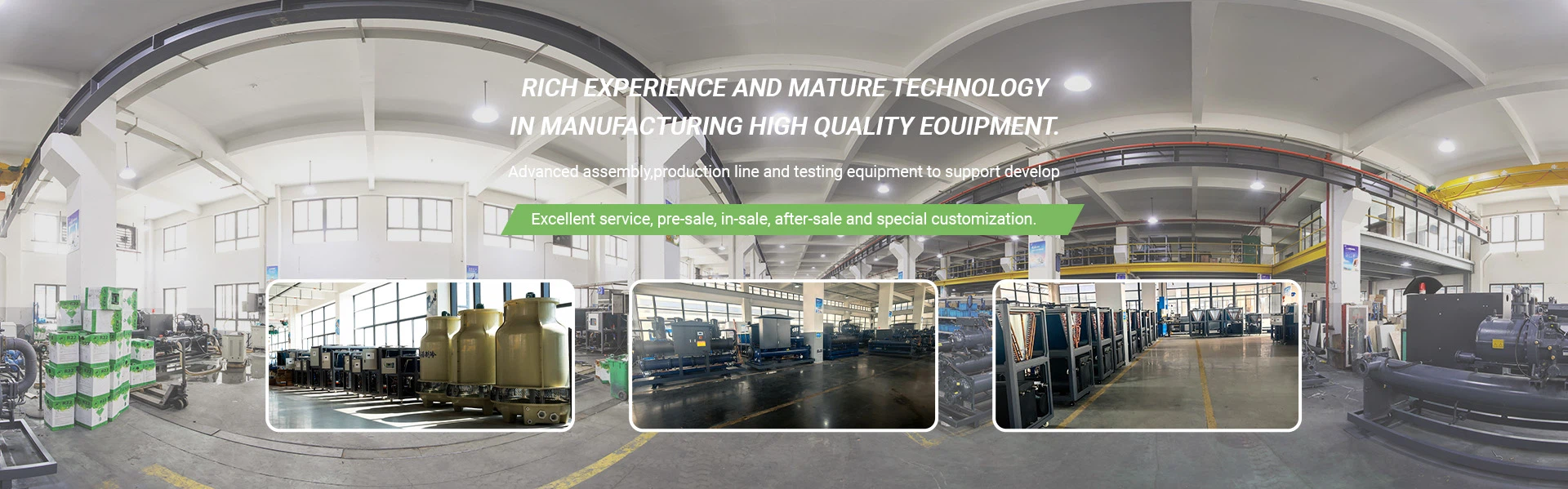
WENZHOU DMG MACHINERY Co., Ltd manily manufacture and export refrigeration equipment and air compressor with good reputation, Our customers are located all over the world including China, Southeast Asia, Middle East, USA, Europe as well as Africa and South America.

Ultimate FAQ Guide to Chiller
We're known as one of the most professional chiller manufacturers and suppliers in China. Please be free to buy customized chiller at competitive price from our factory. Contact us for more details.
refrigeration equipment, hermetic chiller, modular chiller