

Screw Air Compressor
Why Choose Us?
Rich Experience
One of more than 10 years profession supplier of refrigeration equipment and air compressor, Our products are widely used in different industries,perfect performance especially for plestic PET bottles.
Reliable Product Quality
We have advanced management experience,design,raw materials purchase, production flow and quality control to provide customers with guaranteed high-quality products.
Excellent Customer Service
Pre-sale service for free, product consulting, designing scheme. On-purcahse service Patiently, update production scheule, pacakge, shipping etc. After sales service timely, feedback within 24hours, provide solution ASAP.
Wide Range of Applications
Our chillers and air compressor are widely used in field of plastic, electroplating, leather, medicine, chemical, shoes, printing, fungus mushroom production environment project, agricultural cultivation, etc.
What is Screw Air Compressor?
A rotary screw compressor is a type of air compressor that uses two rotating screws (also known as rotors) to produce compressed air. Rotary screw air compressors are clean, quiet and more efficient than other compressor types. They are also supremely reliable, even when used continuously. This makes screw compressors the preferred solution for professional and industrial applications across the globe.


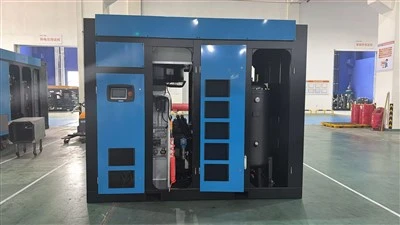
VSD screw air compressor
Advantages of Screw Air Compressor
Functions under extreme conditions
Whether you work indoors or out, rotary screw compressors provide the functions you need. They work in high and low temperatures, pressurizing air regardless of many extreme environmental conditions.
Has high efficiency
Rotary screw air compressors are more efficient than other systems. They conserve more energy by producing less heat and having an efficient design. Rotary screw compressors also use less oil than other compressors. You then save money on power and oil costs with this machinery.
Provides more power
A rotary screw air compressor is efficient, but it also puts out more power for your operations. High airflow rates allow this machinery to run equipment and tools with high horsepower.
Provides a safe power option
Some industries and work environments have strict requirements for powering equipment. Whether temperature or safety is a concern, rotary screw air compressors can operate under those requirements.
Comes in various options
As you'll see, there are many types of rotary screw compressors. That makes this machinery useful for countless industries and facilities, large or small. It'll be easy to find the specs you need for your particular operations.
Is simple to maintain
Rotary screw air compressors can have up to 70% fewer parts. You'll keep your maintenance costs low because there won't be excessive small parts to maintain or replace.
Types of Screw Air Compressor
Oil-free compressor
Modern, high-speed, oil-free screw compressors have asymmetric screw profiles. This arrangement results in significantly improved energy efficiency from reduced internal leakage. External gears are most often used to synchronize the position of the counter-rotating rotors. As the rotors don't come into contact with each other, nor with the compressor housing, no lubrication is required inside the compression chamber. Consequently, the compressed air is completely oil-free.
Oil-lubricated compressor
One variant is known as an oil-flooded compressor or an oil-injected compressor. The technical name, however, is oil-lubricated. Oil-lubricated rotary screw compressors inject oil into the compression chamber. This oil cools and lubricates the compressor element, helping remove heat while minimizing leakage in the compression chamber.
Fixed speed compressors
Fixed speed compressors are very efficient when continuously operating at 100% capacity, but most facilities don't require that amount of productivity. Before the motor comes to a complete stop, it will continue to run while no air is being produced, consequently wasting energy and money.
Variable speed drive compressors (VSD)
VSD compressors increase the speed of the motor as the need for air increases, thus supplying more flow/CFM. If the demand decreases, the motor will automatically slow down and only use the required energy to provide appropriate flow.
Application of Screw Air Compressor in Coal Mine Production
Applications in economic energy conservation
Compared with the screw air compressor, the traditional piston air compressor has more advantages in cost, and it has been used for a long time in the field of coal mine, so everyone is more familiar with its operation. Screw air compressor in coal mine production is more expensive, and has certain requirements on operation technology, need to train people who can operate it skillfully.
Applications in improving efficiency
Comprehensive protection ability is the more outstanding advantage of screw air compressor. Timely face unloading delay and stop, as well as the main motor overload shutdown and other issues, will not have a greater impact on the screw air compressor, it is difficult to occur a large failure, will not produce too much maintenance costs. At the same time, the chiller because of the thermostatic valve automatic control unit, set the fan cooling function in the cold air unit, can greatly reduce the possibility of failure.
Stronger environmental design capabilities
Screw air compressor mainly adopts soundproof box design and contains compact and complete unit, which has the advantages of smaller volume, lighter deadweight and small footprint, and does not need special foundation design to achieve convenient installation and construction. The screw air compressor can be completely balanced in its work, which not only promotes the normal operation of the system, but also provides a balanced and stable running condition for the machine.
Components of Screw Air Compressor
Airend
This part is the heart of the air compressor and the site of compression. This component has an inlet valve to combine air with oil throughout the compression process.
Air filter
It is essential to filter the air before it reaches the inlet valve. Air compressors must mount to the compressor or connect with a hose. Look for the area with the cleanest, coolest air and place the filter there for the best results.
Primary separation tank
Compressed air mixes with compressor oil as it travels from the airend. The primary separation tank allows the first round of filtration to occur. Mechanical separation and centrifugal force work to form oil droplets, which then fall to the bottom, allowing the tank to become an oil reservoir.
Secondary separation filter
Compressed air needs additional filtration to become completely clean. The remaining oil and air mixtures go through the secondary separation filter. Here, filters catch the oil and direct it back to the central oil system. Air leaving this filter will be free of oil.
Oil filter
This component's job is to gather loose particles from the oil collection. You can place an oil filter at one of the various intervals on the compressor loop.
Oil cooler
The air compression process produces a significant amount of heat, which can cause oil to get very hot. The fluid must go through a cooler to shed some of that heat before cycling into the compressor again. Some rotary compressors use an air-to-liquid cooler, while others use a liquid-to-liquid cooler.
Hoses
Hoses must meet the chemical, heat and pressure specifications of the oil you use to avoid causing excess wear and tear or hose failure. These failures can be incredibly dangerous and could result in repairing or replacing the unit.
Airend
Airend damage can occur due to air contamination or excessive heat and lubricants. Pay close attention to any unusual sounds or vibrations to catch damage early. Manufacturers often suggest rebuilding airends around the 50,000- or 60,000-hour mark of run time to prevent sudden breakdowns.
Motor bearings
Proper lubrication will allow the motor bearing to provide a long, efficient service life. Still, you must replace the bearings more often than other components to ensure longevity. Ensure the motor doesn't experience overloading by checking the amperage draw regularly.
Drive train systems
Misalignment can cause unnecessary damage to your unit, which is a significant concern in drive train systems. Therefore, you must inspect V-belts and potentially adjust them after roughly 500 hours. You must also replace any belt that shows signs of wear, including fraying.
Lubricants
Lubricants provide the cooling, sealing and protectant your compressor needs. Follow the manufacturer's instructions for specific lubrication applications and when to change the oil. Only use specified lubricants for your model, and always drain old fluid from the system before refilling the unit.
Filters
Implementing adequate filtration is much more cost-effective than paying for repairs when equipment suffers damage due to contaminated air. Inspect the inlet filters often and replace them when needed, generally around every 2,000 hours.
Applications
Rotary vane compressors are ideal when a smaller, quieter unit is preferred, while rotary screw compressors are better suited for larger horsepower applications with higher pressure requirements.
Leakage & lubrication
While the rate of leakage in rotary screw compressors tends to increase over time, a rotary vane compressor’s design allows for reduced leakage with increasing use.
Speed control
The energy efficiency of a rotary vane compressor is significantly reduced when operating speeds exceed or fall below their functional range. In contrast, rotary screw compressors can quickly adapt to variations in air demand with minor losses in efficiency.
Bearings
Compared with the simple bearings used in rotary vane compressors, the complex ball bearings of rotary screw compressors typically require more frequent inspection and replacement.
Repair & maintenance costs
In general, rotary screw compressors are more complex in design and require more maintenance and repair than their rotary vane counterparts.
Working Principle of Screw Air Compressor
Intake
Air enters the compressor through an inlet filter, removing dust and debris to prevent internal component damage.
Compression
The heart of the compressor lies in the intermeshing male and female rotors. As these rotors rotate, air gets trapped between their lobes and gradually compressed as the volume between them decreases.
Injection (Oil-injected compressors only)
In oil-injected screw compressors, oil is injected during this stage for cooling, lubrication, and sealing the clearances between the rotors and the housing.
Separation (Oil-injected compressors only)
After compression, the air-oil mixture passes through an oil separator where the oil is separated from the compressed air.
Aftercooler
The compressed air then flows through an aftercooler which removes moisture condensation through heat exchange, preventing corrosion and ensuring clean, dry air output.
Discharge
Finally, the compressed air is delivered to the application through a discharge line and receiver tank (for storage).
Screw Air Compressor Working Fault Principle Analysis
High-temperature shutdowns
The main influencing factors of high temperature shutdown are: insufficiency of cooling oil, high overall temperature of the surrounding environment, poor electrical connectors, and the working effect of the cooling system cannot meet the requirements. In the face of this problem, it is recommended that the staff combined with the surrounding operating environment to establish an accurate assessment of the equipment, improve the current ventilation conditions, check the cooling system, sampling of cooling oil, and professional testing, to ensure that the parameters are qualified, there are no impurities, to avoid problems with the equipment, and the air compressor between the connecting lines are fully inspected to ensure that the contact is in a good condition.
Automatic shutdowns
The main reasons for automatic shutdown can be divided into two kinds, one is the shutdown caused by high pressure, and the other is the automatic shutdown caused by motor overload. Motor overload caused by automatic shutdown, the main reason is that the current is too large, which leads to overheating of the power line, triggering the protection mechanism of the motor equipment, thus triggering a trip shutdown. Combined with the actual situation, the specific solution strategy, the need for timely detection of the power supply voltage value, and ensure that the value is within the normal range.
Low pressure value
The main reason for the low pressure value is that the air volume is too low, which triggers the malfunction due to the low jump design pressure value. The solution is to check the workshop to ensure that there are no leaks in the operating system and to set the jump pressure value in time.
Abnormal power indicator light
In the case of unreasonable voltage control, there will be power indicator abnormalities, maintenance personnel must focus on the inspection of power controllers, during the inspection should uphold a meticulous and comprehensive attitude, and repeatedly observe the secondary control group, check whether there is a fused wire problem.
Air compressor not loading
If the air inlet valve is not opened successfully, it will lead to the unloading phenomenon of the air compressor. To solve this problem, the first task is to cut off the power system of the air compressor, followed by troubleshooting the air inlet valve in the air compressor system, and then troubleshooting whether the internal stand-alone machine produces a fault.
Reasons for the High Temperature of the Screw Air Compressor

01.The temperature sensor is out of order
02. The temperature control valve is faulty
03. The oil filter is clogged
04. The cooler is blocked
05. The controller of the screw air compressor is faulty
06. Lack of lubricating oil
Problems That Will Occur if the Screw Air Compressor Is Not Overhauled
Increased wear and tear.
Under normal circumstances, the operation of the air compressor will inevitably bring about wear and tear. Under normal circumstances, due to the lubrication of lubricating fluid, the wear and tear will be greatly reduced, but the long-term high-speed operation of the air compressor will increase the degree of wear and tear, and cause the wear and tear of other major components.
Parts are deformed.
The air end is the core compression component of the compressor. The internal parts of the compressor host have been in a high temperature and high pressure environment for a long time, coupled with high-speed operation, it will inevitably cause deformation over time. At the same time, dust and impurities gradually accumulate in the machine. Long-term operation may cause the rotor to deform and increase the gap. In severe cases, the host may be stuck.
The parts are damaged.
The vulnerable parts of the main engine part of the compressor mainly include: various gaskets, sealing rings, shaft oil seals, etc. Among them, the shaft oil seal is in the environment of high temperature, high pressure and high-speed operation for a long time, which greatly shortens its service life. Once damaged, the compressor will be damaged. Oil leakage, if not found in time, is very likely to cause the rotor and bearing to burn due to lack of lubrication.
Cost increases.
If the air compressor is not overhauled for a long time, a large amount of impurities generated by wear and tear will remain inside the equipment, resulting in:
a. Shorten the service life of lubricating fluid;
b. Shorten the service life of oil filter and air filter;
c. Increase friction, reduce compression efficiency, and increase power cost.
Our Factory
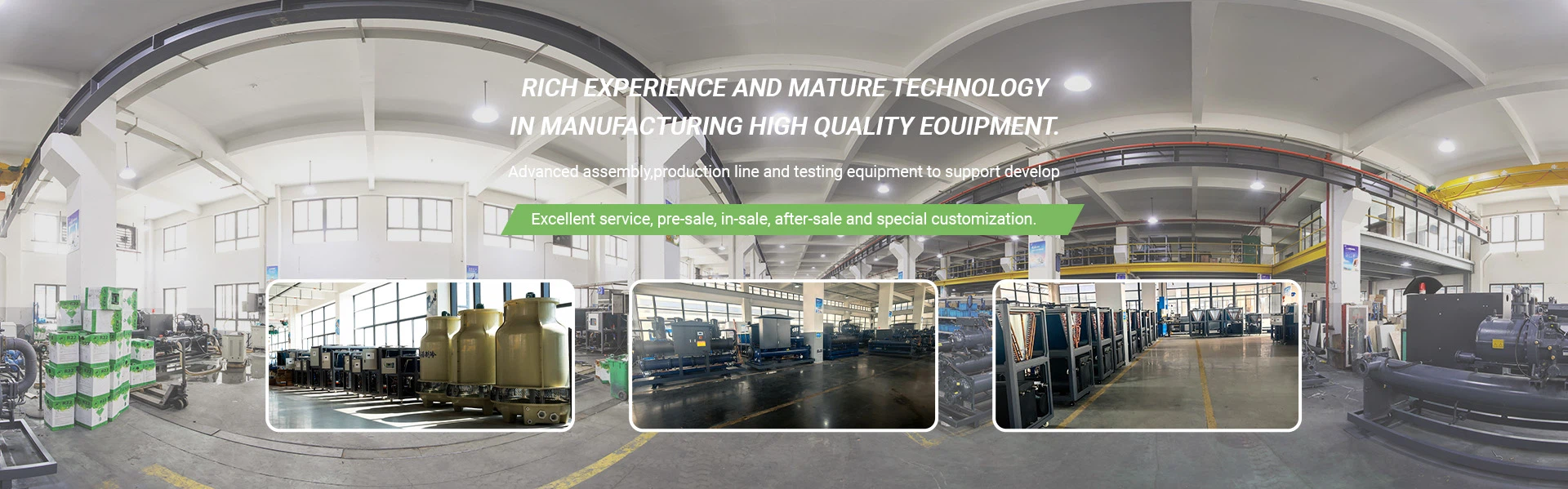
WENZHOU DMG MACHINERY Co., Ltd manily manufacture and export refrigeration equipment and air compressor with good reputation, Our customers are located all over the world including China, Southeast Asia, Middle East, USA, Europe as well as Africa and South America.

Ultimate FAQ Guide to Screw Air Compressor
We're known as one of the most professional screw air compressor manufacturers and suppliers in China. Please be free to buy customized screw air compressor at competitive price from our factory. Contact us for more details.