

Air Cooled Chiller
Why Choose Us?
Rich Experience
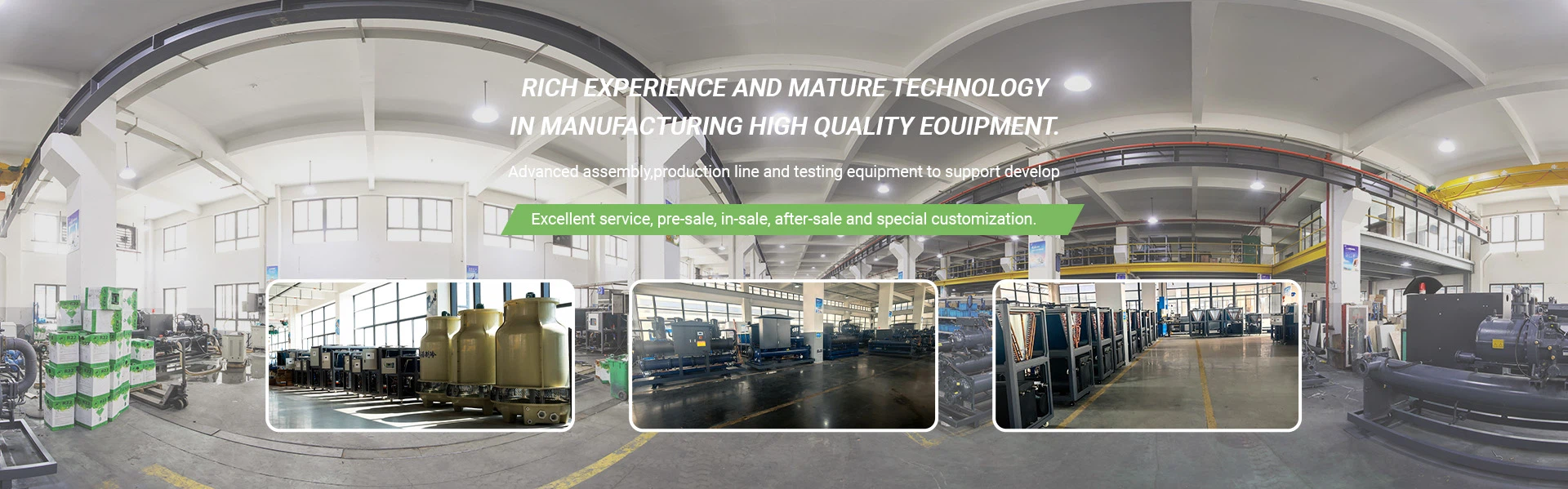
One of more than 10 years profession supplier of refrigeration equipment and air compressor, Our products are widely used in different industries,perfect performance especially for plestic PET bottles.
Reliable Product Quality
We have advanced management experience,design,raw materials purchase, production flow and quality control to provide customers with guaranteed high-quality products.
Excellent Customer Service
Pre-sale service for free, product consulting, designing scheme. On-purcahse service Patiently, update production scheule, pacakge, shipping etc. After sales service timely, feedback within 24hours, provide solution ASAP.
Wide Range of Applications
Our chillers and air compressor are widely used in field of plastic, electroplating, leather, medicine, chemical, shoes, printing, fungus mushroom production environment project, agricultural cultivation, etc.
What is Air Cooled Chiller?
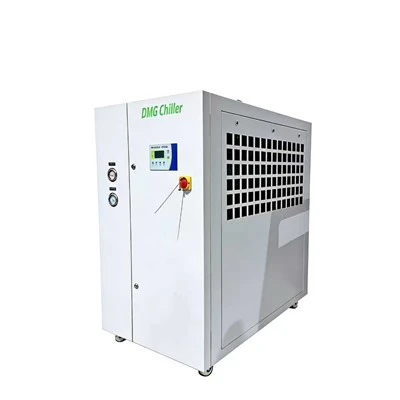
Air cooled chillers are refrigeration systems that cool fluids and work in tandem with the air handler system of a facility. Air cooled industrial chillers are types of industrial chillers that rely on the use of fans to reject heat outside the building rather than relying on cooling towers. The system uses air to cool water and fluids that are circulated through the system to absorb and remove heat to lower the temperature of equipment, processes, and areas.


Advantages of Air Cooled Chiller
Less Upfront Costs
Installation costs are much higher for water-cooled chillers than for air-cooled ones. When you install air-cooled chillers, all you have to care for is to have a hauling company deliver the equipment to your factory’s doorstep, in addition to average set-up costs. For water-cooled chillers, installment costs are more extensive. When you install a water-cooled device, you must bring in the equipment, but you also need a cooling tower. Cooling towers take up a lot of space and are incredibly heavy. This means that they are not possible to mount on rooftops, unless structural remodels take place to have them withstand all the additional weight.
Saved Space
All the extra space that your average water-cooled chiller requires can rather be utilized for more profitable purposes, such as storing products or prime materials to create goods. You know that warehouse costs are on the rise, as space is a commodity that not many industries can afford. If you are in the need to squeeze as much storage space as possible, air cooled chillers are for you. With air cooled chillers, you can forget about cooling towers, condenser water pumps, and all the other components that come with water chillers.
Lower Maintenance Costs
You know how reducing overheads can sometimes make the difference between being prosperous and having to declare bankruptcy. The more that maintenance and upgrade costs can be alleviated, the better. In fact, low-cost industries demand the absolute reduction of overheads for profit margin maintenance. When you use water-cooled chillers, the maintenance costs can be significantly elevated than those you would expect from any air-cooled chiller. Extra auxiliary parts, cooling towers, and water pumps are all elements that must be maintained on the regular to avoid chiller malfunctions.
Environmentally Friendly
Air-cooled chillers do not employ superfluous water resources, whereas water-cooled chillers do. Nowadays, companies do not only have to worry about maximizing profits and providing employees with competitive salaries. Also, they have to carry out responsible corporate practices that elevate corporate social responsibility to higher degrees. An excellent form of doing so is by adopting environment-friendly practices such as water consumption reduction. Air cooled chillers enable you to save up a lot of water since they do not employ extra water for cooling purposes.
Application of Air Cooled Chiller
Commercial buildings
Air cooled chillers are often used in large commercial buildings, such as office towers, hotels, and shopping centers, to provide cooling for the building’s air conditioning system. They are preferred over water cooled chillers because they require less space and are easier to install and maintain.
Data centers
Data centers generate a lot of heat from their computer servers, which can cause system failure and data loss. Air cooled chillers are used to remove the heat generated by the servers, ensuring optimal performance and preventing damage to the equipment.
Manufacturing
Air cooled chillers are commonly used in manufacturing processes that require cooling, such as in the plastics, food, and beverage industries. They can help maintain consistent temperatures in the manufacturing process, ensuring product quality and safety.
Medical facilities
Medical facilities, such as hospitals and clinics, require precise temperature control for equipment and sensitive materials. Air cooled chillers can be used for medical imaging equipment, laboratory testing, and other critical applications.
Agriculture
Air cooled chillers are used in agriculture to provide cooling for livestock housing and storage facilities for crops and produce. They can help maintain optimal temperatures and humidity levels to ensure animal and crop health.
Events
Air cooled chillers can also be used for outdoor events, such as concerts and festivals, to provide cooling for large tents and other temporary structures. They are easy to transport and install, making them a popular choice for event organizers.
Components of Air Cooled Chiller
Compressor
The compressor provides the driving force for moving the refrigerant around the system. There are four main types of compressors. Three of them (screw, scroll, and reciprocating) use positive displacement to create pressure, and the fourth (centrifugal) creates pressure with centrifugal force.
Condenser
The condenser is a configuration of horizontal pipes through which hot refrigerant runs. Air is moved across the condenser to dissipate unwanted heat.
Condenser Fans
These fans represent the main difference between air cooled and water cooled chillers. As they move air across the condenser, unwanted heat is removed from the system so the cycle can start all over again.
Expansion Valve
The expansion valve expands the refrigerant from liquid form to gaseous form before it enters the evaporator.
Evaporator/Heat Exchanger
In the evaporator, chilled water is created when unwanted heat is drawn into the refrigerant before it is fed into the condenser.
Filter Drier
The filter drier protects your chiller by removing unwanted contaminants and moisture from the system. They do get clogged with repeated use and need to be replaced regularly.

The working principle of air cooled chillers is based on the absorption of heat from processed water. Once the air handler system uses up the water, it becomes warm and is returned to the chiller. The chiller’s evaporator is utilized to transfer heat away from the water. A low-pressure gas is created by the evaporation of liquid refrigerant over the evaporator tube. Next, the refrigerant that has been evaporated travels to the compressor. At the compressor, low-pressure gas is compressed into high-pressure gas.
The gas will then leave and travel to the air cooled condensers. While inside the condenser, heat is removed from the chiller by blowing out the heat to the outside through the fans located on the side of the condenser. It is ideal if the chiller is placed outdoors or in a large indoor location. This is so because the heat is blown outside the chiller, and the excess heat effect is reduced.
The refrigerant turns into a high-pressure liquid soon after the gas leaves the condenser. The high-pressure liquid then flows to the evaporator via the expansion valve. As this process takes place, the refrigerant changes from a high-pressure liquid to a low-pressure liquid. Since an industrial air cooled chiller’s working principle is also based on a continuous cycle, this low-pressure liquid will then be transferred back to the evaporator. At the evaporator, the whole cycle repeats itself.
Factors to Consider When Choosing an Air Cooled Chiller
Some considerations when choosing an air cooled chiller include:
Minimum Industrial Chiller Capacity
When opting for an air cooled industrial chiller, the environmental characteristics and the device's capacity must be considered. When there is a cold environment and a large temperature difference between day and night, air cooled chillers are preferred. However, in those cases, the capacity of the device, whether minimum or not, must be considered. When the appliances are of low capacity, it is ideal to use air cooled industrial chillers.
Effect of Industrial Chiller Height
The height of the surroundings is an important factor that must also be considered. Always pay attention to the height factor when purchasing an air-cooled chiller because the air cooled chiller capacity decreases as the altitude increases.
Industrial Chiller Control Type
When choosing an air cooled chiller, operators must consider how the chiller will be controlled. This is so because devices that can be easily controlled are more likely to promise more efficient work as well as performance.
Industrial Chiller and Refrigerant Pressure
Any type of industrial chiller must be protected against high pressure as much as possible, whether the water is cold or the air is cool. For this purpose, the quantity of air that flows in the condenser must be high. At the same time, medium and low-pressure refrigerants should be preferred.
Resistance to Air Temperature
In air cooled devices, the device’s remaining capacity is reduced by 1% for every 1°C. This is an important factor that will largely affect the choice when opting for an air cooled industrial chiller. This change also greatly affects the compressor and increases the amount of power that is used by the compressor by 1%.
Evaporator Pressure Drop Value
In air cooled industrial chillers, the pressure drop value of the evaporator must not exceed 60 kPa by a large amount. This must not occur in the air cooled industrial chillers that prefer the lowest pressure drop.
Physical Size of an Industrial Chiller
The size of the chiller is an important factor to consider. In the space of the building in which the chiller is going to be used, a small chiller must be chosen according to the available space. Usually, most air cooled chillers use little space.
The Amount of Noise Produced by the Device
The issue of the noise produced by the device during operation must also be considered. In places where noise is an important factor, categories of air cooled chillers with sound pressure less than 75dBA at a distance of 16.4ft (5 m) in an open space must be selected. There should be a preference for categories with low noise levels.
Number of Compressors
The number of compressors that an air cooled chiller contains is important. These are written in the specifications of the device.
Difference between Air Cooled Chillers and Rooftop Units
Location of placement of the chiller
You can install air-cooled chiller systems at multiple locations in the building, including the basement or the various floor levels. However, rooftop chiller units are only suitable for installation on the roof of the building.
The difference in size between the two
The air-cooled chiller cooling system has a bulkier design because of the multiple attachments such as chillers and boilers. Rooftop chilling units have a simplified layout that gives them a compact configuration.
Attachments and internal connections
As mentioned above, air-cooled chillers have various additions installed throughout the system. A rooftop chiller has a comprehensive design that includes all the required attachments in the body, reducing external accessories.
The design of this model of chiller makes it extremely easy to use in facilities. Cold Shot Chillers give a very basic explanation of the design.
Air cooled chillers are equipped with condensers that utilize ambient air to reduce refrigerant temperatures.
Two chillers sit on the roof of the building, attached to the chiller pumps and the main pump. It is possible for the chiller system to be located in the basement, but every situation is different.
New Carrier air cooled chiller delivered to our Sturgis office.
Covering the top of the unit are two condenser cooling fans. This is where the air cooled chiller gets its name. Air circulation created by the fans cools off the hot condenser. The compressor sits at the bottom of the unit and moves the high-pressure refrigerant up to the cooling fans and the condenser. Both the filter drier and the expansion valve sit on the bottom of the unit connected to the evaporator. The evaporator is extremely important in this process. It houses the return water pipes as well as the supply water pipes.

Installation cost
Air cooled chillers are generally installed at a lower cost than water cooled chillers, mainly because there is no requirement for a cooling tower or the condenser water pumps that keep the system circulating.
Life cycle cost
While air cooled chillers have a lower upfront cost, water cooled chillers tend to operate at a lower cost over the long term. This is because air movement via fans requires more energy.
Maintenance costs
Water cooled chillers require more frequent maintenance due to the continuous flow of water causing scale, mineral deposits and corrosion, especially on the cooling tower. In contrast, air cooled chillers require less maintenance but have a shorter lifespan and may require replacement sooner.
Installation size
Smaller chiller systems are typically air cooled for cost reasons, while larger installations are mostly water cooled due to the lower long term operating costs and superior heat transfer properties.
Overall performance
Water cooled chillers provide superior cooling on a square foot basis due to the heat transfer qualities of water compared to air.
Water availability
One important factor to take into account is the availability and cost of water in the local area. If water is scarce or expensive, it may not be practical or economically feasible to use a water cooled chiller, making an air cooled chiller the better option. Whilst this is not typically an issue in the UK, it still needs addressing in the evaluation stage.
Night time ambient temperature
An air cooled chiller may also be a better option in areas where the night time temperatures drop significantly lower than daytime temperatures. This is because an air cooled chiller can take advantage of the cooler conditions to reduce energy consumption and operating costs, and is particularly relevant for applications that require 24 hour operation.
Available space
Air cooled chillers also have an advantage when space is limited or at a premium, since there is no requirement for a water cooling tower or mechanical room. However, they require significantly more space than water cooled chillers to achieve the same capacity, and there are portable water cooled chiller systems available for facilities with space constraints.
Airflow obstruction
Obstruction to continuous airflow will have a severely negative impact on the performance of air cooled chiller units - high walls and other buildings or structures close by could all be an impediment to the airflow required for an air cooled chiller to work properly.
Noise of operation
Due to the frequently running motors and fans, air cooled chiller systems are noisier in operation than water chiller units. This can cause issues, especially in densely populated residential areas.
How to Properly Maintain an Air Cooled Chiller to Ensure Maximum Efficiency
Revise Water Inlets and Outlets
Inlets and outlets are particularly susceptible to leaks. Always make sure that you are inspecting them periodically. This will prevent water leaks from happening, or at the very least, reduce them.
Keep an Eye on Coils
Coils tend to have problems sporadically. The fins can get bent, and the coils themselves can suffer corrosion or leaks. Make sure that you revise them so as to prevent issues with coils.
Analyze Actuators
Zone control actuators can sometimes require adjustments, clean-ups, or just plain revision. When actuators work right, the amount of water let into the evaporator coil is just right.
Closely Inspect Your Compressor
The compressor is one of the most important parts of the chiller. It is the one in charge of moving the liquid to the condenser. Due to its importance, it should be revised accordingly. Always ensure to check the refrigerant charge, the amount of vibration—or lack thereof in the best of cases—crankcase heater, oil and/or refrigerant leaks, and operational temperatures. And most importantly, look for oil level changes.
Keep Condenser Fans Clean
Condenser fans are usually subdued to more wear and tear than other components. Keep them clean, inspect bearings frequently—especially when they are lubricated, and supervise the tightness of couplings and belts. Adjust when necessary.
Beware of the Condenser Coil
Condensers also have coils that could be harmed by dust, corrosion and leaks. If there are any bends on the combs, consider changing the condenser coils.
Examine Electrical Disconnects
Contacts can sometimes be dirty or go unsupervised. This part might go overlooked, but it can certainly cause electrical failures in your system. Try to examine electrical disconnects for better operation.
Evaluate the Exhaust Air Daamper
Are bearings lubricated? Are they also properly calibrated? Have you checked if they are in need of a quick adjustment? Check exhaust air dampers!
Revise Return Air Dampers As Well!
These dampers demand care too! Make sure to keep bearings lubricated and calibrated.
Find for Anomalies in the Fresh Air Damper
Once again, ensure that bearings are properly lubricated and calibrated for optimal functioning.
Examine the Filter Dryer
Given that they are exposed to liquids, you must check that they are not either old, damaged, dirty, or broken. When you are under the suspicion that the filter needs a change, do it. It is better to be safe than sorry.
Latest Innovations in Air Cooled Chillers
Innovations in Compressors
Innovations in compressor technology have resulted in improved efficiency and reduced energy consumption. Some air-cooled chillers now use oil-free compressors, which eliminate the need for oil changes and reduce energy consumption ostensibly. Also, air-cooled chillers are now equipped with variable-speed compressors that can adjust their cooling output to match the building's actual cooling load.
Intelligent Controls
Any modern air-cooled chiller that is worth its salt features advanced control systems that use real-time data to optimize system performance. The main objective of technology implementation in this context is to reduce energy inputs and moderate cooling outputs respectively. In addition, they adjust the speed of the compressor or fans, improving overall usability.
Advancements in Heat Exchangers
Air-cooled chillers are dependent on their heat exchangers to transfer heat from the refrigerant to the outdoor air. Recent advancements in heat exchanger design have resulted in improved efficiency and reduced pressure drop, resulting in lower energy consumption and boosted performance.
Improvement of Condensers
Condensers are one of the most important parts of a chiller, as they are responsible for releasing the heat absorbed by the refrigerant during the cooling process. Improvements in condenser design have resulted in increased heat transfer efficiency, and reduced energy consumption as well.
Better Evaporators
Evaporator design has always been a constant in the engineering department that more often than not, has left their integrants scratching their heads. Evaporators have come quite a ways, since they have resulted in game-changing agents in terms of heat transfer efficiency. As a consequence, energy outputs are diminished by the same token.
Enhanced Fans
The use of variable-speed fans allows air-cooled chillers to adjust their cooling capacity to match the building's cooling load. This technology reduces energy consumption by adjusting the fan speed to meet the building's needs, resulting in greater efficiency and much less wear and tear in adjacent components.
Our Factory
WENZHOU DMG MACHINERY Co., Ltd manily manufacture and export refrigeration equipment and air compressor with good reputation, Our customers are located all over the world including China, Southeast Asia, Middle East, USA, Europe as well as Africa and South America.

Ultimate FAQ Guide to Air Cooled Chiller
We're known as one of the most professional air cooled chiller manufacturers and suppliers in China. Please be free to buy customized air cooled chiller at competitive price from our factory. Contact us for more details.
air cooled chiller for dry environments, air cooled chiller for intermittent cooling, air cooled chiller with wireless connectivity