


Screw Chiller
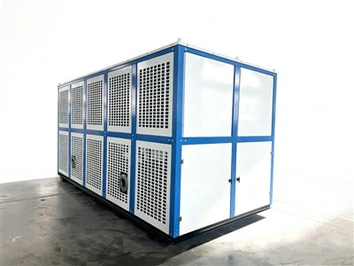
What is Screw Chiller
Metric Roller Chain Sprocket can be used in almost every type of system. Used in conveyor systems such as conveyors, it can transport food, beverages, grain, and other materials from one place to another. Used in the transmission system, it transfers power from a source such as the engine to various components such as the wheels. Therefore, the product is also widely used in fields such as machine manufacturing,agricultural equipment, automobiles, and military equipment.
Benefits of Screw Chiller
Efficiency
Screw chillers are renowned for their high energy efficiency. The continuous compression process they employ results in smoother operation and reduced energy consumption compared to traditional reciprocating compressors.
Reliability
The design of screw chillers minimizes the number of moving parts, leading to improved reliability and lower maintenance requirements. This makes them ideal for industries that demand uninterrupted cooling.
Capacity Control
Screw chillers excel in part-load efficiency due to their capacity modulation capabilities. They can adjust their cooling output according to the actual cooling demand, optimizing energy usage.
Quiet Operation
The screw compressor design generates less noise and vibration, creating a quieter working environment in industrial settings.
Compact Design
Screw chillers are known for their compact size relative to their cooling capacity, making them a space-saving option for facilities with limited room.


Why Choose Us
Competitive prices
We offer our products at competitive prices, making them affordable for our customers. We believe that high-quality products should not come at a premium, and we strive to make our products accessible to all.
Efficient and convenient
The company has established marketing networks around the world to provide high-quality services to customers in an efficient and convenient manner.
High quality products
We always put customer needs and expectations in the first place, refine on, continuous improvement, to seek every opportunity to do better, to provide customers with their expectations of quality products, to provide customers with the most satisfactory service at anytime.
Quality control
All goods will undergo strict quality inspection before shipment. MCC always insists on providing high-quality products. We firmly believe that quality is the basis of everything.
State-of-the-art technology
We use the latest technology and tools to deliver high quality services. Our team is well-versed in the and advancements in technology and uses them to provide the best results.
Customer satisfaction
Providing after-sales services can enhance customer satisfaction by ensuring that customers' needs are met even after the purchase. This can lead to increased customer loyalty and positive word-of-mouth referrals.
Comparison Between Screw Chillers and Centrifugal Chillers


Structure
Screw Chillers: In a screw compressor, the meshing of two female and male rotors completes the suction, compression, and exhaust processes by rotating inside the casing. Its main components include screw compressors, condensers, evaporators, thermal expansion valves, and other control components, which are fewer than centrifugal machines. It has the characteristics of compact structure, balanced and reliable operation, few vulnerable parts, high partial load efficiency, and long service life.
Centrifuge Chillers: It relies on the centrifugal force generated by the high-speed rotating impeller in a centrifugal compressor to generate power for refrigeration. Its main components include a centrifugal compressor, evaporator, condenser, throttling mechanism, extraction and recovery device, lubrication system, and electrical control cabinet. It has the characteristic of large refrigeration capacity per unit, but there are drawbacks such as surge.
Capacity
Screw Chillers: The refrigeration capacity of a screw compressor is smaller than that of a centrifuge compressor, usually ranging from 30RT to 500RT. Therefore, nowadays, screw chiller with large refrigeration capacity adopt a multi head method, controlled and regulated by a microcomputer, and each compressor has a separate refrigeration system.
Centrifuge Chillers: The refrigeration capacity of a centrifugal compressor is relatively large, ranging from 150-3000RT, so generally, centrifugal chillers are designed with only one centrifugal compressor to meet the cooling needs.
Working
Screw Chillers: The electric motor directly meshes with the main rotor and auxiliary rotor to rotate at low speed.
Centrifuge Chillers: The electric motor drives the impeller to rotate at high speed through a pair of speed increasing gears.
Efficiency
Screw Chillers: The screw machine uses oil pressure to push the slide valve switch to control the capacity, and there is no unbalanced impact phenomenon when under partial load. For multi head screw units, the energy regulation range is generally between 10% and 100%, and continuous energy regulation is possible. Especially in civil and commercial places, such as hotels, shopping malls, conference centers, etc., the air conditioning load varies greatly with seasonal and human flow changes, requiring refrigeration units to have a wide range of energy regulation.
Centrifuge Chillers: Generally speaking, the energy regulation range of a centrifugal unit is 40-100%. When operating at a load below 40%, the centrifugal unit is more prone to "surge". When the "surge" is severe, it can damage the entire core component of the unit - the impeller. At present, many centrifugal unit manufacturers use "air replenishment" methods to achieve a critical point of "20%" or "10%" for the unit's "surge", which requires a large amount of energy consumption, resulting in relatively low efficiency of the unit below 50%.
Maintenance
Screw Chillers: The screw machine is in the form of multiple compressors and has an independent refrigeration system. In this way, during maintenance and repair, it is necessary to shut down a single damaged compressor while others continue to operate as usual.
Centrifuge Chillers: Generally speaking, centrifuges adopt the form of a single compressor. During maintenance and repair, the entire machine needs to be shut down and the refrigeration operation stopped. The structure is complex, with many vulnerable parts and high maintenance costs.
Noise
Screw Chillers: It relies on the meshing and rotation of the female and male rotors to complete suction and exhaust. Its speed is relatively low, usually 2950 revolutions per minute, and its noise value is generally around 75dB (A), while centrifugal units are generally above 80 dB (A).
Centrifuge Chillers: Generally 9000-40000 rpm, and uses blades, impellers for suction and exhaust, so its noise level is slightly higher than that of screw machines and sharper.
Consumption
Both centrifuges and screw chillers consume a large amount of electricity, but under the same refrigeration capacity, the energy efficiency of screw chillers under partial load is higher than that of centrifugal units under partial load.
With a total cooling capacity of 5632Kw (1600 cold tons), if three units are used, each unit has a cooling capacity of approximately 650 cold tons. Taking the 650 ton chiller unit as an example, the power consumption of two types of units will be compared and analyzed. According to statistics, the full load or 100% operating time of the chiller unit accounts for 2.3%, 75%, 50%, and 25% of the total operating time.
The running time accounts for 41.5%, 46.1%, and 10.1% of the total running time, respectively. This project is calculated based on an annual air conditioning time of 4 months: the overall operating time is 4 x 30 x 10=1200 hours. Then the unit is 100%, 75%, 50%, and 25%. The running time is 27.6 hours, 498 hours, 553 hours, and 121 hours respectively.
Applications of Screw Chillers
Screw chillers find applications in a wide range of industries due to their efficiency and versatility. Some common uses include:
HVAC Systems
Screw chillers are used for large-scale air conditioning systems in commercial buildings, malls, and industrial complexes.
01
Manufacturing
Industries like plastics, chemicals, and pharmaceuticals rely on screw chillers to cool machinery and products during production processes.
02
Data Centers
The cooling demands of data centers are met effectively by screw chillers, ensuring stable operating temperatures for servers and equipment.
03
Food and Beverage
Screw chillers are used to maintain precise cooling temperatures in food processing and beverage production, preserving product quality.
04
Hospitals
Medical facilities utilize screw chillers for critical areas such as operating rooms and laboratories, where temperature control is crucial.
05
We hope the checklists above help you navigate the key steps needed for your water cooled screw chiller maintenance. Some of our general maintenance tips for chiller maintenance include:
Tube Cleaning
Tubes are the primary path for heat transfer and can have a big impact on the performance.
Condenser Water Treatment
Untreated water results in higher condenser pressures and less heat transfers. It can also cause inconsistencies in water flow and temperature. Proper chemical treatments keeps the system working correctly.
Analyze and Change Compressor Oil
Analyzing oil ensures you are changing the oil frequently enough.
Purge Low Pressure Machines
This involves purging the system of non-condensable gases. This ensure air and moisture are low.
Analyzing Compressor Water Temp
When possible; increasing the temperature of water being supplied to the facility will improve efficiency.
Look at Flow Rates
Flow rates should be higher than 3 feet per second and less than 12 feet per second. To slow and you will have flow issues and two high and vibration and noise will create issues.
How Does a Water-Cooled Screw Chiller Works
Water-cooled screw chillers are complex machines that provide cooling by circulating a refrigerant through a closed-loop system. The primary components of a water-cooled screw chiller include compressors, condensers, evaporators, and a refrigerant circulation system. Let's break down the operation of a water-cooled screw chiller into several key steps:
Compression
The process begins with the compressor. Water-cooled screw chillers typically use twin screw compressors that are highly efficient and reliable. These compressors are designed to raise the pressure and temperature of the refrigerant vapor.
High-Pressure Gas
As the refrigerant is compressed, it becomes a high-pressure, high-temperature gas. This gas is then sent to the condenser unit.
Condensation
In the condenser, the hot, high-pressure refrigerant gas is cooled down and condensed into a high-pressure liquid. This is achieved by circulating cooling water or air over the condenser coils. Heat from the refrigerant is released into the surroundings as the gas changes phase from a vapor to a liquid.
Expansion Valve
The high-pressure liquid refrigerant then passes through an expansion valve. The expansion valve reduces the pressure and temperature of the refrigerant, turning it into a low-pressure, low-temperature liquid-vapor mixture. This sudden expansion causes the refrigerant to cool significantly.
Evaporation
The low-pressure refrigerant is now sent to the evaporator. In the evaporator, it absorbs heat from the water or air that needs to be cooled. As the refrigerant evaporates, it changes from a liquid to a vapor. This phase change is what removes heat from the environment, whether it's a building or an industrial process.
Vapor Return
The refrigerant, now in a vapor state, is returned to the compressor to begin the cycle again. This continuous circulation of the refrigerant allows the chiller to maintain the desired cooling effect.
The Refrigeration Cycle in a Screw Chiller
The refrigerant enters the screw compressor as a low-pressure gas, drawn from the evaporator where it has absorbed heat from the surrounding environment or process. This phase is crucial for preparing the refrigerant for the next steps in the cooling cycle.
During the compression phase, the screw compressor increases the pressure and temperature of the refrigerant gas as the two intermeshing rotors turn, compressing the gas significantly. This step is vital as it readies the refrigerant for heat release in the subsequent phase.
Next, in the condensation phase, the high-pressure, high-temperature refrigerant gas moves into the condenser, where it releases its absorbed heat to the surrounding environment, typically through water or air. As the refrigerant cools, it condenses into a liquid state, setting the stage for the next part of the cycle.
The liquid refrigerant passes through an expansion valve in the expansion phase, causing a rapid drop in pressure and temperature. This cooling prepares the refrigerant to absorb heat again in the evaporator, thus completing the refrigeration cycle and readying the system for another round of cooling.
Heat absorption occurs mainly in the evaporator, where the low-pressure liquid refrigerant takes in heat from the environment or process it is cooling. It evaporates as the refrigerant absorbs heat, transforming it back into a gas and becoming ready for the next cycle in the compressor.
What Are the Main Parts of Chiller
Chillers consist of four essential components; an evaporator, a compressor, a condenser, and an expansion unit. In addition, every chiller system contains a refrigerant.
A chiller is a vital component in air conditioning and industrial cooling systems, consisting of several key parts that work together to remove heat from a space or process. The main parts of a chiller include the compressor, evaporator, condenser, and expansion valve.
Compressor
This is the heart of the chiller, responsible for compressing the refrigerant gas. It raises the pressure and temperature of the refrigerant, preparing it for the cooling process.
Evaporator
The evaporator absorbs heat from the surrounding environment or a process fluid, causing the refrigerant to evaporate and turn into a low-pressure, low-temperature gas. This chilled gas is then sent to the compressor to restart the cycle.
Condenser
The condenser releases the heat absorbed by the refrigerant in the evaporator. It transforms the high-pressure, high-temperature gas into a high-pressure liquid by dissipating the heat into the air or another cooling medium.
Expansion Valve
This valve regulates the flow of the refrigerant, reducing its pressure and temperature before it enters the evaporator. This process allows the refrigerant to absorb heat efficiently in the evaporator.
How Do You Choose Cooling Tower For Water Cooled Screw Chiller
There are three important temperature levels you need to keep a close eye on when choosing a cooling tower: hot water temperature, cold water temperature, and wet bulb temperature. The hot water temperature is that which enters the tower. The cold water temperature is that which leaves the water while the wet bulb temperature refers to the prevailing temperature of the geographic region where the tower is located.
Approach is the term used to refer to the difference between the temperatures of the water source as it enters the tower versus the temperature of the water once it has left the tower. This is a crucial determiner of the effective of the heat exchange process.
To choose the right cooling tower, mechanical efficiency should be given priority. This refers to the amount of fan power needed to circulate ambient air within the cooling tower. The range – or the difference in temperature between hot and cold water – is also crucial as it will impact energy usage.
You must also choose a tower based on the size. To choose the right size of tower, you must take into account the heat load, range, approach, and the ambient temperature.
WENZHOU DMG MACHINERY Co., Ltd manily manufacture and export refrigeration equipment and air compressor with good reputation, Our customers are located all over the world including China, Southeast Asia, Middle East, USA, Europe as well as Africa and South America.


FAQ
We're known as one of the most professional screw chiller manufacturers and suppliers in China. Please be free to buy customized screw chiller at competitive price from our factory. Contact us for more details.
Screw Compressor Chiller, Types Of Chiller, Air Cooled Screw Chiller Liquid Chiller