

Hey there! As a supplier of high-pressure compressors, I often get asked about the differences between high-pressure compressors and low-pressure ones. So, I thought I'd write this blog to clear things up.
Let's start with the basics. Compressors are machines that increase the pressure of a gas by reducing its volume. They're used in all sorts of industries, from manufacturing to healthcare, and even in our everyday lives, like in our car tires. But the pressure levels they work at can vary widely, and that's where the difference between high-pressure and low-pressure compressors comes in.
Pressure Ratings
The most obvious difference between high-pressure and low-pressure compressors is their pressure ratings. Low-pressure compressors typically operate at pressures up to around 150 psi (pounds per square inch). These are commonly used in applications where you don't need a whole lot of pressure, like painting, inflating tires, or powering small pneumatic tools.
On the other hand, high-pressure compressors can go way beyond that. They can operate at pressures ranging from a few hundred psi up to several thousand psi. For example, some of our high-pressure compressors can reach pressures of 3000 psi or more. These are used in applications that require a lot of force, like deep-sea diving, natural gas processing, and high-pressure cleaning.
Design and Construction
Because of the high pressures they need to handle, high-pressure compressors are built differently from low-pressure ones. They have to be more robust and durable to withstand the stress of compressing gas to such high levels.
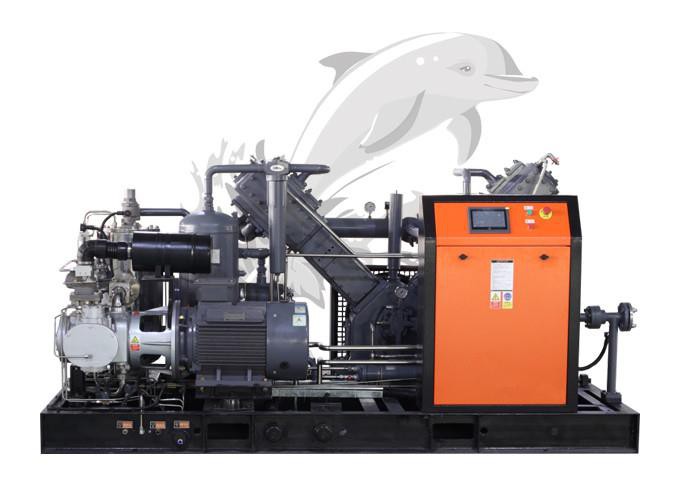

High-pressure compressors often have multiple stages of compression. Each stage increases the pressure a little bit more, and by the time the gas reaches the end of the compressor, it's at a very high pressure. This multi-stage design also helps to keep the temperature of the gas under control, which is important because when you compress a gas, it gets hot.
Low-pressure compressors, on the other hand, usually have a simpler design. They might have just one or two stages of compression, and they don't need to be as heavy-duty as high-pressure compressors. This makes them smaller, lighter, and less expensive.
Performance and Efficiency
When it comes to performance, high-pressure compressors are all about power. They can deliver a lot of pressure, which means they can do jobs that low-pressure compressors just can't handle. But this comes at a cost. High-pressure compressors use more energy to operate because they have to work harder to compress the gas to such high levels.
Low-pressure compressors, on the other hand, are more energy-efficient. They use less power to operate because they're not working as hard. This makes them a good choice for applications where you don't need a lot of pressure and where energy efficiency is important.
Applications
The different pressure ratings and performance characteristics of high-pressure and low-pressure compressors mean that they're used in different applications.
Low-pressure compressors are commonly used in:
- Home and DIY applications: Like inflating tires, powering airbrushes for painting, and operating small pneumatic tools like nail guns.
- Manufacturing: For tasks like blowing dust off parts, powering small assembly line tools, and operating conveyor belts.
- Automotive repair: For tasks like inflating tires and powering air ratchets and impact wrenches.
High-pressure compressors are used in:
- Industrial applications: Like natural gas compression, petrochemical processing, and high-pressure cleaning.
- Medical applications: For providing high-pressure oxygen to patients in hospitals and for operating medical equipment like ventilators.
- Recreational applications: Like filling scuba tanks for diving and high-pressure paintball guns.
Our High-Pressure Compressors
As a supplier of high-pressure compressors, we offer a range of products to meet different customer needs. Our compressors are designed to be reliable, efficient, and easy to maintain.
One of our popular products is the Oilless Air Compressor. This compressor is oil-free, which means it doesn't require any lubrication. This makes it a great choice for applications where oil contamination is a concern, like in the food and beverage industry or in medical applications.
Another product we offer is the 30 Bar Air Compressor. This compressor is capable of delivering a pressure of 30 bar (about 435 psi), which makes it suitable for a wide range of industrial applications.
We also have a 100% Oil Free Compressor that provides clean, oil-free air. This is ideal for applications where air quality is critical, such as in semiconductor manufacturing and pharmaceutical production.
Conclusion
In conclusion, high-pressure compressors and low-pressure compressors are different in many ways, from their pressure ratings and design to their performance and applications. The choice between a high-pressure and a low-pressure compressor depends on your specific needs and requirements.
If you're looking for a compressor that can deliver a lot of pressure and handle tough jobs, then a high-pressure compressor is the way to go. But if you're just looking for a compressor for some light-duty tasks around the house or in a small business, then a low-pressure compressor might be more suitable.
If you're interested in learning more about our high-pressure compressors or if you have any questions, feel free to reach out. We're here to help you find the right compressor for your needs.
References
- Compressed Air and Gas Institute. (2023). Compressor Handbook.
- ASME Standards on Pressure Vessels and Compressors. (2023).
- Fluid Mechanics and Thermodynamics of Turbomachinery by S. L. Dixon. (2014). Cambridge University Press.