

In the industrial landscape, industrial chiller systems play a crucial role in maintaining optimal operating temperatures for various processes. Among the key components of these systems, the evaporator stands out as a vital part that enables efficient heat transfer and cooling. As an established supplier of industrial chiller systems, I am excited to delve into the intricacies of how the evaporator works within these systems.
The Basics of an Industrial Chiller System
Before we dive into the evaporator, it's essential to understand the overall function of an industrial chiller system. Industrial chiller systems are designed to remove heat from a process or space and transfer it to the environment. They are widely used in industries such as manufacturing, food and beverage, pharmaceuticals, and data centers, where precise temperature control is critical for product quality and equipment performance.
An industrial chiller system typically consists of four main components: a compressor, a condenser, an expansion valve, and an evaporator. These components work together in a closed-loop refrigeration cycle to continuously remove heat from the process fluid and reject it to the surroundings.
The Role of the Evaporator
The evaporator is the component in the industrial chiller system where the refrigerant absorbs heat from the process fluid. It acts as a heat exchanger, facilitating the transfer of heat from the warmer process fluid to the colder refrigerant. This heat transfer causes the refrigerant to evaporate, changing from a liquid state to a vapor state.
How the Evaporator Works
The operation of the evaporator can be broken down into several key steps:
1. Inlet of Refrigerant
The refrigerant enters the evaporator as a low-pressure, low-temperature liquid. This refrigerant is typically a substance with a low boiling point, such as R-410A or R-134a. The refrigerant is supplied to the evaporator through the expansion valve, which regulates the flow of refrigerant into the evaporator.
2. Heat Transfer
As the refrigerant enters the evaporator, it comes into contact with the process fluid. The process fluid, which is usually water or a water-glycol mixture, is flowing through a series of tubes or channels within the evaporator. The refrigerant absorbs heat from the process fluid, causing the temperature of the process fluid to decrease.
3. Evaporation of Refrigerant
As the refrigerant absorbs heat from the process fluid, it begins to evaporate. The heat transfer causes the refrigerant to change from a liquid state to a vapor state. This phase change requires a significant amount of energy, which is taken from the process fluid, resulting in a cooling effect.
4. Vaporization and Exit
Once the refrigerant has completely evaporated, it exits the evaporator as a low-pressure, high-temperature vapor. The vapor is then drawn into the compressor, where it is compressed to a high-pressure, high-temperature state.
Types of Evaporators
There are several types of evaporators used in industrial chiller systems, each with its own advantages and applications. The most common types of evaporators include:
1. Shell and Tube Evaporators
Shell and tube evaporators are the most widely used type of evaporator in industrial chiller systems. They consist of a shell (a large cylindrical vessel) and a bundle of tubes. The process fluid flows through the tubes, while the refrigerant flows through the shell. The large surface area of the tubes provides efficient heat transfer between the process fluid and the refrigerant.
2. Plate Evaporators
Plate evaporators are another type of evaporator commonly used in industrial chiller systems. They consist of a series of thin metal plates stacked together. The process fluid and the refrigerant flow through alternating channels between the plates. Plate evaporators offer a high heat transfer coefficient and a compact design, making them suitable for applications where space is limited.
3. Finned Tube Evaporators
Finned tube evaporators are similar to shell and tube evaporators, but they have fins attached to the outside of the tubes. The fins increase the surface area of the tubes, enhancing the heat transfer efficiency. Finned tube evaporators are commonly used in air-cooled chiller systems, where the refrigerant is cooled by air flowing over the fins.
Factors Affecting Evaporator Performance
Several factors can affect the performance of the evaporator in an industrial chiller system. These factors include:
1. Refrigerant Flow Rate
The flow rate of the refrigerant through the evaporator is a critical factor in determining its performance. If the flow rate is too low, the refrigerant may not absorb enough heat from the process fluid, resulting in poor cooling performance. On the other hand, if the flow rate is too high, the refrigerant may not have enough time to evaporate completely, leading to liquid refrigerant entering the compressor, which can cause damage.
2. Process Fluid Flow Rate
The flow rate of the process fluid through the evaporator also affects its performance. A higher flow rate of the process fluid can increase the heat transfer rate, but it may also require more energy to pump the fluid. A lower flow rate of the process fluid can reduce the heat transfer rate and may lead to uneven cooling.
3. Temperature Difference
The temperature difference between the process fluid and the refrigerant is another important factor in determining the performance of the evaporator. A larger temperature difference results in a higher heat transfer rate, but it may also require a more powerful compressor to maintain the desired refrigerant pressure and temperature.

4. Fouling
Fouling is the accumulation of dirt, debris, and other contaminants on the surface of the evaporator tubes or plates. Fouling can reduce the heat transfer efficiency of the evaporator and increase the energy consumption of the chiller system. Regular maintenance and cleaning of the evaporator are essential to prevent fouling and ensure optimal performance.
Importance of a Well - Functioning Evaporator
A well - functioning evaporator is essential for the efficient operation of an industrial chiller system. It ensures that the process fluid is cooled to the desired temperature, which is crucial for maintaining product quality and equipment performance in industrial processes. A malfunctioning evaporator can lead to reduced cooling capacity, increased energy consumption, and potential damage to other components in the chiller system.
Our Industrial Chiller Systems and Evaporators
As a leading supplier of industrial chiller systems, we offer a wide range of products that incorporate high - performance evaporators. Our Chilled Water System 40ton is designed to provide reliable and efficient cooling for medium - sized industrial applications. It features a state - of - the - art evaporator that ensures optimal heat transfer and energy efficiency.
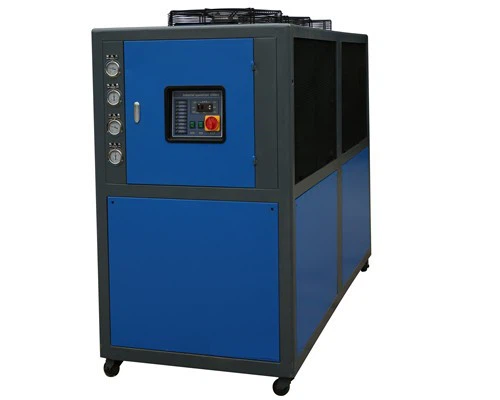
Our Air Cooled Chiller System is a popular choice for industries where water availability is limited. The evaporator in this system is carefully engineered to work in conjunction with the air - cooling mechanism, providing effective cooling with minimal water usage.
For more heavy - duty industrial applications, our Industrial Air Cooled Water Chiller is equipped with a robust evaporator that can handle high - heat loads and demanding operating conditions.
Contact Us for Your Industrial Chiller Needs
If you are in the market for an industrial chiller system or need to upgrade your existing system, our team of experts is ready to assist you. We can provide you with detailed information about our products, help you select the right system for your specific application, and offer professional installation and after - sales support. Contact us today to start a conversation about how our industrial chiller systems can meet your cooling requirements.
References
- ASHRAE Handbook - Refrigeration. American Society of Heating, Refrigerating and Air - Conditioning Engineers.
- Industrial Refrigeration Handbook. CRC Press.
- Principles of Refrigeration. Pearson Education.