

Hey there, folks! I'm a supplier of screw air compressors, and I often get asked about how to measure the air delivery rate of these machines. It's a crucial aspect of understanding your compressor's performance, so today, I'm gonna break it down for you.
Why Measuring Air Delivery Rate Matters
First off, let's talk about why it's so important to measure the air delivery rate. You see, the air delivery rate tells you how much compressed air your screw air compressor can supply over a given period. This info helps you know if your compressor can meet your production needs. For example, if you're running a large - scale industrial operation, you need to make sure your Industrial Screw Air Compressor can pump out enough air to keep all your pneumatic tools and equipment running smoothly.
Not measuring the air delivery rate correctly can lead to some serious problems. If your compressor is under - delivering, it might cause your production to slow down or your equipment to malfunction. On the other hand, if you overestimate and buy a compressor with a much higher air delivery rate than you need, you're going to waste a lot of energy and money.
Basics of Screw Air Compressors
Before we dive into the measurement methods, let me quickly give you a rundown on how screw air compressors work. They've got a pair of rotors (screws) that spin inside a casing. As the screws turn, they trap air, compress it, and then push it out. It's a pretty efficient way to generate compressed air compared to some other types of compressors.
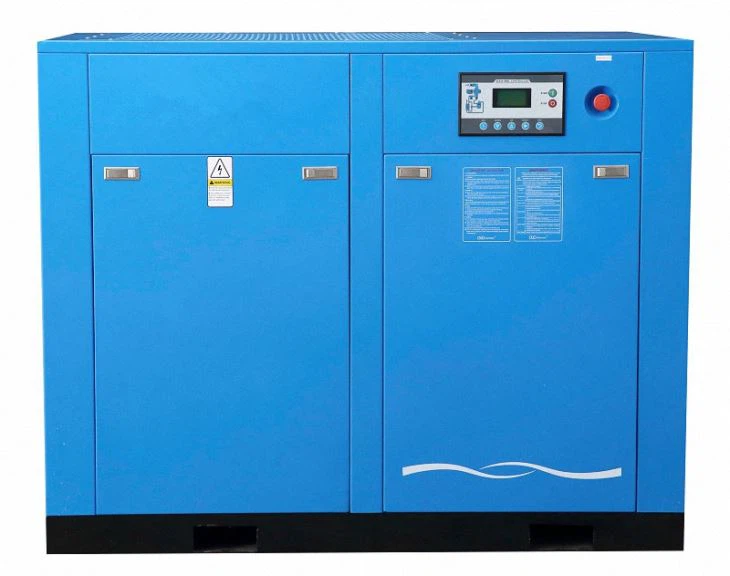

There are different kinds of screw air compressors out there. For instance, you've got the 150 Psi Air Compressor, which can generate air at a pressure of 150 pounds per square inch (psi). And then there's the 2 Stage Air Compressor, which compresses the air in two stages for better efficiency and higher pressure output.
Measuring Methods
The Container Method
One of the simplest ways to measure the air delivery rate is the container method. Here's how you do it:
- Get a large, air - tight container with a known volume. Let's say it's a big - ass tank.
- Hook up your compressor to the container through a valve. Make sure the container is completely empty of air at the start.
- Open the valve and start the compressor. Let the compressor fill the container with compressed air.
- Keep track of the time it takes to fill the container to a certain pressure. You can use a pressure gauge to measure the pressure.
- Once you've got the time and pressure data, you can calculate the air delivery rate.
The formula for calculating the air delivery rate using this method is:
[Q = \frac{V(P_2 - P_1)}{t}]
Where (Q) is the air delivery rate, (V) is the volume of the container, (P_2) is the final pressure, (P_1) is the initial pressure (usually atmospheric pressure), and (t) is the time it takes to fill the container.
This method is easy to set up, but it has its limitations. The container needs to be air - tight, and you've got to be really careful when measuring the pressure and time to get accurate results.
Flow Meter Method
Another way is to use a flow meter. There are different types of flow meters out there, like the orifice plate flow meter, the turbine flow meter, and the thermal mass flow meter.
To use a flow meter:
- Install the flow meter in the air outlet line of your compressor.
- Make sure the flow meter is calibrated correctly. This is super important because an uncalibrated flow meter can give you way - off readings.
- Start the compressor and let it run for a while to stabilize.
- Read the flow rate directly from the flow meter.
The advantage of using a flow meter is that it gives you real - time information about the air delivery rate. You can see how the rate changes as the compressor operates under different conditions. But flow meters can be expensive, and they need regular maintenance to keep them working properly.
Power - Based Method
The power - based method involves using the power consumption of the compressor to estimate the air delivery rate. Here's the idea:
- Measure the power input to the compressor. You can use a power meter for this.
- Look up the efficiency curve of your specific compressor model. The efficiency curve shows how the compressor's efficiency changes with different operating conditions.
- Based on the power input and the efficiency curve, you can estimate the air delivery rate.
This method is useful because it doesn't require any special equipment like a large container or a flow meter. But it relies a lot on the accuracy of the efficiency curve, which can vary depending on factors like the compressor's age, wear and tear, and ambient conditions.
Factors Affecting Air Delivery Rate
There are several factors that can affect the air delivery rate of a screw air compressor.
- Temperature: Higher ambient temperatures can reduce the density of the air, which means the compressor has to work harder to draw in the same volume of air. As a result, the air delivery rate can go down.
- Pressure: If you increase the discharge pressure of the compressor, the air delivery rate usually decreases. This is because the compressor has to work harder to compress the air to a higher pressure.
- Humidity: Moist air is less dense than dry air. So, if the ambient air is really humid, the compressor might not be able to deliver as much dry air as it would in dry conditions.
- Compressor Wear and Tear: Over time, the rotors and other components of the compressor can wear out. This can lead to a decrease in the compression efficiency and, therefore, a lower air delivery rate.
Tips for Accurate Measurement
To get accurate measurements of the air delivery rate, here are some tips:
- Make sure your testing environment is as stable as possible. Keep the temperature, humidity, and pressure consistent during the measurement.
- Calibrate all your measuring equipment regularly. An uncalibrated pressure gauge, flow meter, or power meter can give you incorrect readings.
- Run multiple tests. Don't rely on just one measurement. Take several readings and calculate the average to get a more accurate result.
Conclusion
Well, folks, that's how you measure the air delivery rate of a screw air compressor. It's not rocket science, but you've got to be careful and pay attention to the details. Whether you use the container method, the flow meter method, or the power - based method, each has its pros and cons.
If you're in the market for a new screw air compressor or you want to check the performance of your existing one, and you've got any questions about the air delivery rate or other aspects of these machines, don't hesitate to reach out. We're here to help you make the right choice for your operation. Whether you need a 150 Psi Air Compressor, a 2 Stage Air Compressor, or an Industrial Screw Air Compressor, we've got you covered. Let's talk about your needs and figure out the best solution for you.
References
- Compressed Air and Gas Handbook, various editions.
- Manufacturer's manuals of screw air compressors.
- Technical papers on air compressor performance testing.