

Hey there! As a supplier of PLC Control Chillers, I've had my fair share of experiences dealing with both domestic and industrial chillers. In this blog, I'm gonna break down the key differences between these two types of PLC - controlled chillers.

1. Capacity and Cooling Power
First off, let's talk about capacity. Domestic PLC - controlled chillers are designed for small - scale applications. They're usually used in homes, small offices, or maybe a small workshop. These chillers typically have a relatively low cooling capacity, often ranging from a few thousand BTUs (British Thermal Units) to around 20,000 BTUs. For example, a domestic chiller might be used to cool a single room or a small laboratory setup in a home.
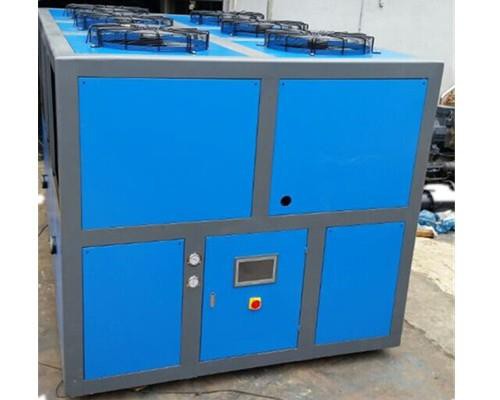
On the flip side, industrial PLC - controlled chillers are beasts when it comes to cooling power. They're built to handle large - scale operations in factories, data centers, and big commercial buildings. Industrial chillers can have cooling capacities that go well into the hundreds of thousands or even millions of BTUs. Take our High Capacity Industrial Screw Air Cooled Chiller (MG - 160AS) for example. It's specifically designed to provide high - volume cooling for industrial processes, ensuring that large machinery and equipment stay at the right temperature.
2. Size and Installation
Size is another major difference. Domestic chillers are compact and easy to install. They're often designed to be installed in a corner of a room or on a small platform. You can usually set up a domestic chiller without the need for a large team of technicians. They're also relatively lightweight, which makes them easy to move around if needed.
Industrial chillers, on the other hand, are huge. They can take up a significant amount of floor space in a factory or a dedicated mechanical room. Installation of an industrial chiller is a complex process that requires a team of experienced engineers and technicians. There are also often additional requirements such as proper ventilation, electrical connections, and plumbing. Our Air Cooled Screw Chiller and Industrial Air Cooled Screw Chiller models, for instance, need careful planning and installation to ensure optimal performance.
3. Control and Monitoring
Both domestic and industrial PLC - controlled chillers use Programmable Logic Controllers (PLCs) for control. However, the level of sophistication in control and monitoring is quite different.
Domestic chillers usually have basic control functions. You can set the temperature, turn the chiller on and off, and maybe adjust the fan speed. The control interface is simple and user - friendly, designed for the average homeowner or small - business owner to operate without much technical knowledge.
Industrial chillers, in contrast, have highly advanced control and monitoring systems. The PLCs in industrial chillers can manage multiple parameters simultaneously, such as temperature, pressure, flow rate, and compressor speed. They can also integrate with other industrial control systems, allowing for seamless operation within a larger manufacturing or commercial process. Real - time monitoring and remote access are common features in industrial chillers, enabling operators to keep an eye on the chiller's performance from anywhere.
4. Maintenance and Durability
Maintenance requirements are also distinct between domestic and industrial chillers. Domestic chillers are relatively easy to maintain. They usually have fewer components, and basic maintenance tasks like cleaning the filters and checking the refrigerant levels can be done by the user. The lifespan of a domestic chiller is typically around 10 - 15 years, depending on usage and maintenance.
Industrial chillers, however, demand more intensive maintenance. They have complex systems with multiple components that need regular inspection and servicing. Specialized technicians are often required to perform maintenance tasks such as compressor overhauls, condenser cleaning, and electrical system checks. Industrial chillers are built to last, though. With proper maintenance, they can have a lifespan of 20 years or more, making them a long - term investment for industrial facilities.
5. Cost
Cost is a significant factor when comparing domestic and industrial PLC - controlled chillers. Domestic chillers are much more affordable. The initial purchase price is relatively low, and the operating costs are also minimal. They consume less energy, and the maintenance costs are low due to their simplicity.
Industrial chillers, on the other hand, are expensive. The upfront cost of an industrial chiller can be quite high, especially for high - capacity models. In addition, the operating costs are significant because of their high energy consumption. However, the return on investment for industrial chillers can be substantial, as they are essential for maintaining the efficiency and productivity of industrial processes.
6. Application Specificity
Domestic chillers are designed for general cooling needs in a home or small - scale environment. They're used to cool living spaces, small server rooms, or small refrigeration units.
Industrial chillers are highly application - specific. They're tailored to meet the unique requirements of different industries. For example, in the food and beverage industry, industrial chillers are used to cool processing equipment and storage areas to maintain product quality. In the pharmaceutical industry, they're used to control the temperature in clean rooms and manufacturing processes to ensure product safety.
Why Choose Our PLC - Controlled Chillers?
Whether you're in the market for a domestic or an industrial PLC - controlled chiller, we've got you covered. Our chillers are built with the latest technology, ensuring high performance, energy efficiency, and reliability. We offer a wide range of models to suit different needs and budgets.
If you're interested in learning more about our PLC - controlled chillers or have any questions regarding which chiller is right for your application, don't hesitate to reach out. We're here to help you make the best choice for your cooling needs. Contact us today to start the procurement process and let's work together to find the perfect chiller solution for you.
References
- "Handbook of Heating, Ventilation, and Air Conditioning"
- "Industrial Refrigeration Handbook"
So, there you have it - the main differences between domestic and industrial PLC - controlled chillers. I hope this blog has given you a better understanding of these two types of chillers and how they can meet your specific cooling requirements.