

As a supplier of PLC Control Chillers, I've witnessed firsthand the importance of well - trained personnel in operating these sophisticated machines. PLC (Programmable Logic Controller) - controlled chillers are complex systems that require a specific set of skills and knowledge for efficient and safe operation. In this blog, I'll delve into the key requirements for training personnel to operate a PLC - controlled chiller.
Technical Knowledge Requirements
Understanding of Refrigeration Cycle
A fundamental requirement for personnel operating a PLC - controlled chiller is a solid understanding of the refrigeration cycle. The refrigeration cycle is the heart of any chiller system, and it involves processes such as compression, condensation, expansion, and evaporation. Workers need to know how these processes interact to remove heat from the chilled water and transfer it to the external environment.
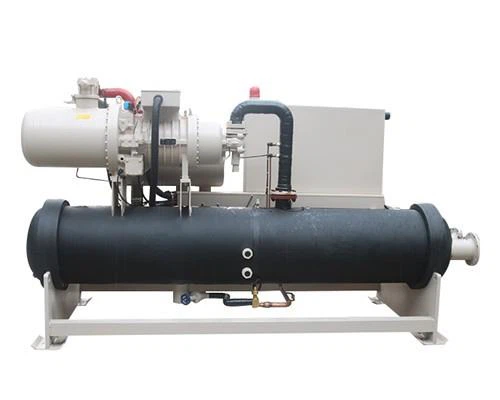
For instance, they should understand that the compressor in a Screw Water Chiller increases the pressure and temperature of the refrigerant vapor. Then, the condenser cools the high - pressure vapor into a liquid state, releasing heat. The expansion valve reduces the pressure of the liquid refrigerant, and finally, the evaporator absorbs heat from the chilled water, turning the refrigerant back into a vapor. Without this basic knowledge, operators may struggle to diagnose and troubleshoot issues when the chiller malfunctions.
Familiarity with PLC Programming and Operation
Since these chillers are controlled by PLCs, operators must be familiar with PLC programming and operation. They should know how to read and interpret ladder logic diagrams, which are commonly used in PLC programming. Ladder logic represents the electrical circuit logic in a graphical form, making it easier for operators to understand the control sequence of the chiller.
Operators should also be able to set up and adjust parameters in the PLC. For example, they need to know how to set the temperature setpoints for the chilled water and the condenser water, as well as the pressure limits for the refrigerant system. Additionally, they should be able to troubleshoot basic PLC - related problems, such as sensor malfunctions or communication errors between the PLC and other components of the chiller system.
Knowledge of Electrical Systems
A good understanding of electrical systems is essential for operating a PLC - controlled chiller. The chiller has various electrical components, including motors, contactors, relays, and sensors. Operators need to know how to safely handle electrical equipment, understand electrical schematics, and troubleshoot electrical faults.
For example, they should be able to identify and replace faulty electrical components, such as a burned - out motor or a malfunctioning sensor. They also need to be aware of electrical safety procedures, such as wearing appropriate personal protective equipment (PPE) when working on live electrical circuits.
Safety Training Requirements
General Safety Procedures
Safety is of utmost importance when operating a PLC - controlled chiller. Operators must be trained in general safety procedures, such as proper lifting techniques, the use of safety guards, and the importance of wearing appropriate PPE. They should also know how to respond to emergencies, such as fires, electrical shocks, or refrigerant leaks.
For refrigerant leaks, operators should be trained to detect the presence of refrigerant using appropriate leak detection equipment. They should also know how to isolate the refrigerant system, evacuate the area if necessary, and follow the proper procedures for refrigerant recovery and disposal.
Chiller - Specific Safety
In addition to general safety procedures, operators need to be trained in chiller - specific safety. This includes understanding the potential hazards associated with the high - pressure refrigerant system, the hot components of the chiller, and the electrical systems.
For example, they should know how to safely start and stop the chiller, taking into account the proper sequencing of the compressor, pumps, and other components. They should also be aware of the safety interlocks in the chiller system, which are designed to prevent the chiller from operating under unsafe conditions.
Operational Skills Requirements
Monitoring and Control Skills
Operators need to have strong monitoring and control skills. They should be able to monitor the chiller's performance parameters, such as temperature, pressure, flow rate, and power consumption, on a regular basis. By analyzing these parameters, they can detect any abnormal trends or deviations from the normal operating conditions.
For example, if the chilled water temperature starts to rise above the setpoint, operators should be able to quickly identify the cause, which could be due to a problem with the refrigerant system, a clogged filter, or a malfunctioning pump. They should then take appropriate corrective actions, such as adjusting the refrigerant charge, cleaning the filter, or repairing the pump.
Troubleshooting and Maintenance Skills
Troubleshooting and maintenance skills are crucial for ensuring the reliable operation of a PLC - controlled chiller. Operators should be able to diagnose common problems, such as compressor failures, refrigerant leaks, and electrical faults, using a systematic approach.

They should also be trained in basic maintenance tasks, such as cleaning the condenser coils, checking the lubricant levels in the compressor, and inspecting the belts and couplings. Regular maintenance helps to prevent breakdowns and extends the lifespan of the chiller.
Soft Skills Requirements
Communication Skills
Good communication skills are essential for operators of PLC - controlled chillers. They need to be able to communicate effectively with other members of the maintenance team, as well as with supervisors and customers.
For example, if an operator discovers a problem with the chiller, they need to be able to clearly and accurately describe the issue to the maintenance team. They also need to be able to communicate any changes in the chiller's operation or performance to the relevant stakeholders.
Problem - Solving Skills
Operating a PLC - controlled chiller often involves dealing with unexpected problems. Operators need to have strong problem - solving skills to quickly identify the root cause of the problem and develop effective solutions.
They should be able to think critically, analyze data, and make decisions based on the available information. For example, if the chiller is experiencing a high - pressure alarm, operators need to be able to determine whether the problem is due to a blocked condenser, a faulty pressure sensor, or an overcharge of refrigerant.
In conclusion, training personnel to operate a PLC - controlled chiller requires a comprehensive approach that includes technical knowledge, safety training, operational skills, and soft skills. By ensuring that operators have the necessary skills and knowledge, we can improve the efficiency, reliability, and safety of the chiller system.
If you're interested in our Plc Control Chiller products or need more information about chiller operation and training, please feel free to contact us for further discussion and potential procurement opportunities.
References
- ASHRAE Handbook - Refrigeration. American Society of Heating, Refrigerating and Air - Conditioning Engineers.
- Manufacturer's manuals for PLC - controlled chillers.
- Electrical safety standards and guidelines.