

Hey there! As a supplier of Food Grade Chillers, I've seen firsthand the importance of having the right equipment in a cold storage facility. In this blog, I'll share the key requirements for using a food grade chiller in such a setting.
Hygiene and Sanitation
When it comes to food storage, hygiene is non - negotiable. A food grade chiller must be designed and constructed in a way that prevents the growth of bacteria, mold, and other contaminants.
First off, the materials used in the chiller should be food - safe. Stainless steel is a popular choice because it's durable, easy to clean, and resistant to corrosion. It doesn't react with food products, so there's no risk of chemical contamination. The surfaces inside the chiller should be smooth, without any crevices or joints where dirt and bacteria can accumulate.
Regular cleaning and maintenance are also crucial. The chiller should have accessible parts for easy cleaning. For example, removable air filters can be taken out, washed, and reinstalled. This helps to maintain good air quality inside the cold storage facility. Sanitizing agents can be used to clean the chiller, but make sure they are approved for use in food - related environments.
Temperature Control
One of the main functions of a chiller in a cold storage facility is to maintain a consistent temperature. Different food products have different temperature requirements. For example, fresh produce might need to be stored at around 2 - 4°C, while frozen foods require temperatures below - 18°C.

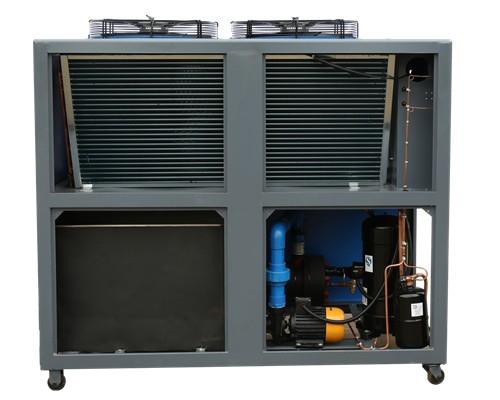
A food grade chiller should have precise temperature control capabilities. It should be able to adjust the temperature accurately and quickly in response to changes in the load or external conditions. This means having a reliable temperature sensor and a control system that can regulate the cooling process effectively.
The chiller should also have a backup system in case of power outages or equipment failures. A standby generator or an uninterruptible power supply (UPS) can ensure that the temperature inside the cold storage doesn't rise to dangerous levels during an emergency.
Energy Efficiency
Running a cold storage facility can be energy - intensive. That's why energy efficiency is a major requirement for a food grade chiller. An energy - efficient chiller not only helps to reduce operating costs but also has a lower environmental impact.
Look for chillers with high energy efficiency ratios (EER) or coefficient of performance (COP). These ratings indicate how effectively the chiller can convert electrical energy into cooling power. Newer models often come with advanced compressor technologies, such as variable - speed compressors, which can adjust their operation based on the cooling demand. This means they use less energy when the load is low.
Proper insulation of the chiller and the cold storage facility also plays a role in energy efficiency. Good insulation helps to prevent heat transfer, so the chiller doesn't have to work as hard to maintain the desired temperature.
Capacity and Load Handling
The size and capacity of the chiller are important factors to consider. You need to choose a chiller that can handle the heat load of your cold storage facility. The heat load depends on several things, like the size of the storage area, the number of food products being stored, and the frequency of door openings.
Over - sizing or under - sizing the chiller can lead to problems. An over - sized chiller might cycle on and off too frequently, which can reduce its lifespan and waste energy. On the other hand, an under - sized chiller won't be able to maintain the required temperature, which can spoil the food.
It's a good idea to have the heat load calculated by a professional. They can take into account all the relevant factors and recommend the right size of the food grade chiller for your specific needs.
Safety Features
Safety is always a top priority in a food storage environment. A food grade chiller should have several safety features to protect the equipment, the food products, and the people working in the facility.
For example, it should have a high - pressure and low - pressure cut - off switch. These switches automatically shut down the chiller if the pressure in the refrigerant system gets too high or too low. This helps to prevent damage to the compressor and other components.
There should also be a temperature alarm system. If the temperature inside the cold storage goes out of the set range, an alarm will sound, alerting the staff to take action. Additionally, the chiller should be properly grounded to prevent electrical hazards.
Compatibility with Other Equipment
In a cold storage facility, the chiller usually works in conjunction with other equipment, such as air handling units, fans, and refrigeration coils. It's important that the food grade chiller is compatible with these other components.
The chiller should be able to integrate smoothly with the existing ventilation and refrigeration systems. This ensures that the entire cold storage system works efficiently as a whole. For example, the airflow from the chiller should be compatible with the air distribution pattern of the air handling unit.
Noise Level
In a working environment, excessive noise can be a nuisance. A food grade chiller should operate quietly, especially if the cold storage facility is located in an area where noise restrictions apply or where people are working nearby.
Modern chillers are designed with noise - reducing features. For example, they might have insulated compressor compartments or low - noise fans. When choosing a chiller, consider the noise level specifications and look for models that are known for their quiet operation.
Regulatory Compliance
Food storage facilities are subject to various regulations and standards. A food grade chiller must comply with these requirements. This includes regulations related to food safety, energy efficiency, and environmental protection.
For example, in many countries, chillers need to meet certain refrigerant regulations. Some older refrigerants are being phased out due to their high global warming potential. So, make sure the chiller uses an approved refrigerant that is environmentally friendly.
Our Food Grade Chillers
At our company, we offer a range of top - quality Food Grade Chiller that meet all these requirements. Our chillers are made from high - quality food - safe materials, have precise temperature control, and are energy - efficient.
We also have Special Air Cooler Chiller For Film Blowing Machine and Industrial Air Cooled Chiller for other industrial applications. If you're in the market for a reliable food grade chiller for your cold storage facility, we'd love to talk to you. Whether you need help with sizing, installation, or maintenance, our team of experts is here to assist you. Contact us today to start the conversation about your chiller needs and let's work together to find the perfect solution for your business.
References
- ASHRAE Handbook of Refrigeration.
- Food Safety Modernization Act (FSMA) guidelines.
- International Electrotechnical Commission (IEC) standards for electrical equipment in refrigeration systems.