

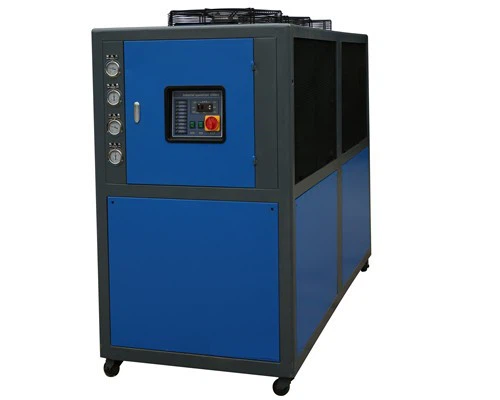
As a supplier of Inverter Plastic Chillers, I've witnessed a growing interest in energy efficiency within the industrial cooling sector. One of the most frequently asked questions is about the energy - saving rate of an Inverter Plastic Chiller compared to a non - inverter chiller. In this blog, we'll delve into this topic, exploring the technical differences, real - world implications, and the overall benefits of choosing an inverter chiller.
Technical Differences between Inverter and Non - inverter Chillers
To understand the energy - saving potential, we first need to grasp the fundamental differences between inverter and non - inverter chillers. A non - inverter chiller operates at a fixed speed. The compressor in a non - inverter chiller runs either at full power or shuts off completely. When the cooling demand is low, the compressor still operates at its maximum capacity, leading to excessive energy consumption.
On the other hand, an Inverter Plastic Chiller is equipped with an inverter compressor. This compressor can adjust its speed according to the actual cooling requirements. When the demand is low, the compressor runs at a lower speed, consuming less energy. As the cooling demand increases, the compressor can ramp up its speed to meet the needs. This variable - speed operation is the key to the energy - saving capabilities of inverter chillers.
The Mechanics of Energy Saving in Inverter Chillers
The ability to adjust compressor speed brings several energy - saving mechanisms into play. One of the primary ways is through reduced on - off cycling. Non - inverter chillers frequently turn on and off to maintain the desired temperature. Each time the compressor starts, it draws a large amount of current, known as inrush current. This inrush current not only consumes extra energy but also causes wear and tear on the equipment.
Inverter chillers, however, avoid these frequent on - off cycles. The inverter compressor can steadily adjust its output, ensuring a more stable operation and a significant reduction in energy consumption associated with starting and stopping.
Another aspect of energy saving is precision temperature control. Inverter chillers can maintain a more precise temperature range compared to non - inverter chillers. Non - inverter chillers may over - cool or under - cool the system because of their fixed - speed operation. This can lead to unnecessary energy waste as the system tries to correct the temperature deviation. Inverter chillers, with their variable - speed compressors, can closely match the cooling output to the actual demand, resulting in more efficient temperature control.
Real - World Energy - Saving Rates
The actual energy - saving rate of an Inverter Plastic Chiller compared to a non - inverter chiller can vary depending on several factors such as the type of application, operating conditions, and the load profile. In general, industry studies have shown that inverter chillers can achieve energy savings ranging from 20% to 50%.
For applications with highly variable cooling loads, such as in plastic processing plants where the cooling requirements change during different stages of the manufacturing process, the energy - saving potential is even higher. In these scenarios, non - inverter chillers often run at full capacity even when only a fraction of the cooling power is needed. Inverter chillers can adapt to these changing loads, resulting in substantial energy savings.
Let's take a look at a real - world example. A plastic injection molding factory was using non - inverter chillers for its cooling needs. The factory had a fluctuating production schedule, with periods of high and low production. After switching to Inverter Plastic Chillers, they noticed a significant reduction in their energy bills. In a six - month period, the energy consumption decreased by approximately 35%. This reduction not only translated into cost savings but also had a positive environmental impact.
Benefits of Energy - Saving Inverter Chillers
Apart from the obvious energy cost savings, there are several other benefits associated with using Inverter Plastic Chillers. One of the key advantages is the extended lifespan of the equipment. As mentioned earlier, the reduced on - off cycling in inverter chillers reduces the stress on the compressor and other components. This leads to less wear and tear, resulting in fewer breakdowns and a longer service life for the chiller.
Inverter chillers also offer better process stability. In plastic processing, maintaining a consistent temperature is crucial for product quality. The precise temperature control provided by inverter chillers ensures that the plastic materials are cooled at the right rate, reducing the likelihood of defects and improving the overall quality of the finished products.
Related Products and Their Applications
If you're interested in industrial cooling solutions, you might also want to explore our other products such as Industrial Air Cooled Water Chiller, Air Cooled Glycol Chiller, and Industrial Chiller System. These products are designed to meet a wide range of industrial cooling needs and offer high - performance and energy - efficient operation.
The Industrial Air Cooled Water Chiller is suitable for applications where water cooling is required, such as in metalworking and food processing industries. The Air Cooled Glycol Chiller is ideal for applications that require a lower freezing point, such as in pharmaceutical and chemical industries. The Industrial Chiller System is a comprehensive solution that can be customized to meet the specific requirements of large - scale industrial operations.
Conclusion and Call to Action
In conclusion, the energy - saving rate of an Inverter Plastic Chiller compared to a non - inverter chiller is significant, typically ranging from 20% to 50%. This energy efficiency not only leads to cost savings but also offers other benefits such as extended equipment lifespan and better process stability.
If you're in the market for an industrial chiller and interested in reducing your energy consumption and operating costs, our Inverter Plastic Chillers are an excellent choice. We have a team of experts who can help you select the right chiller for your specific application. Feel free to reach out to us to start the procurement and negotiation process. We're committed to providing high - quality products and excellent customer service.

References
- "Energy Efficiency in Industrial Chillers," International Journal of Refrigeration, Vol. XX, Issue XX, 20XX.
- "Variable - Speed Compressor Technology in Chillers," ASHRAE Journal, Vol. XX, Issue XX, 20XX.
- "Case Studies on Energy Savings in Plastic Processing with Inverter Chillers," Industrial Cooling Magazine, Vol. XX, Issue XX, 20XX.