

In the realm of industrial and commercial cooling solutions, air cooled screw chillers stand out as a reliable and efficient option. As a leading supplier of air cooled screw chillers, I often encounter inquiries regarding the evaporator types used in these systems. Understanding the different evaporator types is crucial for optimizing the performance, efficiency, and overall functionality of an air cooled screw chiller. In this blog post, I will delve into the various evaporator types commonly employed in air cooled screw chillers, their characteristics, advantages, and applications.
1. Direct Expansion (DX) Evaporators
Direct expansion evaporators are a popular choice in air cooled screw chillers, especially for smaller to medium - sized applications. In a DX evaporator, the refrigerant directly evaporates inside the tubes of the evaporator coil. As the warm air from the space to be cooled passes over the coil, heat is transferred from the air to the refrigerant, causing the refrigerant to change from a liquid to a vapor state.
One of the key advantages of DX evaporators is their simplicity. They have fewer components compared to other types of evaporators, which translates to lower installation and maintenance costs. Additionally, DX evaporators offer a relatively quick response time to changes in the cooling load. Since the refrigerant evaporates directly in the coil, the cooling effect is immediate, making them suitable for applications where rapid temperature changes are required.
However, DX evaporators also have some limitations. They are more sensitive to changes in the air flow rate and temperature. If the air flow over the coil is insufficient, the refrigerant may not evaporate completely, leading to reduced cooling efficiency and potential damage to the compressor. Moreover, DX evaporators are typically limited in terms of the cooling capacity they can provide. For larger cooling loads, multiple DX evaporators may need to be installed, which can increase the complexity and cost of the system.
For more information on refrigeration equipment and screw chillers, you can visit our Refrigeration Equipment Screw Chiller page.
2. Flooded Evaporators
Flooded evaporators operate on a different principle compared to DX evaporators. In a flooded evaporator, the evaporator tubes are submerged in a pool of liquid refrigerant. The warm water or air to be cooled passes through the tubes, and heat is transferred from the fluid to the refrigerant, causing the refrigerant to evaporate.
One of the main advantages of flooded evaporators is their high heat transfer efficiency. Since the tubes are completely surrounded by the liquid refrigerant, there is a large surface area for heat transfer, resulting in a more effective cooling process. Flooded evaporators are also less sensitive to changes in the air or water flow rate compared to DX evaporators. They can maintain a relatively stable cooling performance even when the flow conditions vary.
Another benefit of flooded evaporators is their ability to handle larger cooling loads. They are commonly used in industrial applications where high - capacity cooling is required, such as in large manufacturing plants, data centers, and commercial buildings. However, flooded evaporators are more complex and expensive to install and maintain. They require additional components, such as a refrigerant pump, to circulate the liquid refrigerant, and proper refrigerant management is crucial to ensure optimal performance.
3. Plate - Type Evaporators
Plate - type evaporators consist of a series of thin metal plates that are stacked together. The refrigerant and the fluid to be cooled flow through alternate channels between the plates, allowing for efficient heat transfer. Plate - type evaporators are known for their compact design and high heat transfer coefficient.
The compact size of plate - type evaporators makes them ideal for applications where space is limited. They can be easily installed in areas where traditional evaporators may not fit. Additionally, plate - type evaporators offer a high degree of flexibility in terms of capacity and configuration. They can be customized to meet the specific requirements of different applications by adjusting the number and size of the plates.
However, plate - type evaporators are more prone to fouling compared to other types of evaporators. The narrow channels between the plates can become clogged with dirt, debris, or scale, which can reduce the heat transfer efficiency and increase the pressure drop across the evaporator. Regular cleaning and maintenance are essential to ensure the long - term performance of plate - type evaporators.
Our Plc Control Chiller page provides more details on how advanced control systems can be integrated with different evaporator types in air cooled screw chillers.
4. Shell - and - Tube Evaporators
Shell - and - tube evaporators are one of the most widely used evaporator types in air cooled screw chillers, especially for large - scale applications. They consist of a shell (a large cylindrical vessel) and a bundle of tubes inside the shell. The refrigerant flows inside the tubes, while the fluid to be cooled (usually water) flows through the shell.
Shell - and - tube evaporators offer several advantages. They have a large heat transfer surface area, which allows for efficient heat transfer and high cooling capacity. They are also relatively easy to clean and maintain. The tubes can be removed and replaced if necessary, and the shell can be accessed for inspection and cleaning.
Moreover, shell - and - tube evaporators are highly reliable and can withstand high pressures and temperatures. They are suitable for a wide range of applications, including industrial processes, commercial air conditioning, and district cooling systems. However, shell - and - tube evaporators are relatively large and heavy, which can pose challenges in terms of installation and transportation. They also require a significant amount of refrigerant, which can increase the cost and environmental impact of the system.
For more information on air cooled chilled water systems, which often incorporate shell - and - tube evaporators, you can visit our Air Cooled Chilled Water System page.
Selecting the Right Evaporator Type
When selecting an evaporator type for an air cooled screw chiller, several factors need to be considered. The cooling load is one of the most important factors. For small to medium - sized cooling loads, DX evaporators or plate - type evaporators may be sufficient. For larger cooling loads, flooded evaporators or shell - and - tube evaporators are more appropriate.
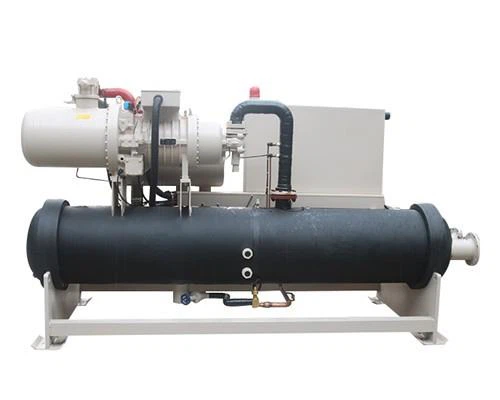

The available space is also a crucial consideration. If space is limited, plate - type evaporators or compact DX evaporators may be the best choice. On the other hand, if there is ample space, shell - and - tube evaporators or flooded evaporators can be installed without any issues.
The operating conditions, such as the temperature and flow rate of the fluid to be cooled, also play a role in the selection process. Some evaporator types are more sensitive to changes in these conditions than others. For example, DX evaporators require a relatively stable air flow rate, while flooded evaporators are more forgiving in this regard.
Conclusion
In conclusion, the choice of evaporator type in an air cooled screw chiller depends on a variety of factors, including the cooling load, available space, and operating conditions. Each evaporator type has its own unique characteristics, advantages, and limitations. As a supplier of air cooled screw chillers, we have the expertise and experience to help you select the most suitable evaporator type for your specific application.
If you are in the market for an air cooled screw chiller and need assistance in choosing the right evaporator type, please do not hesitate to contact us. Our team of experts will be happy to discuss your requirements and provide you with a customized solution. We are committed to providing high - quality products and excellent customer service to ensure your cooling needs are met effectively and efficiently.
References
- ASHRAE Handbook of Refrigeration. American Society of Heating, Refrigerating and Air - Conditioning Engineers.
- Refrigeration and Air Conditioning Technology by William C. Whitman, William M. Johnson, and John Tomczyk.