

Altitude can have a significant impact on the performance of an air dryer, and as an air dryer supplier, I've seen firsthand how this factor can affect the functionality and efficiency of our products. In this blog, I'll break down the key ways altitude plays a role in air dryer performance and what you need to know when using these systems at different elevations.
How Altitude Affects Air Properties
Before diving into how altitude impacts air dryers, it's essential to understand how it changes the properties of air. As you go higher in altitude, the atmospheric pressure drops. This decrease in pressure means there are fewer air molecules in a given volume of air. For example, at sea level, the standard atmospheric pressure is about 101.3 kPa (kilopascals), but at an altitude of 3,000 meters, it can drop to around 70 kPa.
The lower air density at higher altitudes also affects the moisture - holding capacity of the air. Warmer air can hold more moisture than cooler air, and lower air density at high altitudes means that for the same relative humidity, there is less actual water vapor in the air. However, the reduced pressure can also change the behavior of air as it passes through an air dryer.

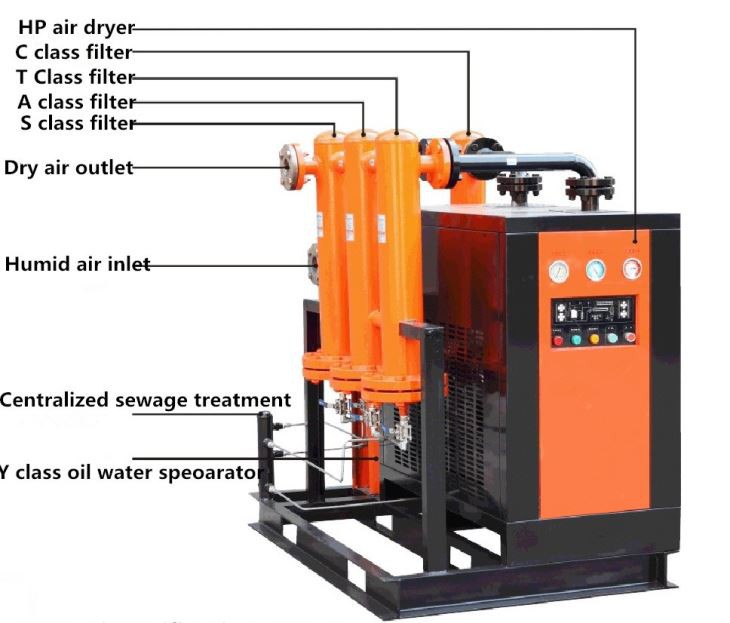
Impact on Refrigerated Air Dryers
Refrigerated Air Dryer work by cooling the compressed air to condense the water vapor into liquid water, which can then be drained out. At higher altitudes, the lower air density can cause issues with the heat transfer process in these dryers.
The reduced air density means that there are fewer air molecules to transfer heat to the refrigerant in the cooling coils. As a result, the cooling efficiency of the dryer can decrease. This can lead to higher outlet temperatures of the dried air and less effective moisture removal. The dryer may have to work harder to achieve the same level of drying as it would at sea level, which can increase energy consumption and potentially lead to more wear and tear on the equipment.
Another aspect is the pressure drop across the dryer. The lower atmospheric pressure at high altitudes can change the pressure drop characteristics of the refrigerated air dryer. If the pressure drop is not properly accounted for, it can affect the overall performance of the compressed air system, leading to reduced air flow and potentially impacting the operation of downstream equipment.
Impact on Compressed Air Dryers
Compressed Air Dryer come in different types, including desiccant dryers and membrane dryers, in addition to refrigerated ones. Desiccant dryers use a desiccant material to adsorb moisture from the compressed air. At higher altitudes, the reduced air density can affect the adsorption process.
The desiccant's ability to adsorb moisture depends on the contact between the air and the desiccant material. With lower air density, the air may pass through the desiccant bed more quickly, reducing the contact time and the effectiveness of moisture removal. This can result in higher dew points in the dried air, which may not meet the requirements of some applications.
Membrane dryers separate moisture from the compressed air by allowing water vapor to permeate through a membrane. The lower air density at high altitudes can change the diffusion rate of water vapor through the membrane. This can lead to less efficient moisture separation and higher moisture content in the output air.
Impact on Medium Pressure Air Purification Systems
Medium Pressure Air Purification System are designed to remove contaminants, including moisture, from compressed air at medium pressures. Altitude can have a complex impact on these systems.
The lower atmospheric pressure at high altitudes can affect the pressure balance within the purification system. If the system is not properly adjusted for the reduced pressure, it can lead to improper operation of the filtration and drying components. For example, the flow rate of the compressed air through the filters and dryers may be affected, which can impact the overall purification efficiency.
In addition, the reduced air density can also change the behavior of any moving parts within the system, such as valves and regulators. These components may need to be adjusted or calibrated to ensure proper operation at high altitudes.
What to Do When Using Air Dryers at High Altitudes
If you're planning to use an air dryer at a high - altitude location, there are several steps you can take to ensure optimal performance. First, it's crucial to consult with your air dryer supplier. As an air dryer supplier, I can provide specific recommendations based on the altitude and the type of air dryer you're using.
In some cases, you may need to choose a larger - capacity air dryer to compensate for the reduced efficiency at high altitudes. This can ensure that the dryer can still meet the required dew point and air quality standards.
Regular maintenance is also essential. At high altitudes, the air dryer may experience more stress due to the changes in air properties. This means that components such as filters, cooling coils, and desiccant beds may need to be replaced more frequently.
Contact Us for Altitude - Ready Air Dryers
If you're facing challenges with air dryer performance at high altitudes or are planning a project in a high - altitude area, don't hesitate to reach out. As an experienced air dryer supplier, we have the knowledge and products to help you overcome these issues. Whether you need a Refrigerated Air Dryer, a Compressed Air Dryer, or a Medium Pressure Air Purification System, we can provide the right solution for your needs. Contact us today to start a discussion about your air drying requirements and how we can assist you in achieving optimal performance at any altitude.
References
- ASHRAE Handbook - Fundamentals. American Society of Heating, Refrigerating and Air - Conditioning Engineers.
- Compressed Air and Gas Handbook. Ingersoll Rand.
- "The Effects of Altitude on Compressed Air Systems" by various industry research papers.