

A screw water chiller is a crucial piece of equipment in various industrial and commercial applications, providing efficient cooling solutions. As a supplier of screw water chillers, I am often asked about the working principle behind these remarkable machines. In this blog post, I will delve into the details of how a screw water chiller operates, shedding light on its key components and the refrigeration cycle that enables it to cool water effectively.
Key Components of a Screw Water Chiller
Before we explore the working principle, let's first familiarize ourselves with the main components of a screw water chiller. These components work together in harmony to achieve the desired cooling effect.
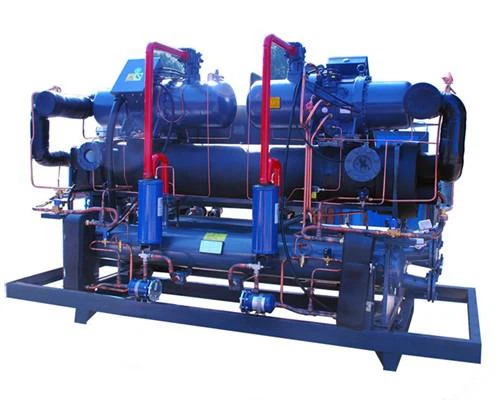
- Screw Compressor: The heart of the chiller, the screw compressor is responsible for compressing the refrigerant gas. It consists of two helical rotors that mesh together, creating a series of chambers. As the rotors rotate, the refrigerant gas is drawn into the chambers and compressed, increasing its pressure and temperature.
- Condenser: The condenser is where the high-pressure, high-temperature refrigerant gas releases heat and condenses into a liquid. It can be either air-cooled or water-cooled. In an air-cooled condenser, the heat is dissipated to the surrounding air through a series of fins and fans. In a water-cooled condenser, water is used to absorb the heat from the refrigerant, which is then discharged to a cooling tower or other heat rejection system.
- Expansion Valve: The expansion valve regulates the flow of the liquid refrigerant into the evaporator. It reduces the pressure of the refrigerant, causing it to expand and cool down. This allows the refrigerant to absorb heat from the water in the evaporator.
- Evaporator: The evaporator is where the heat exchange occurs between the refrigerant and the water. The low-pressure, low-temperature refrigerant absorbs heat from the water, causing the water to cool down. The refrigerant then evaporates back into a gas and returns to the compressor to start the cycle again.
- Control System: The control system monitors and regulates the operation of the chiller, ensuring optimal performance and energy efficiency. It includes sensors, controllers, and actuators that adjust the compressor speed, refrigerant flow, and other parameters based on the cooling demand.
The Refrigeration Cycle
Now that we understand the key components, let's take a closer look at the refrigeration cycle of a screw water chiller. The refrigeration cycle consists of four main stages: compression, condensation, expansion, and evaporation.
- Compression: The cycle begins with the compressor drawing in low-pressure, low-temperature refrigerant gas from the evaporator. As the rotors of the compressor rotate, the gas is compressed, increasing its pressure and temperature. The high-pressure, high-temperature refrigerant gas then leaves the compressor and enters the condenser.
- Condensation: In the condenser, the high-pressure, high-temperature refrigerant gas releases heat and condenses into a liquid. As the refrigerant cools down, its temperature and pressure decrease. The heat is transferred to the cooling medium (air or water), which carries it away from the chiller. The liquid refrigerant then leaves the condenser and enters the expansion valve.
- Expansion: The expansion valve reduces the pressure of the liquid refrigerant, causing it to expand and cool down. As the refrigerant expands, its temperature and pressure drop significantly. The low-pressure, low-temperature refrigerant then enters the evaporator.
- Evaporation: In the evaporator, the low-pressure, low-temperature refrigerant absorbs heat from the water, causing the water to cool down. As the refrigerant absorbs heat, it evaporates back into a gas. The heat exchange between the refrigerant and the water is facilitated by a series of tubes or plates in the evaporator. The evaporated refrigerant gas then returns to the compressor to start the cycle again.
Air-Cooled vs. Water-Cooled Screw Chillers
As mentioned earlier, screw water chillers can be either air-cooled or water-cooled. Each type has its own advantages and disadvantages, and the choice between the two depends on various factors such as the application, location, and available resources.
- Air-Cooled Screw Chillers: Air-cooled screw chillers are relatively simple and easy to install. They do not require a separate cooling tower or water source, making them suitable for applications where water is scarce or expensive. However, they are less energy-efficient than water-cooled chillers, especially in hot climates, as the air-cooled condenser has a lower heat transfer efficiency. To learn more about the refrigeration cycle of air-cooled screw chillers, you can visit Screw Air Cooled Chiller Refrigeration Cycle.
- Water-Cooled Screw Chillers: Water-cooled screw chillers are more energy-efficient than air-cooled chillers, as the water-cooled condenser has a higher heat transfer efficiency. They are also quieter and have a longer lifespan. However, they require a separate cooling tower or water source, which adds to the installation and operating costs. Water-cooled screw chillers are suitable for large-scale applications where high cooling capacity and energy efficiency are required. To learn more about water-cooled screw type chillers, you can visit Water Cooled Screw Type Chiller.
Applications of Screw Water Chillers
Screw water chillers are widely used in various industrial and commercial applications, including:
- HVAC Systems: Screw water chillers are commonly used in heating, ventilation, and air conditioning (HVAC) systems to provide cooling for commercial buildings, hospitals, hotels, and other large facilities.
- Industrial Processes: Many industrial processes require precise temperature control, and screw water chillers are often used to cool equipment such as lasers, welding machines, and plastic injection molding machines.
- Food and Beverage Industry: Screw water chillers are used in the food and beverage industry to cool products during processing, storage, and transportation.
- Pharmaceutical Industry: In the pharmaceutical industry, screw water chillers are used to maintain the temperature of laboratory equipment, storage facilities, and production processes.
Advantages of Screw Water Chillers
Screw water chillers offer several advantages over other types of chillers, including:
- High Efficiency: Screw compressors are known for their high efficiency, which translates into lower energy consumption and operating costs.
- Reliability: Screw water chillers are designed to operate continuously for long periods of time, making them highly reliable.
- Flexibility: Screw water chillers can be customized to meet the specific requirements of different applications, including cooling capacity, temperature control, and refrigerant type.
- Low Noise Levels: Screw water chillers are relatively quiet compared to other types of chillers, making them suitable for applications where noise is a concern.
Conclusion
In conclusion, the working principle of a screw water chiller is based on the refrigeration cycle, which involves the compression, condensation, expansion, and evaporation of a refrigerant. The key components of a screw water chiller include the screw compressor, condenser, expansion valve, evaporator, and control system. Screw water chillers can be either air-cooled or water-cooled, each with its own advantages and disadvantages. They are widely used in various industrial and commercial applications, offering high efficiency, reliability, flexibility, and low noise levels.
If you are in the market for a screw water chiller, I encourage you to contact us to discuss your specific requirements. Our team of experts can help you select the right chiller for your application and provide you with a comprehensive solution that meets your needs and budget. To learn more about our refrigeration equipment screw chillers, you can visit Refrigeration Equipment Screw Chiller.

References
- ASHRAE Handbook - Refrigeration
- Carrier Corporation. (2023). Screw Chiller Technical Manual.
- Trane Technologies. (2023). Screw Water Chiller Product Guide.