

A screw air compressor is a critical piece of equipment in many industrial applications, providing a reliable source of compressed air. At the heart of its efficient operation lies the separator, a component that plays a pivotal role in ensuring the quality of the compressed air. As a trusted screw air compressor supplier, I am excited to delve into the workings of the separator and explain how it contributes to the overall performance of the compressor.
The Basics of a Screw Air Compressor
Before we dive into the separator, let's briefly understand how a screw air compressor operates. In a screw air compressor, two helical rotors mesh together inside a housing. As the rotors turn, they draw in air through an intake valve. The air is then trapped between the rotors and the housing, and as the rotors continue to rotate, the volume of the air pocket decreases, compressing the air. This compressed air is then discharged through an outlet valve.
During the compression process, lubricating oil is injected into the compression chamber to cool the air, seal the clearances between the rotors, and reduce friction. This oil mixes with the compressed air, and it is the job of the separator to separate the oil from the air before the air is delivered to the end - user.
How the Separator Works
The separator in a screw air compressor typically consists of a separator tank and a separator element.
Separator Tank
The separator tank is the first stage of separation. When the oil - air mixture enters the separator tank, the sudden expansion of the mixture as it enters the larger volume of the tank causes a reduction in the velocity of the mixture. Due to the difference in density between the oil droplets and the air, the heavier oil droplets start to settle at the bottom of the tank under the influence of gravity. This is a relatively simple but effective initial separation method.
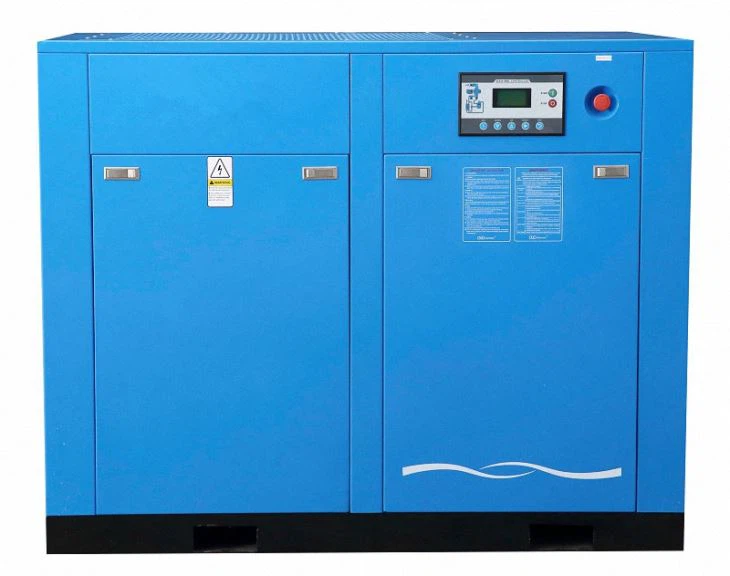

The separator tank also acts as a buffer, smoothing out the pulsations in the compressed air flow. This helps to ensure a more stable and consistent supply of compressed air to the downstream equipment.
Separator Element
The separator element is the key component for achieving a high - level of oil - air separation. It is usually a high - efficiency filter made of a special fibrous material.
When the partially separated oil - air mixture from the separator tank passes through the separator element, several separation mechanisms come into play:
Inertial Separation
As the oil - air mixture flows through the separator element, the small oil droplets in the air are forced to change direction due to the complex structure of the fibrous material. The inertia of the oil droplets causes them to collide with the fibers of the filter material. Once they collide with the fibers, the oil droplets adhere to the fibers.
Diffusion Separation
The air molecules in the oil - air mixture are in constant random motion. The smaller oil droplets are also subject to this random motion. As they move through the separator element, they are more likely to come into contact with the fibers of the filter material. When they do, they are captured by the fibers, further contributing to the separation process.
Coalescence
As more and more oil droplets adhere to the fibers of the separator element, they start to merge or coalesce into larger droplets. These larger droplets then flow down the fibers under the influence of gravity and eventually drip off the element and collect at the bottom of the separator housing.
The air, now with a significantly reduced oil content, passes through the separator element and is ready to be delivered to the end - user.
Importance of a Well - Functioning Separator
A properly functioning separator is crucial for several reasons:
Air Quality
The main purpose of the separator is to ensure that the compressed air delivered to the end - user is clean and free of excessive oil. In many industrial applications, such as in the food and beverage industry, electronics manufacturing, and pharmaceutical production, even a small amount of oil in the compressed air can contaminate the products or damage the sensitive equipment. A high - quality separator can reduce the oil content in the compressed air to very low levels, typically in the range of a few parts per million (ppm).
Equipment Protection
Separating the oil from the compressed air also helps to protect the downstream equipment. Oil - contaminated air can cause corrosion, wear, and clogging in pneumatic tools, valves, and other components. By removing the oil, the separator extends the service life of the equipment and reduces maintenance costs.
Energy Efficiency
A well - functioning separator can also contribute to the energy efficiency of the screw air compressor. When the oil is effectively separated, it can be recycled back into the compressor lubrication system. This reduces the need for frequent oil replacement and ensures that the compressor operates at its optimal efficiency.
Different Types of Separators
There are different types of separators available in the market, each with its own characteristics and applications.
Standard Separators
Standard separators are the most commonly used type. They are designed to provide a good balance between separation efficiency and cost. They are suitable for most general industrial applications where the requirements for air quality are not extremely high.
High - Efficiency Separators
High - efficiency separators are used in applications where very low oil content in the compressed air is required. These separators are made of more advanced filter materials and have a more complex structure to achieve a higher level of separation. They are often used in industries such as electronics manufacturing and food processing.
Impact of Separator Quality on Compressor Performance
The quality of the separator has a direct impact on the performance of the screw air compressor. A low - quality separator may not be able to achieve the desired level of oil - air separation, resulting in high oil carry - over in the compressed air. This can lead to increased maintenance requirements, higher energy consumption, and potential damage to the downstream equipment.
On the other hand, a high - quality separator can improve the overall efficiency of the compressor. It can reduce the oil consumption, extend the service life of the compressor components, and ensure a more reliable supply of clean compressed air.
Maintenance of the Separator
Proper maintenance of the separator is essential for its long - term performance. This includes regular inspection of the separator element for signs of clogging or damage. The separator element should be replaced at the recommended intervals to ensure optimal separation efficiency.
The separator tank also needs to be drained regularly to remove the accumulated oil and water. Failure to drain the tank can lead to reduced separation efficiency and potential damage to the separator element.
Conclusion
As a screw air compressor supplier, I understand the importance of the separator in the overall performance of the compressor. A well - functioning separator ensures high - quality compressed air, protects downstream equipment, and improves energy efficiency. Whether you are looking for a Two Stage Air Compressor, a 2 Stage Air Compressor, or an Industrial Screw Air Compressor, we can provide you with the right solution.
If you are in the market for a screw air compressor or need advice on separator maintenance, please do not hesitate to contact us. Our team of experts is ready to assist you in finding the best solution for your specific needs. We look forward to the opportunity to work with you and contribute to the success of your operations.
References
- Compressed Air and Gas Handbook, by Compressed Air and Gas Institute
- Screw Compressor Technology, by various industry publications on compressor technology.