

Hey there! As a supplier of Air Cooled Screw Chillers, I'm super stoked to chat with you about how capacity modulation can seriously boost the energy efficiency of these chillers. Let's dive right in!

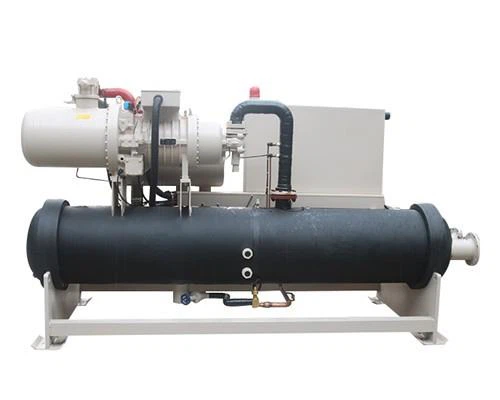
First off, what's capacity modulation? Well, it's a fancy term for adjusting the chiller's cooling capacity to match the actual cooling load. You see, in real - world scenarios, the cooling demand in a building or industrial process isn't constant. There are times when it's really high, like on a scorching summer day, and other times when it's much lower. Without capacity modulation, a chiller would run at full capacity all the time, even when it doesn't need to. That's like using a sledgehammer to crack a nut - it's overkill and wastes a ton of energy.
When an air - cooled screw chiller is equipped with capacity modulation, it can operate at different levels of capacity. For example, it can run at 25%, 50%, 75%, or 100% of its maximum capacity, depending on how much cooling is required. This ability to fine - tune the output is a game - changer for energy efficiency.
One of the main ways capacity modulation saves energy is by reducing part - load losses. In a non - modulated chiller, when the cooling demand drops, the chiller still consumes a significant amount of power even though it's not doing as much work. It's like a car idling in traffic - it's using fuel but not going anywhere fast. With capacity modulation, the chiller can scale back its operation. When the load is low, it runs at a lower capacity, which means it uses less electricity. This directly translates into lower energy bills for the end - user.
Let's talk about compressor efficiency. The compressor is the heart of an air - cooled screw chiller. In a standard chiller without capacity modulation, the compressor either runs at full speed or shuts off completely. Starting and stopping the compressor frequently is not only hard on the equipment but also consumes a lot of energy. Every time the compressor starts up, it requires a large inrush of current. On the other hand, a chiller with capacity modulation can adjust the compressor's speed smoothly. It can slow down when the load is light and speed up when more cooling is needed. This continuous and smooth operation keeps the compressor running more efficiently, reducing both energy consumption and wear and tear on the compressor.
Another aspect to consider is the relationship between the chiller and the cooling system it serves. In a building's HVAC system, for instance, the chiller needs to work in harmony with other components like fans and pumps. Capacity modulation allows the chiller to better coordinate with these other parts. When the cooling demand decreases, the chiller can reduce its output, and then the fans and pumps can also be adjusted accordingly. This integrated approach ensures that the entire cooling system operates at its most energy - efficient level.
Now, let me give you a real - world example. Imagine an industrial facility that uses an 100HP 215KW Industrial Double Screw Compressor Air Cooled Chiller to cool its manufacturing processes. During normal operation, the cooling demand varies throughout the day. In the morning, when production is ramping up, the demand is relatively high. As the day goes on, the demand might decrease as some production lines slow down or take breaks. Without capacity modulation, the chiller would run at full capacity all day, even during the periods of low demand. This would result in a huge amount of wasted energy. But if the chiller has capacity modulation, it can adjust its output to match the actual demand. It can run at a lower capacity during the slow periods, saving a substantial amount of electricity and money for the facility.
There are different types of capacity modulation methods available for air - cooled screw chillers. One common method is slide valve modulation. The slide valve in the compressor can be adjusted to control the amount of refrigerant flowing through the compressor, thus changing the compressor's capacity. Another method is variable - speed drive (VSD) technology. With VSD, the speed of the compressor motor can be adjusted based on the cooling load. This is a very precise way of modulating the capacity and is known for its high energy - saving potential.
If you're in the market for a high - efficiency air - cooled screw chiller, you might also be interested in our Screw Water Chiller. It combines the benefits of screw compressor technology with water - cooling, offering even more flexibility and energy - saving options. And for those who want advanced control features, our Plc Control Chiller is a great choice. The PLC (Programmable Logic Controller) allows for precise control of the chiller's operation, including capacity modulation, and can be customized to meet the specific needs of your application.
In conclusion, capacity modulation is a crucial feature that can significantly improve the energy efficiency of an air - cooled screw chiller. It reduces part - load losses, enhances compressor efficiency, and enables better integration with the overall cooling system. By investing in a chiller with capacity modulation, you're not only saving energy and money but also contributing to a more sustainable future.
If you're interested in learning more about our air - cooled screw chillers or want to discuss your specific cooling needs, don't hesitate to reach out. We're here to help you find the perfect chiller solution for your project. Let's work together to make your cooling system more energy - efficient!
References
- ASHRAE Handbook - HVAC Systems and Equipment.
- Technical papers on screw chiller technology from industry conferences.