

A water cooled chiller is a vital component in various industrial and commercial applications, providing efficient cooling solutions. At the heart of this system, the water pump plays a crucial role in ensuring the proper circulation of water, which is essential for the chiller's operation. In this blog, as a water cooled chiller supplier, I will delve into the workings of the water pump in a water cooled chiller and explain its significance.
The Basics of a Water Cooled Chiller
Before we explore the water pump's role, let's briefly understand how a water cooled chiller operates. A water cooled chiller consists of four main components: the compressor, condenser, expansion valve, and evaporator. The compressor pressurizes the refrigerant, which then releases heat in the condenser. The cooled refrigerant passes through the expansion valve and enters the evaporator, where it absorbs heat from the process water or air. The heated refrigerant is then sent back to the compressor, and the cycle repeats.
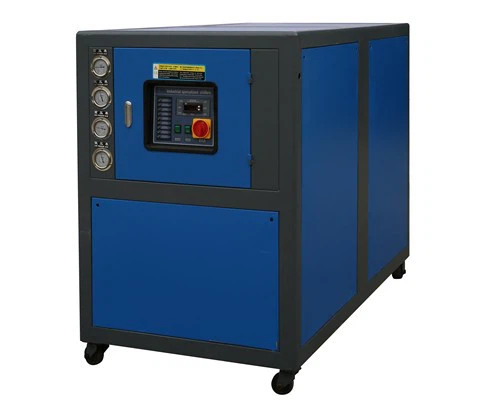
The water pump in a water cooled chiller is responsible for circulating water through the condenser and evaporator. This water absorbs heat from the refrigerant in the condenser and transfers it to the external environment, usually through a cooling tower. In the evaporator, the water absorbs heat from the process or space being cooled and returns to the chiller to repeat the cycle.

How the Water Pump Works
The water pump in a water cooled chiller is typically a centrifugal pump. Centrifugal pumps are widely used in chiller systems due to their simplicity, reliability, and efficiency. Here's a step-by-step breakdown of how a centrifugal water pump works:
1. Inlet and Impeller
The water enters the pump through the inlet, which is usually located at the center of the pump casing. As the water enters, it encounters the impeller, a rotating component with curved blades. The impeller is connected to a motor, which provides the power to rotate it at high speeds.
2. Centrifugal Force
As the impeller rotates, it imparts a centrifugal force to the water. This force causes the water to move radially outward from the center of the impeller towards the outer edge of the pump casing. The speed and pressure of the water increase as it moves along the impeller blades.
3. Volute Casing
The pump casing is designed in a volute shape, which gradually expands in cross-sectional area as the water moves towards the outlet. This expansion of the casing allows the water to slow down and convert its kinetic energy into pressure energy. The volute casing also helps to direct the water towards the outlet in a smooth and efficient manner.
4. Outlet and Discharge
The water exits the pump through the outlet, which is located at the side of the pump casing. The high-pressure water is then discharged into the chiller system, where it circulates through the condenser and evaporator.
Importance of the Water Pump in a Water Cooled Chiller
The water pump is a critical component of a water cooled chiller system, and its proper operation is essential for the overall performance and efficiency of the chiller. Here are some key reasons why the water pump is so important:
1. Heat Transfer
The water pump ensures the continuous circulation of water through the condenser and evaporator, which is necessary for efficient heat transfer. Without proper water circulation, the refrigerant would not be able to release or absorb heat effectively, leading to reduced cooling capacity and increased energy consumption.
2. System Pressure
The water pump maintains the required pressure in the chiller system. This pressure is necessary to ensure that the water flows through the system at the correct rate and that the refrigerant can be properly compressed and expanded. If the pressure is too low, the water may not circulate properly, and the chiller may not function efficiently. If the pressure is too high, it can cause damage to the system components.
3. Cooling Tower Operation
In a water cooled chiller system, the water pump is also responsible for supplying water to the cooling tower. The cooling tower is used to dissipate the heat absorbed by the water in the condenser. The water pump ensures that the cooling tower receives an adequate supply of water at the correct pressure, which is necessary for efficient heat dissipation.
4. Process Cooling
In industrial applications, the water pump plays a crucial role in providing cooling for various processes. The circulating water absorbs heat from the process equipment and transfers it to the chiller, where it is removed. This helps to maintain the temperature of the process within the desired range, ensuring the quality and efficiency of the production process.
Factors Affecting Water Pump Performance
Several factors can affect the performance of the water pump in a water cooled chiller system. These factors include:
1. Pump Size and Capacity
The size and capacity of the water pump are important considerations. The pump must be sized correctly to meet the flow rate and pressure requirements of the chiller system. If the pump is too small, it may not be able to provide sufficient water circulation, leading to reduced cooling capacity. If the pump is too large, it may consume more energy than necessary and cause unnecessary wear and tear on the system components.
2. Motor Efficiency
The efficiency of the motor that drives the water pump can also affect its performance. A high-efficiency motor will consume less energy and operate more reliably than a low-efficiency motor. It is important to choose a motor that is properly sized and matched to the pump to ensure optimal performance.
3. Water Quality
The quality of the water used in the chiller system can also have an impact on the water pump's performance. Water that contains impurities such as dirt, sediment, or chemicals can cause corrosion, scaling, and clogging of the pump components. This can reduce the pump's efficiency and lifespan. It is important to use high-quality water and to implement proper water treatment measures to prevent these issues.
4. System Design
The design of the chiller system, including the piping layout and the configuration of the condenser and evaporator, can also affect the water pump's performance. A well-designed system will minimize pressure losses and ensure that the water flows smoothly through the system. It is important to work with a qualified engineer or technician to design a chiller system that is optimized for the specific application.
Maintenance and Troubleshooting of the Water Pump
Regular maintenance of the water pump is essential to ensure its proper operation and to prevent breakdowns. Here are some maintenance tasks that should be performed on a regular basis:
1. Inspection
Regularly inspect the pump for signs of wear, damage, or leaks. Check the impeller, bearings, seals, and motor for any signs of damage or malfunction. Replace any worn or damaged components as needed.
2. Lubrication
If the pump has bearings that require lubrication, make sure to lubricate them according to the manufacturer's recommendations. Use the correct type and amount of lubricant to ensure proper operation.
3. Cleaning
Clean the pump and its components regularly to remove any dirt, sediment, or debris. This will help to prevent clogging and ensure that the pump operates efficiently.
4. Alignment
Check the alignment of the pump and motor regularly to ensure that they are properly aligned. Misalignment can cause excessive vibration and wear on the pump components, leading to premature failure.
If the water pump is experiencing problems, here are some troubleshooting steps that can be taken:
1. Check the Power Supply
Make sure that the pump is receiving power and that the motor is functioning properly. Check the electrical connections, fuses, and circuit breakers to ensure that they are not damaged or tripped.
2. Check the Water Supply
Ensure that the water supply to the pump is adequate and that there are no blockages or restrictions in the piping. Check the inlet strainer to make sure that it is clean and not clogged.
3. Check the Pump Operation
Listen for any unusual noises or vibrations coming from the pump. If the pump is making strange noises or vibrating excessively, it may be a sign of a problem. Stop the pump immediately and investigate the cause.
4. Check the Pressure and Flow Rate
Use a pressure gauge and flow meter to check the pressure and flow rate of the water in the system. If the pressure or flow rate is too low or too high, it may indicate a problem with the pump or the system.
Conclusion
The water pump is a critical component of a water cooled chiller system, and its proper operation is essential for the overall performance and efficiency of the chiller. By understanding how the water pump works and the factors that can affect its performance, you can ensure that your chiller system operates smoothly and reliably. Regular maintenance and troubleshooting of the water pump will help to prevent breakdowns and extend the lifespan of the system.
If you are in the market for a water cooled chiller or need assistance with the maintenance or troubleshooting of your existing system, we are here to help. As a leading Industrial Water Chiller supplier, we offer a wide range of Water Cooled Chiller Unit and Industrial Chiller Plant solutions to meet your specific needs. Contact us today to learn more about our products and services and to discuss your cooling requirements.
References
- ASHRAE Handbook - HVAC Systems and Equipment. American Society of Heating, Refrigerating and Air-Conditioning Engineers.
- Centrifugal Pumps: Fundamentals, Design, and Application. By Igor J. Karassik.
- Water Chiller Systems: Design, Operation, and Maintenance. By David A. Dorgan.