

Hey there! As a supplier of chiller cooling systems, I've been getting a lot of questions lately about the environmental impacts of the refrigerants we use. So, I thought I'd take a moment to break it down for you.
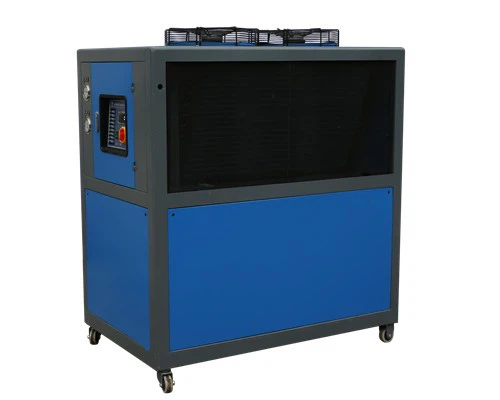
First off, let's talk about what a chiller cooling system is. In simple terms, it's a machine that removes heat from a liquid via a vapor - compression or absorption refrigeration cycle. This cooled liquid then circulates through a building or industrial process to cool equipment, spaces, etc. And at the heart of this system is the refrigerant.
Common Refrigerants in Chiller Systems
There are several types of refrigerants commonly used in chiller cooling systems. The most well - known ones are Hydrochlorofluorocarbons (HCFCs), Hydrofluorocarbons (HFCs), and more recently, Hydrofluoroolefins (HFOs).
HCFCs were once the go - to refrigerants. They were great at their job of heat transfer, but they had a major drawback. These chemicals contain chlorine, and when they're released into the atmosphere, they can damage the ozone layer. The ozone layer is crucial as it protects us from the sun's harmful ultraviolet (UV) rays. In fact, the Montreal Protocol, an international treaty, was put in place to phase out the production and consumption of HCFCs due to their ozone - depleting potential.
HFCs came in as a replacement for HCFCs. They don't contain chlorine, so they don't harm the ozone layer. However, they have another big problem: high global warming potential (GWP). GWP measures how much heat a greenhouse gas traps in the atmosphere over a specific period compared to carbon dioxide. HFCs can trap a whole lot more heat than CO₂, sometimes hundreds or even thousands of times more. This means that when HFCs are released into the atmosphere, they contribute significantly to global warming.
On the bright side, we now have HFOs. These are the new kids on the block. They have very low ozone - depleting potential and much lower GWP compared to HFCs. They're seen as a more environmentally friendly alternative, and many chiller manufacturers are starting to use them in their systems.
Impact on Ozone Depletion
As I mentioned earlier, HCFCs are the main culprits when it comes to ozone depletion. When these refrigerants are released into the atmosphere, they rise up to the stratosphere. There, the ultraviolet radiation breaks them down, releasing chlorine atoms. These chlorine atoms then react with ozone molecules, breaking them apart. This leads to a reduction in the ozone layer, which can have serious consequences for life on Earth.
Increased UV radiation can cause skin cancer, cataracts, and weakened immune systems in humans. It can also harm plants and marine life. That's why the phase - out of HCFCs has been so important. We've seen a slow but steady recovery of the ozone layer since the implementation of the Montreal Protocol.
Impact on Global Warming
HFCs are a major contributor to global warming. The high GWP of HFCs means that even small amounts released into the atmosphere can have a significant impact on the climate. As the Earth warms, we face a range of problems, such as rising sea levels, more extreme weather events like hurricanes and droughts, and disruptions to ecosystems.
The use of HFCs in chiller cooling systems is a concern because these systems are widely used in commercial buildings, industrial processes, and even some residential applications. Every time there's a leak in a chiller system using HFCs, it's adding more greenhouse gases to the atmosphere.

Our Efforts as a Chiller Cooling System Supplier
At our company, we're well aware of these environmental issues. That's why we're constantly looking for ways to reduce the environmental impact of our chiller cooling systems. We're actively promoting the use of HFO - based refrigerants in our products. These refrigerants offer a great balance between performance and environmental friendliness.
We also ensure that our chiller systems are designed to be as leak - proof as possible. A well - designed system with proper seals and fittings can minimize the chances of refrigerant leakage. We train our technicians to install and maintain the systems correctly, so that the risk of leaks is further reduced.
Some of Our Chiller Products
We have a wide range of chiller products that are designed to meet different customer needs. For example, we have the [12HP 30KW Scroll - Type Compressor Industrial Air Cooled Chiller](/chiller/air - cooled - chiller/12hp - 30kw - scroll - type - compressor - industrial.html). This chiller is great for industrial applications where a reliable and efficient cooling solution is required. It uses advanced technology to ensure optimal performance while also being designed with environmental considerations in mind.
Another popular product is the [Water Chiller Air Cooled](/chiller/air - cooled - chiller/water - chiller - air - cooled.html). This type of chiller is commonly used in commercial buildings to cool water for air - conditioning systems. It's energy - efficient and can be configured to use more environmentally friendly refrigerants.
We also offer the [Air Cooled Liquid Chiller](/chiller/air - cooled - chiller/air - cooled - liquid - chiller.html). This chiller is ideal for applications where a liquid needs to be cooled, such as in some manufacturing processes. It's designed to be compact and easy to install, and again, we can use more sustainable refrigerants in its operation.
What Can You Do?
If you're in the market for a chiller cooling system, here are a few things you can do to make an environmentally friendly choice. First, ask about the type of refrigerant used in the system. Look for systems that use HFOs or other low - GWP refrigerants. Second, consider the energy efficiency of the system. A more energy - efficient chiller will not only save you money on electricity bills but also reduce the overall carbon footprint.

When it comes to maintenance, make sure to have your chiller system regularly serviced by a professional. This can help detect and fix any potential leaks early on.
Let's Work Together
We're committed to providing our customers with high - quality chiller cooling systems that are both efficient and environmentally friendly. If you're interested in learning more about our products or have any questions about the environmental impacts of refrigerants, don't hesitate to reach out. We'd love to have a chat with you and discuss how we can meet your cooling needs while also being kind to the planet. Whether you're a small business owner looking for a cooling solution for your office or an industrial operator in need of a large - scale chiller system, we've got you covered.
References
- United Nations Environment Programme. "The Montreal Protocol on Substances that Deplete the Ozone Layer."
- Intergovernmental Panel on Climate Change (IPCC). "Climate Change 2021: The Physical Science Basis."
- U.S. Environmental Protection Agency. "Refrigerants and Climate Change."