

As a supplier of Water Cooled Screw Chillers, I've witnessed firsthand the growing concern about the environmental impacts of refrigerants used in these systems. In this blog, I'll delve into the various environmental aspects associated with the refrigerants in water cooled screw chillers, exploring both the positive and negative impacts, and discussing the industry's response to minimize harm.
The Role of Refrigerants in Water Cooled Screw Chillers
Refrigerants are the lifeblood of water cooled screw chillers. They play a crucial role in the refrigeration cycle, absorbing heat from the water being cooled and releasing it to the environment. The efficiency and performance of a chiller largely depend on the properties of the refrigerant used. Common refrigerants in water cooled screw chillers include hydrofluorocarbons (HFCs), hydrochlorofluorocarbons (HCFCs), and natural refrigerants such as ammonia and carbon dioxide.
Environmental Concerns Associated with Traditional Refrigerants
Ozone Depletion
In the past, many refrigerants used in chillers contained chlorine, such as HCFCs. These chlorine - containing refrigerants were found to be responsible for ozone depletion. When released into the atmosphere, they can rise to the stratosphere, where they break down and release chlorine atoms. These chlorine atoms then react with ozone molecules, breaking them apart and reducing the ozone layer. The ozone layer plays a vital role in protecting the Earth from harmful ultraviolet (UV) radiation. Depletion of the ozone layer can lead to increased UV radiation reaching the Earth's surface, which can cause skin cancer, cataracts, and damage to crops and marine ecosystems. Although the production and use of many HCFCs have been phased out under the Montreal Protocol, some older chillers may still be using these refrigerants.
Global Warming Potential (GWP)
HFCs, which replaced many HCFCs due to their zero ozone - depleting potential, have their own environmental drawback: high global warming potential. GWP is a measure of how much a given mass of a greenhouse gas contributes to global warming over a specific time period compared to carbon dioxide. HFCs can have GWPs hundreds or even thousands of times higher than carbon dioxide. When HFCs are released into the atmosphere, they trap heat, contributing to the greenhouse effect and global climate change. This can lead to rising global temperatures, melting ice caps, sea - level rise, and more extreme weather events.
The Environmental Benefits of Modern Refrigerants
Natural Refrigerants
In recent years, there has been a growing trend towards using natural refrigerants in water cooled screw chillers. Natural refrigerants such as ammonia (NH₃), carbon dioxide (CO₂), and hydrocarbons (e.g., propane and isobutane) have several environmental advantages.
Ammonia has a zero ozone - depleting potential and a very low GWP. It is a highly efficient refrigerant, which means that chillers using ammonia can operate with lower energy consumption. This not only reduces the carbon footprint associated with the chiller's operation but also leads to cost savings for the end - user. However, ammonia is toxic and flammable, so proper safety measures need to be in place when using it.
Carbon dioxide is another natural refrigerant with excellent environmental credentials. It has a GWP of 1, which is much lower compared to HFCs. CO₂ is non - toxic and non - flammable, making it a safer option in many applications. Additionally, CO₂ - based refrigeration systems can be designed to operate in a transcritical cycle, which can be very efficient in certain temperature ranges.
Hydrocarbons, such as propane and isobutane, also have low GWPs and zero ozone - depleting potential. They are highly efficient refrigerants and are widely used in small - to - medium - sized chillers. However, like ammonia, hydrocarbons are flammable, so safety precautions are necessary.
Industry Initiatives to Minimize Environmental Impact
As a water cooled screw chiller supplier, our industry is actively taking steps to minimize the environmental impact of refrigerants.
Refrigerant Management
Proper refrigerant management is crucial. This includes leak detection and repair programs. Regularly checking for refrigerant leaks in chillers can prevent the release of refrigerants into the atmosphere. Modern chillers are also designed with better sealing and monitoring systems to reduce the likelihood of leaks. Additionally, when it comes to refrigerant disposal, proper procedures are followed to ensure that refrigerants are recycled or destroyed in an environmentally friendly manner.
Research and Development
There is ongoing research and development in the field of refrigeration to find even more environmentally friendly refrigerants and improve the efficiency of chiller systems. For example, some companies are exploring new blends of refrigerants that have lower GWPs and better performance characteristics. Others are working on improving the design of chiller components to make the systems more energy - efficient, reducing the overall environmental impact.
Transition to Low - GWP Refrigerants
Many chiller manufacturers, including us, are transitioning to using low - GWP refrigerants in our products. We are investing in the development and production of chillers that can use natural refrigerants or new low - GWP synthetic refrigerants. This not only helps to meet environmental regulations but also positions us as leaders in sustainable refrigeration technology.
The Importance of Choosing the Right Chiller for the Environment
When customers are considering purchasing a water cooled screw chiller, it is essential that they take into account the environmental impact of the refrigerant used. A chiller with a low - GWP refrigerant can significantly reduce the carbon footprint of a building or industrial process.
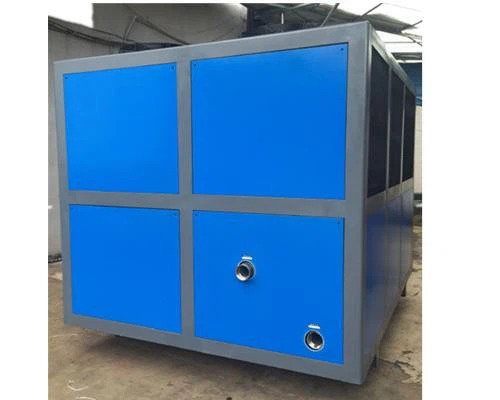
We offer a range of water cooled screw chillers that use different types of refrigerants to meet the diverse needs of our customers. Our Water Cooled Screw Type Chiller models are designed with the latest technology to ensure high efficiency and low environmental impact. For those who prefer air - cooled systems, our Air Cooled Chilled Water System provides a reliable and environmentally friendly option. And for industrial applications, our 100HP 215KW Industrial Double Screw Compressor Air Cooled Chiller offers powerful performance with an eye towards environmental sustainability.

Conclusion
The environmental impacts of refrigerants in water cooled screw chillers are a complex but important issue. While traditional refrigerants have caused significant environmental problems, the industry is making great strides towards more sustainable solutions. By choosing the right chiller with an environmentally friendly refrigerant, customers can not only reduce their environmental footprint but also contribute to a more sustainable future.
If you are interested in learning more about our water cooled screw chillers or are considering a purchase, we encourage you to contact us for a detailed discussion about your specific needs. Our team of experts is ready to assist you in selecting the most suitable chiller that balances performance, cost, and environmental impact.
References
- United Nations Environment Programme. (2023). The Montreal Protocol on Substances that Deplete the Ozone Layer.
- Intergovernmental Panel on Climate Change. (2021). Climate Change 2021: The Physical Science Basis.
- International Institute of Refrigeration. (2022). Natural Refrigerants in Refrigeration Systems.