

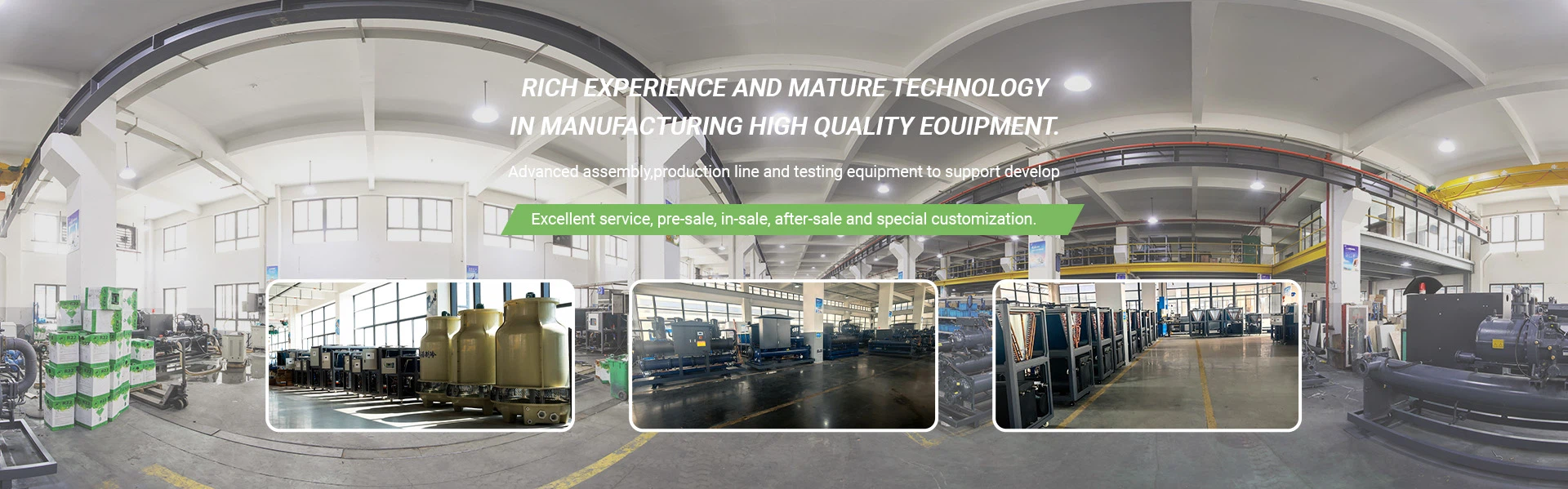
Selecting the right industrial chiller for industrial production is vital for maintaining efficiency and product quality. Below is a comprehensive guide on choosing an appropriate industrial chiller solution.
1. Temperature Range Requirements
The temperature range is a critical factor when selecting an industrial chiller. Businesses should determine the amount of material to be cooled, the cooling duration, and the target temperature. Standard industrial chillers typically provide a constant temperature range of 5-35℃. A low-temperature chiller is necessary for applications requiring lower temperatures, such as -5℃, -10℃, or even -20℃.
2. Power Supply Compatibility
For equipment used in different countries, ensuring compatibility with local power supply specifications is essential. If the power voltage in the target country differs from that of the origin, selecting an industrial chiller suited to the specific voltage is necessary.
3. Collaborative Chiller Operation
For continuous production processes, it's beneficial to consider multiple industrial chillers working in tandem. This setup allows production to continue smoothly even if one chiller fails, as other units can take over. Collaborative chiller systems improve reliability and minimize downtime, helping maintain uninterrupted operations.
4. Environmental Standards and Refrigerant Choices
Environmental standards vary across regions, especially in terms of refrigerants. While R22 is commonly used domestically, exporting equipment may require compliance with environmental regulations that demand eco-friendly refrigerants.
5. Flow Rate and Booster Pump Requirements
Cooling capacity indicates the compressor's cooling ability, while water flow rate represents the industrial chiller's capacity to remove heat. When selecting an industrial chiller, businesses should evaluate the speed, diameter, and length of the piping to ensure the flow rate and booster pump pressure meet operational demands.
6. Explosion-Proof and Special Safety Requirements
Certain industries, such as petrochemicals, food and beverage, pharmaceuticals, and aerospace, may require explosion-proof chillers. In such cases, the chiller's electrical control, motor, and fan may need EX explosion-proof modifications tailored to specific safety standards.