

Hey there! As a supplier of water cooling chillers, I often get asked about the energy efficiency of these machines. It's a crucial topic, not just for cost - saving but also for environmental reasons. So, let's dive right in and explore what the energy efficiency of water cooling chillers is all about.
Understanding Energy Efficiency in Water Cooling Chillers
First off, we need to understand what energy efficiency means in the context of water cooling chillers. Energy efficiency is all about getting the most cooling power out of the least amount of energy input. Simply put, it's how well the chiller can convert electrical energy into useful cooling output.
The most common way to measure the energy efficiency of a water cooling chiller is through the Coefficient of Performance (COP). COP is defined as the ratio of the cooling capacity (in Watts) to the power consumption (in Watts). For example, if a chiller has a cooling capacity of 5000 Watts and consumes 1000 Watts of electrical power, its COP would be 5. That means for every 1 Watt of electrical energy used, the chiller provides 5 Watts of cooling.
Generally, a higher COP indicates better energy efficiency. But keep in mind that the actual COP can vary depending on factors like the chiller's operating conditions, load, and design.
Factors Affecting the Energy Efficiency of Water Cooling Chillers
Refrigerant Type
The refrigerant used in a water cooling chiller plays a significant role in its energy efficiency. Different refrigerants have different thermodynamic properties, which can impact the chiller's performance. For instance, some modern refrigerants are designed to have better heat transfer characteristics, allowing the chiller to operate more efficiently.
Compressor Design
The compressor is the heart of a water cooling chiller. Its design can greatly affect the chiller's energy efficiency. There are different types of compressors, such as reciprocating, scroll, and centrifugal compressors. Each type has its own advantages and disadvantages in terms of efficiency. For example, scroll compressors are known for their high efficiency at part - load conditions. Our Hermetic Scroll 15HP Industrial Water Chiller uses a high - quality scroll compressor, which helps to achieve excellent energy efficiency even when the chiller is not running at full capacity.
Cooling System Design
The overall design of the cooling system, including the condenser and evaporator, also impacts energy efficiency. A well - designed condenser can transfer heat more effectively from the refrigerant to the cooling water, while an efficient evaporator can absorb heat from the process fluid. The size, material, and configuration of these components all matter. For example, using a larger condenser can sometimes improve heat transfer and thus increase energy efficiency.
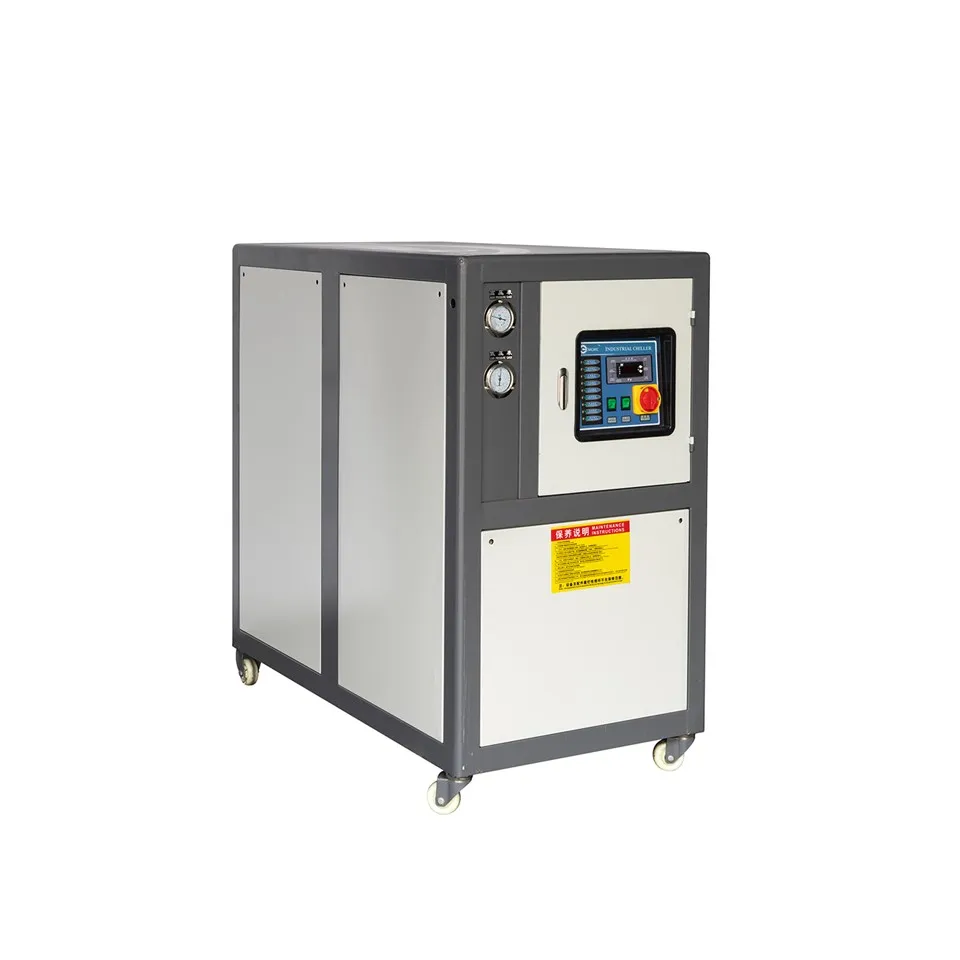

Control System
A good control system is essential for optimizing the energy efficiency of a water cooling chiller. It can adjust the chiller's operation based on the actual cooling load. For example, if the cooling demand decreases, the control system can reduce the compressor's speed or turn off some of the components to save energy.
Benefits of High - Energy - Efficiency Water Cooling Chillers
Cost Savings
One of the most obvious benefits of high - energy - efficiency water cooling chillers is cost savings. By using less electricity to achieve the same cooling effect, you'll see a significant reduction in your energy bills over time. This is especially important for industrial users who rely on chillers for large - scale cooling operations.
Environmental Impact
In today's world, environmental concerns are at the forefront. High - energy - efficiency chillers consume less electricity, which means less demand on power plants. This, in turn, reduces greenhouse gas emissions and helps to protect the environment.
Long - Term Reliability
Energy - efficient chillers are often designed with high - quality components and advanced technology. This not only improves their energy performance but also enhances their long - term reliability. You'll experience fewer breakdowns and maintenance issues, which can save you both time and money in the long run.
Our Water Cooling Chiller Products and Energy Efficiency
At our company, we take energy efficiency very seriously. We offer a wide range of Water Cooled Chiller Unit that are designed to meet different customer needs. Our Industrial Water Chiller products incorporate the latest technologies to ensure high energy efficiency.
For example, our chillers use advanced refrigerant management systems to minimize losses and improve heat transfer. We also implement smart control systems that can adjust the chiller's operation in real - time based on the cooling load. This way, our chillers can always operate at the most efficient point, whether it's a light load or a heavy load situation.
How to Evaluate the Energy Efficiency of a Water Cooling Chiller
If you're in the market for a water cooling chiller, here are some steps you can take to evaluate its energy efficiency:
Check the COP Rating
As mentioned earlier, the COP rating is a key indicator of energy efficiency. Look for chillers with a high COP. However, keep in mind that the COP can be measured under different conditions, so make sure to compare the ratings based on the same operating conditions.
Look for Energy - Saving Features
Check if the chiller has features like variable - speed drives, intelligent controls, and high - efficiency heat exchangers. These features can significantly improve energy efficiency.
Read Customer Reviews
Reading reviews from other customers can give you an idea of how well the chiller performs in real - world applications. Look for feedback on energy consumption and overall efficiency.
Contact Us for Your Water Cooling Chiller Needs
If you're interested in learning more about our energy - efficient water cooling chillers, or if you're ready to make a purchase, don't hesitate to reach out. We have a team of experts who can help you choose the right chiller for your specific needs. We can also provide you with detailed information on the energy efficiency of our products and how they can help you save money and protect the environment.
Whether you're a small business looking for a compact chiller or a large industrial facility in need of a high - capacity system, we've got you covered. So, take the first step towards energy - efficient cooling and contact us today for a consultation and to start discussing your procurement options.
References
ASHRAE. (2019). ASHRAE Handbook - HVAC Systems and Equipment. American Society of Heating, Refrigerating and Air - Conditioning Engineers.
Kreider, J. F., Rabl, A., & Claridge, D. E. (2010). Thermal Environmental Engineering. Cengage Learning.