

Core Role
In modern industry and commerce, chillers act as "cooling guardians", providing a stable low - temperature environment for equipment and processes to ensure efficient operation.
Definition and Applications
A chiller, or industrial chiller, employs a refrigeration cycle to remove heat from refrigerant, supplying low - temperature cooling water. Widely used in sectors like plastic, electronics, chemical, medical, and data centers, it controls equipment temperature, prevents overheating, and enhances quality and efficiency.
Working Principle
Its working principle relies on a refrigeration cycle with four key components: compressor, condenser, expansion valve, and evaporator. The compressor transforms refrigerant into high - temperature/pressure gas; after cooling in the condenser, it becomes liquid, then passes through the expansion valve and enters the evaporator to absorb heat, repeating for continuous cooling.
Type Classify
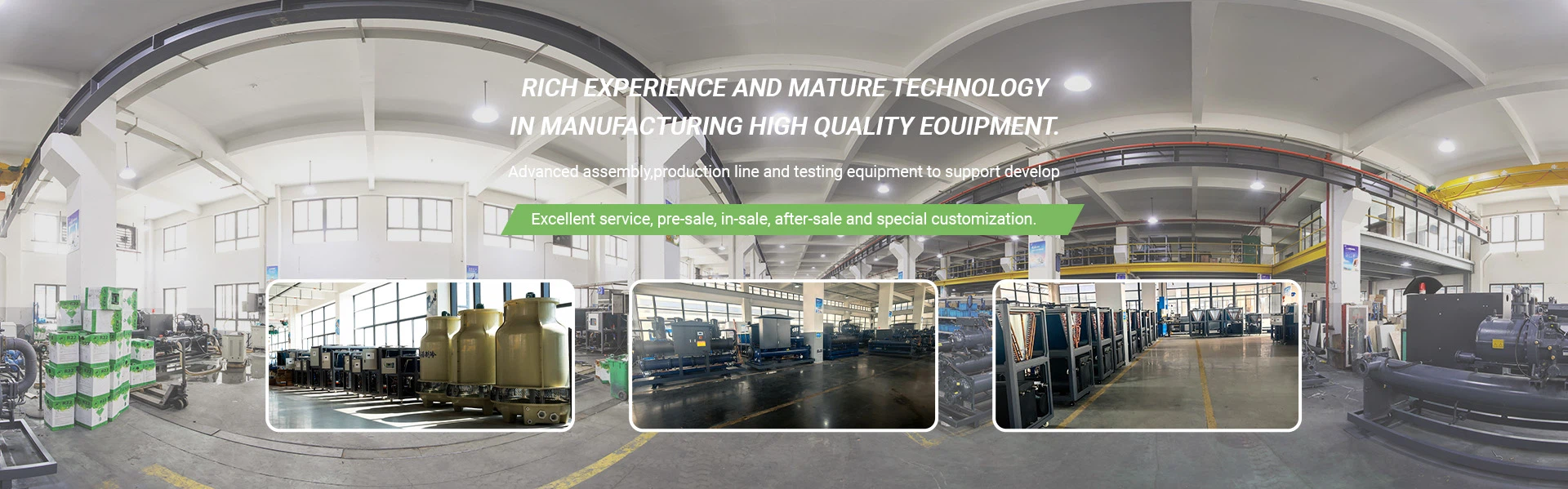
Chillers are categorized as air - cooled or water - cooled. Air - cooled types, using air and no cooling tower, suit water - scarce areas. Water - cooled ones, using a water cycle for high efficiency, are fit for large industries but require a cooling tower.
Practical Applications
In industry, chillers ensure precise machine operation, reducing defects. In commerce, such as data centers, they maintain server temperatures for stable data processing. Modern chillers pursue energy - saving via efficient compressors and smart controls, aligning with green trends.
Industry Impact
Chillers, though unobtrusive, are vital "heroes" in numerous fields, driving industry and commerce with dependable cooling.