



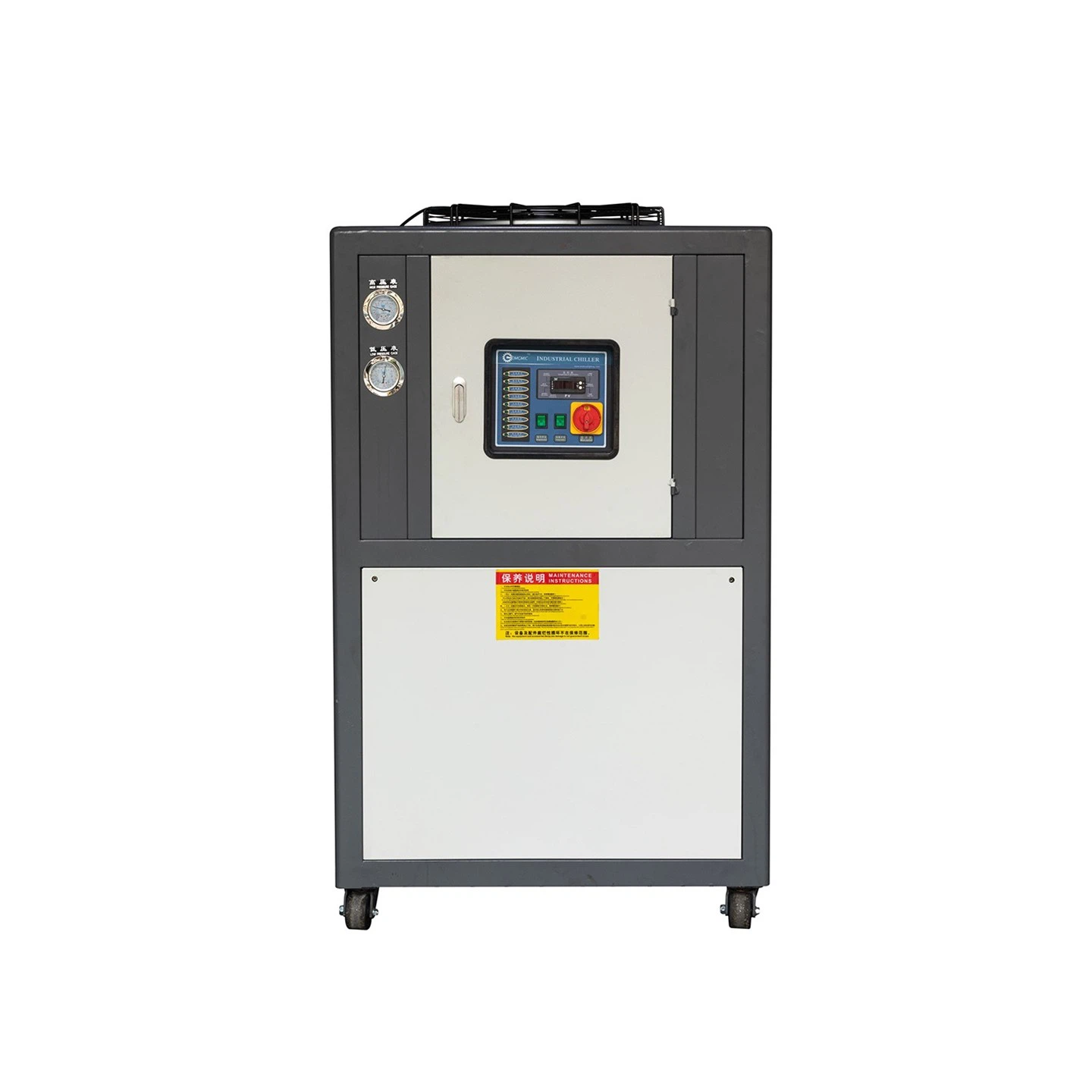


DMG Scroll Chiller

I. Core Working Principle
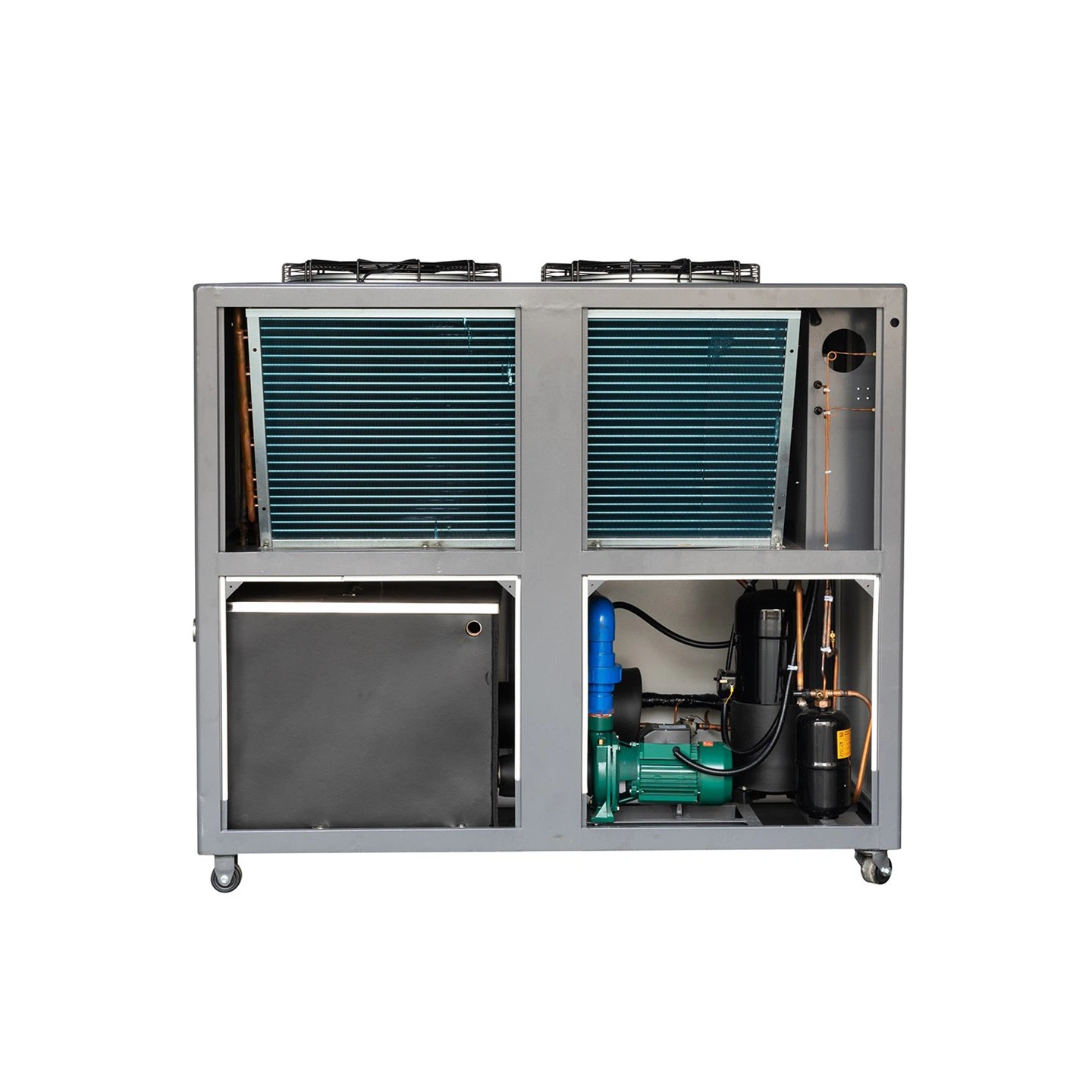
Based on the fundamental principles of the vapor compression refrigeration cycle-an industry-standard thermodynamic process widely utilized in air conditioning, refrigeration systems, and heat pump technologies-efficient heat transfer is achieved through the coordinated operation of four core, interconnected components. These components work in sequence to facilitate the continuous circulation and transformation of the refrigerant, enabling the cycle to absorb heat from a low-temperature environment and reject it to a higher-temperature surroundings, which is the primary objective of the system. The four core components that form the backbone of this heat transfer mechanism are as follows:
Evaporator: As a core component in refrigeration and cooling systems, the evaporator facilitates a crucial heat exchange process where the refrigerant inside absorbs thermal energy from the surrounding circulating water. This heat absorption triggers the refrigerant to undergo a phase change, evaporating from a liquid state into a low‑temperature, low‑pressure gas. Concurrently, as heat is removed from the water, the temperature of the circulating water drops significantly, resulting in the production of chilled water that can be utilized for various cooling applications.
Compressor: As a core component within refrigeration and air conditioning systems, the compressor functions by drawing in low-temperature, low-pressure gaseous refrigerant and mechanically compressing it into a high-temperature, high-pressure gas, preparing the refrigerant for subsequent heat exchange processes in the cooling cycle.
Condenser (Finned Type): Equipped with a finned design to enhance heat exchange efficiency, this component relies on forced airflow generated by connected fans to effectively draw away and dissipate the heat carried by the refrigerant. As the refrigerant releases its thermal energy into the surrounding air, it undergoes a phase change, transitioning from a high-temperature, high-pressure gas state into a dense, high-pressure liquid form.
Expansion valve: Typically installed between the receiver-drier and evaporator. Its core functions include throttling and depressurizing medium-temperature, high-pressure liquid refrigerant into low-temperature, low-pressure wet vapor, regulating refrigerant flow into the evaporator based on real-time superheat at the evaporator outlet to optimize heat exchange efficiency, and preventing liquid slugging, insufficient evaporator utilization and abnormal overheating to protect compressors and stabilize system operation.
II. Key Features
Easy Installation: Its integrated design only needs power and process water connections, removing the need for cooling towers, pumps, or auxiliary piping.
Water-Saving & Eco-Friendly: No cooling water consumption, ideal for water-scarce or poor-water-quality regions.
Low Maintenance: Primarily involves periodic cleaning of condenser fins and filters, resulting in minimal upkeep costs.
Significant Environmental Impact: Heat dissipation efficiency is highly temperature-dependent; cooling capacity decreases in high-temperature environments.
Application Scope: It is mainly designed for small to medium cooling capacities, making it ideal for compact systems and mobile or temporary applications.
III. Typical Applications
Industrial Equipment Cooling: Plastic injection molding, laser processing, electronics manufacturing, electroplating, printing, and food processing.
Commercial/Small-Scale Air Conditioning: Retail stores, offices, small data centers, laboratories, and other similar spaces.
Mobile/Temporary Scenarios: Outdoor construction sites, exhibitions, emergency cooling scenarios, and other similar applications.
Chiller Applications Across various Industries

Chemical Industry
Reactor cooling, distillation control, material storage temperature regulation

Food Industry
Food processing cooling, cold storage, preservation systems
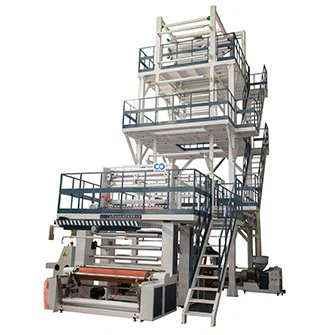
Packing Industry
Temperature control for plastic film cooling and printing equipment

Plastic Industry
Injection molding cooling and extruder temperature management
Product Parameters
|
Item & Description |
Air cooled chiller |
|
|
Model |
MG-5A |
|
|
Eavoprator temperature |
10 degree |
|
|
Condenser temperature |
54.4 degree |
|
|
Cooling capacity |
Kw |
14.2KW, 12300kcal |
|
Input power |
kw |
4.3 |
|
Power supply |
380v/50hz/3ph |
|
|
Refrigerant |
Type |
R407c |
|
Type of control |
Capillary tube |
|
|
Compressor |
Type |
hermetic scroll type |
|
Power |
5HP |
|
|
Qty |
1 |
|
|
Evaporator |
Type |
Shell and tube evaporator |
|
Chilled water flow (m3/h) |
12m3/h |
|
|
Chilled water outlet&inlet |
1.5' |
|
|
Condenser |
Model |
High effectived red copper covered into aluminum fins+low noise outer-rotor axial fan |
|
Cooling air flow (m3/h) |
7000 |
|
|
Fan power |
0.18*2 |
|
|
Water tank |
L |
80L |
|
Protector |
High and low pressure ,overload ,anti-phase ,compressor over temperature ,fusible plug,automatic temperature switch protection,etc. |
|
|
Dimension |
L (mm) |
1250 |
|
W(mm) |
750 |
|
|
W(mm) |
1330 |
|
|
Set Weight |
kg |
270 |
Accessories Overview

Hermetic Scroll Compressor
It delivers refrigerant compression via efficient scroll movement, providing stable cooling performance with minimal noise and vibration.
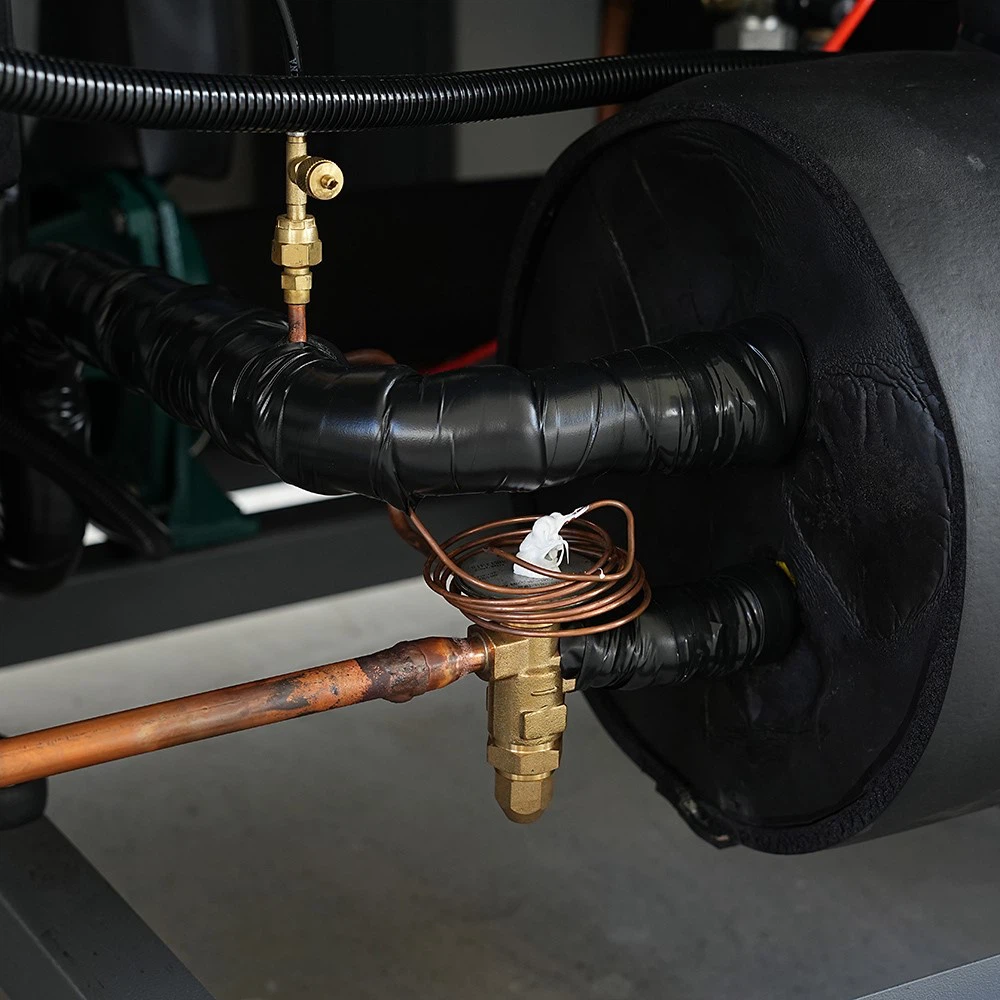
Thermal Expansion Valve
It precisely controls the flow of refrigerant into the evaporator according to cooling demand, optimizing system efficiency and temperature regulation.
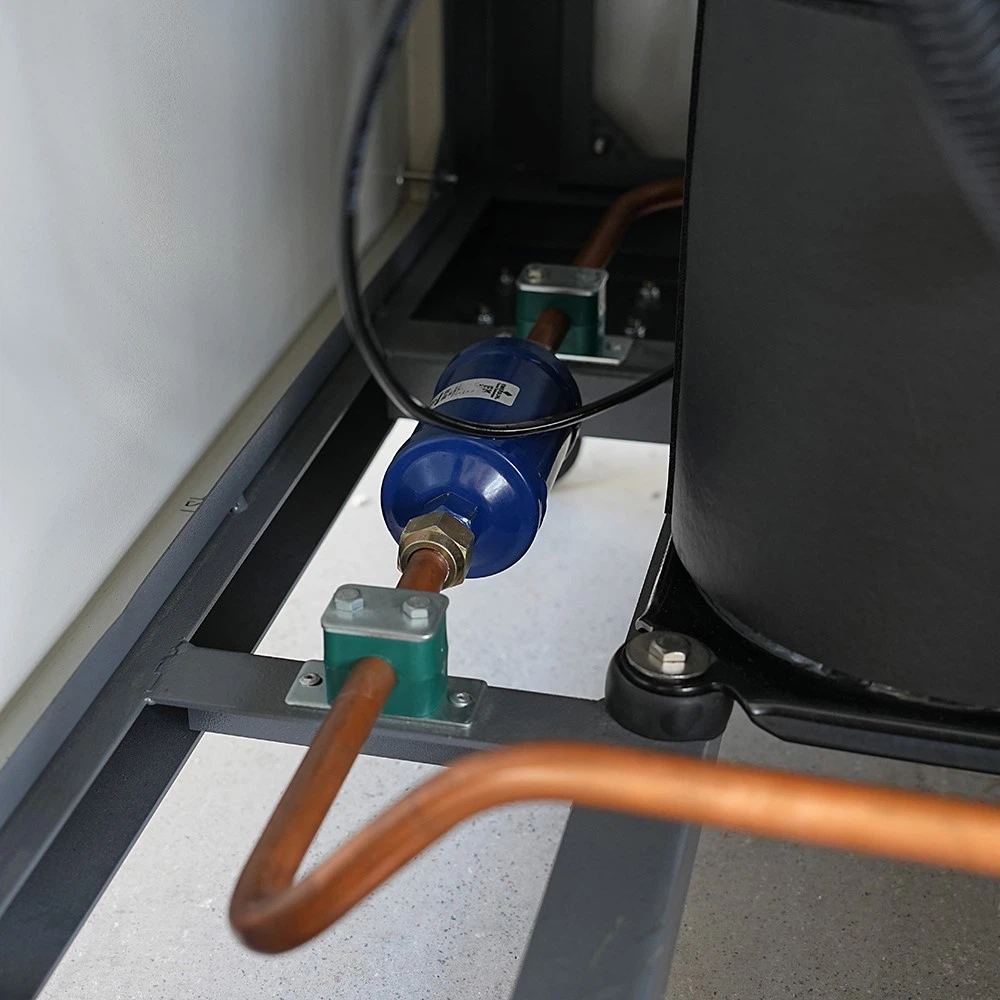
Filter-Drier
It removes moisture and contaminants from the refrigerant. This prevents ice blockages, corrosion, and system damage while keeping the refrigerant pure.
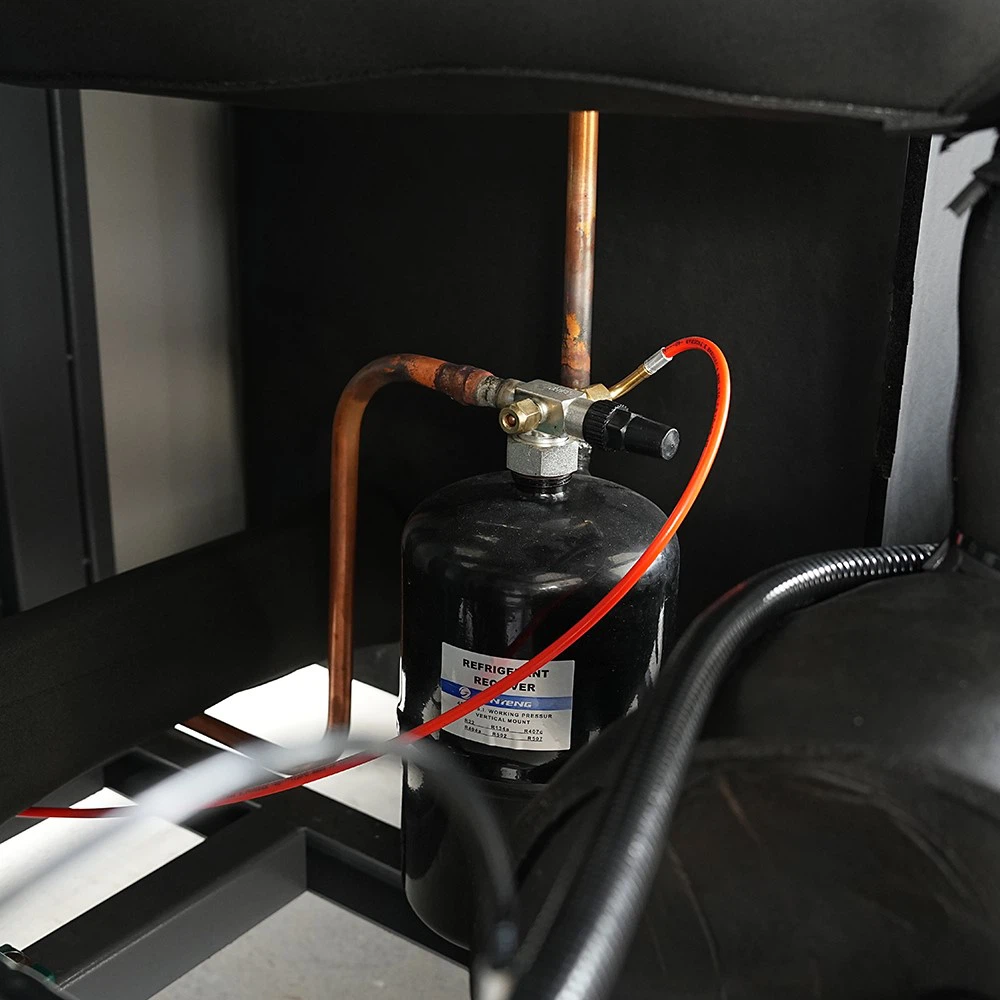
Accumulator
It stores excess refrigerant to handle changing cooling loads, stabilizes system pressure, and ensures a steady refrigerant supply during operation.
DMGMIC Air-Cooled Industrial Chiller
Efficient and Convenient Intelligent Temperature Control Solutions

Core Advantages and Applications
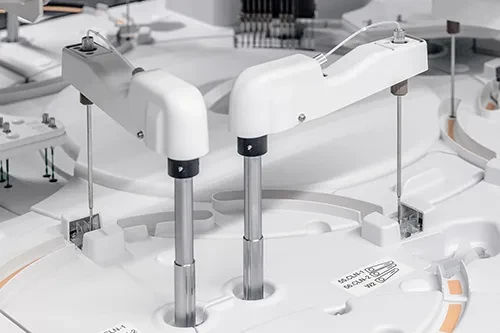
DMGMIC air-cooled industrial chillers boast an advanced, cooling tower-free cabinet design for fast, straightforward installation. This makes them perfect for water-scarce regions and challenging environments. Their high energy efficiency greatly lowers operating expenses while delivering reliable temperature control for industries including plastics, electroplating, chemicals, and pharmaceuticals.
Core Technology and Commitment
Our chillers use well-known brand compressors and electronic components, delivering stable and reliable performance. Corrosion-resistant aluminum finned condensers work with a microprocessor control system to enable intelligent operation and monitoring. They also offer comprehensive safety features, such as leak prevention, overload protection, and overtemperature protection. We maintain fine craftsmanship and are dedicated to producing high-quality, low-energy-consumption products.
Customized Services and Value Proposition
DMGMIC provides a range of standard industrial chiller models and offers customized services to meet specific customer requirements. Partnering with us means selecting a reliable business partner. We are committed to helping you lower production costs and boost profits.
FAQ
How to choose a suitable Air cooled chiller?
This process demands careful consideration of a wide range of practical and technical factors, such as specific cooling requirements for different operating scenarios, on-site space constraints and layout limitations, energy efficiency targets to optimize operational costs, and other relevant engineering considerations. It is essential to accurately determine the necessary water temperature settings, precise flow rate, and adequate cooling capacity based on the actual operational needs and load conditions of the equipment. Following these calculations, you should select the appropriate type and technical specifications of the water chiller that align with the unique site conditions, installation environment, and usage demands. If you provide us with the detailed and specific parameters of your equipment, our professional team will conduct a comprehensive analysis and customize a matching solution to recommend the most suitable water chiller for your application.
How to choose refrigerants?
Common refrigerants widely used in various cooling systems include R22, R407C, and R134A, each with distinct properties suited for different applications. The specific choice of refrigerant cannot be made arbitrarily; instead, it must be comprehensively evaluated and determined based on multiple key factors. These factors include the specific model of the chiller being used, its required cooling capacity, the targeted energy efficiency standards and operational requirements, as well as prevailing environmental protection regulations and industry guidelines governing refrigerant usage.
Is the footprint of air-cooled chillers large?
Due to the absence of a cooling tower, air-cooled chillers feature a relatively small physical footprint, making them a space-efficient choice for various cooling applications. Unlike water-cooled systems that require additional infrastructure for cooling towers and related water circulation components, these chillers integrate heat dissipation directly into their design, eliminating the need for separate tower installation and thereby reducing the overall area they occupy on-site.
If you have any inquiry or any questions feel free to contact us.
Hot Tags: Plastic Recycling Line Chiller, China Plastic Recycling Line Chiller manufacturers, suppliers, factory, air cooled chiller for building a good reputation, air cooled chiller for content marketing, air cooled chiller for heat recovery, air cooled chiller with anti vibration protection, air cooled chiller for hospitals, scroll air cooled chiller