


What is Low Temperature Chiller
Low temperature chillers are refrigeration systems designed to maintain a consistent low temperature in a process or storage application. They work by circulating a refrigerant through a compressor, condenser, and evaporator to remove heat from the process or storage space. Unlike standard chillers that are designed to maintain temperatures around 40-60°F, low temperature chillers are capable of achieving temperatures as low as -80°C. This makes them ideal for applications where low temperatures are required, such as in medical and pharmaceutical industries.
Benefits of Low Temperature Chiller
Improve production efficiency
In many industrial processes, such as chemical industry, pharmaceuticals, food processing, etc., temperature control has an important impact on product quality and production efficiency. Low-temperature chillers can provide a stable low-temperature environment to ensure efficient operation of industrial processes, thereby improving production efficiency.
Energy saving and consumption reduction
During the refrigeration process, the low-temperature chiller can reduce energy consumption and operating costs by optimizing the refrigeration cycle and improving the energy efficiency ratio. In addition, low-temperature chillers can also recover and utilize waste heat to further improve energy efficiency.
Guarantee product quality
Low temperature environments have an important impact on the quality and stability of many products. The low-temperature chiller can provide a stable low-temperature environment to ensure product quality stability during production, storage and transportation, thereby ensuring product quality.
Environmentally friendly
With the improvement of environmental awareness, environmental protection performance has become one of the important factors in the selection of refrigeration equipment. In the design and manufacturing process of low-temperature chillers, we pay attention to environmental protection and energy-saving performance, and use environmentally friendly refrigerants and energy-saving technologies to reduce environmental pollution and damage.

Special Chiller Pet Blowing Bottle Machine
Air cooled water cooling machine can be installed easily and it's unnecessary to be used without cooling tower, There are various specification of machines avaible and cooling range varies from 7250 to 245000 kilocalorie(3HP-100HP),the unit is designed with multiple safety protetion to ensure safe operation

Special Extruder Air Cooled Chiller
Product name:Water Chiller Units Model: MG-3A Cooling capacity: 7250kcal/hr;8.kw Refrigerant:R22/R407c Power supply:380v/50hz/3ph or customization Cooling way: Air cooled Compressor type: scroll type Compressor brand: Panasonic /Copeland/etc.

Special Air Cooler Chiller For Film Blowing Machine
Air cooled water cooling machine can be installed easily and it's unnecessary to be used without cooling tower, There are various specification of machines avaible and cooling range varies from 7250 to 245000 kilocalorie(3HP-100HP),the unit is designed with multiple safety protetion to ensure safe operation

Industrial Water Chiller Manufacturers
Air cooled water cooling machine can be installed easily and it's unnecessary to be used without cooling tower, There are various specification of machines avaible and cooling range varies from 7250 to 245000 kilocalorie(3HP-100HP),the unit is designed with multiple safety protetion to ensure safe operation

Water Chiller System Air Cooled Chiller
Product name:water chiller system air cooled chiller Model: MG-10A Cooling capacity: 25000kcal/hr;29.kw Refrigerant:R22/R407c Power supply:380v/50hz/3ph or customization Cooling way: Air cooled Compressor type: scroll type Compressor brand: Panasonic /Copeland/etc.

Electric Intelligent Air Cooled Chiller
Air cooled water cooling machine can be installed easily and it's unnecessary to be used without cooling tower, There are various specification of machines avaible and cooling range varies from 7250 to 245000 kilocalorie(3HP-100HP),the unit is designed with multiple safety protetion to ensure safe operation

Item: Cooling system chiller air coole chiller Model:MG-8A Cooling capacity: 19250kcal/hr,22kw Input power: 6.8kw Power supply: 380 v/3ph/50hz or as your request Refrigerant: R407c or your request Compressor: Hermetic piston or scroll type Cooling fan :2 set Condenser type: "V" type Evaporator: Shell and tube

The Refrigerated Water Chiller is suitable for injection machine, plastic film machine, film blowing machine, bottle blowing machine, cap compression machine, etc., and food grade special customization for food industry.

Air Cooled Chiller 5 Ton Chiller
Item: Cooling system chiller air coole chiller Model:MG-8A Cooling capacity: 19250kcal/hr,22kw Input power: 6.8kw Power supply: 380 v/3ph/50hz or as your request Refrigerant: R407c or your request Compressor: Hermetic piston or scroll type Cooling fan :2 set Condenser type: "V" type Evaporator: Shell and tube
Why Choose Us
Competitive prices
We offer our products at competitive prices, making them affordable for our customers. We believe that high-quality products should not come at a premium, and we strive to make our products accessible to all.
Efficient and convenient
The company has established marketing networks around the world to provide high-quality services to customers in an efficient and convenient manner.
High quality products
We always put customer needs and expectations in the first place, refine on, continuous improvement, to seek every opportunity to do better, to provide customers with their expectations of quality products, to provide customers with the most satisfactory service at anytime.
Quality control
All goods will undergo strict quality inspection before shipment. MCC always insists on providing high-quality products. We firmly believe that quality is the basis of everything.
State-of-the-art technology
We use the latest technology and tools to deliver high quality services. Our team is well-versed in the and advancements in technology and uses them to provide the best results.
Customer satisfaction
Providing after-sales services can enhance customer satisfaction by ensuring that customers' needs are met even after the purchase. This can lead to increased customer loyalty and positive word-of-mouth referrals.
The Precision of Low Temperature Chillers
When it comes to industrial cooling, precision is paramount. Low-temperature chillers offer a high level of temperature control, ensuring that your industrial processes run smoothly and consistently. Whether you are cooling chemical reactions, pharmaceutical processes, or food production, a low-temperature chiller can maintain temperatures with remarkable accuracy.
Energy Efficiency
Energy costs are a significant concern for industrial facilities. Low-temperature chillers are designed with energy efficiency in mind. They are equipped with advanced compressors, heat exchangers, and controls that optimize cooling performance while minimizing energy consumption. By using a low-temperature chiller, you can reduce operational costs and your environmental footprint.
Environmental Benefits
In today's environmentally conscious world, using eco-friendly cooling solutions is essential. Low-temperature chillers often use environmentally friendly refrigerants that have lower global warming potential (GWP). This not only complies with environmental regulations but also demonstrates your commitment to sustainability.
Versatility and Adaptability
Low-temperature chillers are highly versatile and adaptable to various industrial applications. They can handle a wide range of cooling tasks, from freezing to sub-zero temperature control. Whether you need to chill liquids, gases, or solid materials, a low-temperature chiller can be tailored to suit your specific requirements.
Extended Equipment Lifespan
Effective cooling is essential for preserving the lifespan of your industrial equipment. Overheating can lead to premature wear and tear, resulting in costly repairs or replacements. Low-temperature chillers help maintain optimal operating temperatures, ensuring that your machinery lasts longer and performs at its best.
Reduced Downtime
Downtime in industrial processes can be incredibly costly. With a low-temperature chiller in place, you can minimize the risk of unplanned downtime due to temperature-related issues. This increased reliability translates into improved productivity and reduced production losses.
Cooling Excellence with Low-Temperature Chillers
In conclusion, the benefits of using a low-temperature chiller for industrial cooling are numerous. These precision cooling systems offer energy efficiency, environmental benefits, versatility, and enhanced equipment lifespan, all while minimizing downtime. If you are seeking to optimize your industrial cooling processes, it's time to consider incorporating a low-temperature chiller into your setup.
How To Choose Low Temperature Chiller
Required cooling capacity
To choose a low-temperature chiller that can fulfill the particular requirements of the application, it is crucial to ascertain the required cooling capacity.
The quantity of heat that the chiller can remove from the system in a given amount of time is referred to as cooling capacity. British thermal units per hour (btu/hr) or kilowatts (kw) are used to measure it.
It will be easier to choose a chiller with the right cooling capacity if you are aware of the heat load of the process or equipment that has to be cooled.
Desired temperature range
Another crucial aspect to take into account is the required temperature range. Processes or equipment can be cooled to a precise degree using low-temperature chillers.
While some applications may only need modest cooling, others may need extremely low temperatures. It's crucial to pick a chiller that can consistently achieve and maintain the necessary temperature range.
Environmental considerations
The low-temperature chiller's performance and lifespan greatly depend on the environment in which it will be used. It is necessary to assess elements including ventilation, humidity, and ambient temperature.
The chiller should have sufficient cooling capability to make up for the higher ambient temperatures if it will be used in a hot area.
Similarly, filters or additional maintenance may be necessary for environments that are prone to dust or other impurities to prevent clogging and preserve optimal performance.
Budget
A significant aspect that must not be ignored is the budget allocated for the low-temperature chiller's acquisition and continuing maintenance. Depending on their cooling capacity, features, and brand reputation, chillers fluctuate widely in price.
It's crucial to establish a balance between the budget and the application's specific requirements. Although purchasing a high-quality chiller from a reputed manufacturer may cost more upfront, greater energy efficiency and dependability can result in long-term cost benefits.
Components of Low Temperature Chiller
Chillers are composed of several components that vary depending on the type of chiller being used. These components include the following:
Evaporator
The evaporator is responsible for absorbing heat from the chilled water or process fluid. Located on the low-pressure side of the cycle, it facilitates the heat transfer process and provides the cooling effect required for the chiller's operation.
Various types of evaporators, such as shell-and-tube and plate, are used in chillers to suit different applications.
Compressor
The compressor is the heart of the refrigeration cycle. It plays a crucial role in raising the pressure and temperature of the refrigerant vapor. The compressor enables the release of heat during the condensation process.
Chillers commonly use reciprocating, centrifugal, or screw compressors, each with its unique advantages in different scenarios.
Condenser
Located on the high-pressure side of the cycle, the condenser is responsible for rejecting heat from the refrigerant vapor to the surrounding environment. By removing heat, the refrigerant undergoes a phase change from a low-pressure vapor to high-pressure liquid form.
Commonly used condenser types include air-cooled, water-cooled, and evaporative condensers.
Expansion Device
The expansion device, typically an expansion valve, is positioned between the condenser and the evaporator.
Its primary function is to regulate the flow and pressure of the refrigerant, which causes it to undergo a sudden drop in pressure. This drop results in the refrigerant converting into a low-pressure liquid-vapor mixture. Then the refrigerant enters the evaporator to continue the cycle.
Working Principle of Low Temperature Chiller
The low-temperature chiller is mainly composed of a compressor, condenser, evaporator, throttling device and control system. Its working principle is based on the refrigeration cycle. The refrigerant absorbs heat and evaporates in the evaporator, absorbing the heat of the object being cooled. Then the refrigerant is compressed into a high-temperature and high-pressure gas in the compressor, enters the condenser to release heat and condenses into a liquid. Finally, After reducing the pressure through the throttling device, it enters the evaporator to absorb heat and evaporate again, completing the entire refrigeration cycle.
In the selection of low-temperature chillers, the choice of refrigerant is crucial. Different refrigerants have different thermodynamic properties and environmental performance, so the appropriate refrigerant needs to be selected according to specific application scenarios and requirements. For example, some new environmentally friendly refrigerants, such as R134a, R404a, etc., have excellent performance in refrigeration efficiency and environmental protection performance, and are widely used in low-temperature chillers.
Why Do Chemical Raw Materials Require Low-Temperature Chillers
Temperature control
Many chemical reactions are temperature sensitive and require precise temperature control to ensure reaction rate, selectivity, and product purity. Low temperature chillers can provide stable low temperature conditions to help maintain the temperature inside reaction vessels, crystallization tanks, or other equipment within a specific range, ensuring that chemical reactions proceed as expected.
Thermal management
Chemical reactions are often accompanied by a large amount of heat release, especially in exothermic reactions. If there is no effective cooling, the reaction system may overheat, leading to side reactions, catalyst deactivation, decreased product quality, and even safety accidents. The low-temperature chiller unit can promptly remove excess heat and maintain a stable reaction environment.
Crystallization optimization
In the crystallization process of chemical raw materials, low temperature helps to form purer and more uniform crystals. The chiller unit can optimize crystallization conditions, improve product purity and yield by precisely regulating temperature.
Material cooling and stability
Some chemical raw materials are prone to decomposition, deterioration, or polymerization at high temperatures. Low temperature chillers can cool the materials to ensure their stable properties and facilitate storage and transportation.
Equipment protection
High temperature operations may damage production equipment, such as sealing failure, pipeline expansion and deformation. The use of chillers can effectively protect equipment and extend its service life.
Safety production
Low temperature control can reduce the risk of accidents when dealing with flammable, explosive, or toxic chemicals, such as reducing the emission of volatile organic compounds (VOCs) to ensure production safety.
Maintenance of low temperature chiller
When the ambient temperature is below zero and the chiller is out of service, the concentration and density of the refrigerant inside the evaporator should be checked to prevent freezing. The cooling water system can run the cooling pump for 24 hours or drain the cooling water.
Maintenance of electronic control system
General water cooling cold water chiller use one to two years to do a routine maintenance (including the replacement of frozen oil oil filter drying filter element) to ensure that the use of the unit more stable and efficient.
Condenser and cooling tower is a circulation system, usually the cooling tower is an open cycle, heat exchange with the air for a long time there will be a lot of dust and silt in the cooling tower packing and cooling water when the unit is out of use should be cleaned the cooling tower packing, basic plate and condenser line.
Applications of Low Temperature Chillers
Chemical Processing
In chemical processing, low temperature chillers are used to maintain low temperatures during chemical reactions and to prevent heat buildup in equipment.
Pharmaceutical
In the pharmaceutical industry, low temperature chillers are used to maintain the temperature of vaccines, drugs, and other biological products during storage and transportation.
Food Processing
In the food industry, low temperature chillers are used to maintain the temperature of perishable products during storage and transportation. They are also used in the production of frozen foods.
Research Laboratories
Low temperature chillers are used in research laboratories to maintain low temperatures during experiments and to cool equipment, such as mass spectrometers and other analytical instruments.
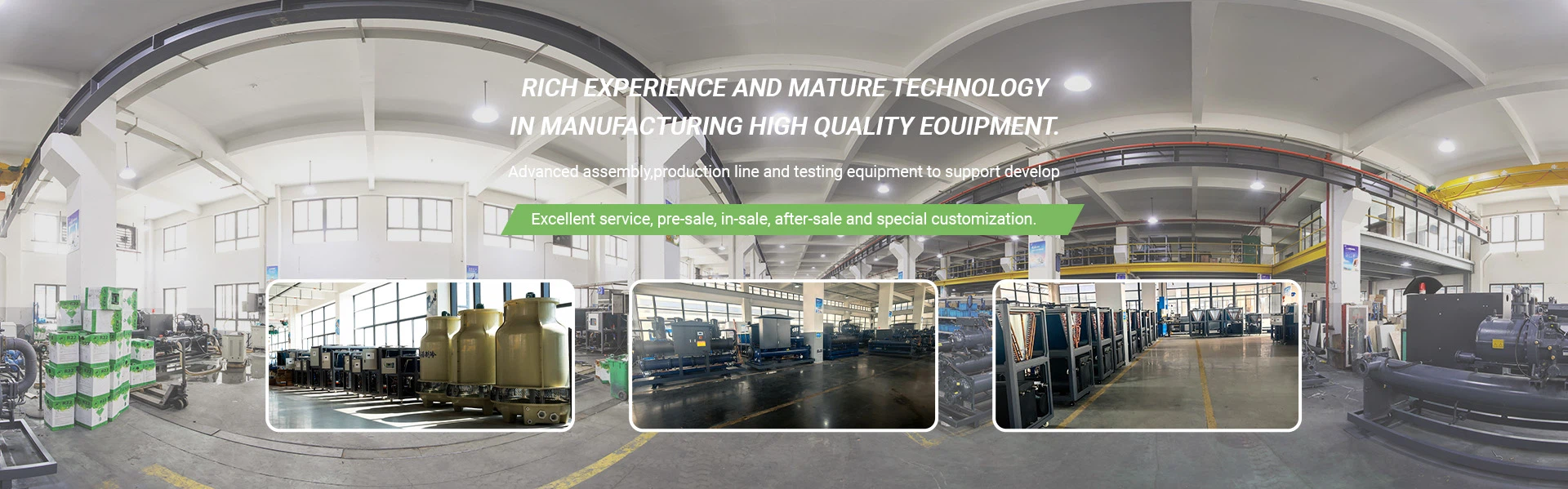
WENZHOU DMG MACHINERY Co., Ltd manily manufacture and export refrigeration equipment and air compressor with good reputation, Our customers are located all over the world including China, Southeast Asia, Middle East, USA, Europe as well as Africa and South America.


FAQ
Hot Tags: low temperature chiller, China low temperature chiller manufacturers, suppliers, factory, Medical Air Compressor, 40 bar Air Compressor, 10 Ton Chiller, Water Cooled Industrial Chiller, Scroll Chiller, Air Cooled Industial Water Chiller